Meta’s Cute Muse AI Mascot Turns Personalization Into a Trust and Privacy Test
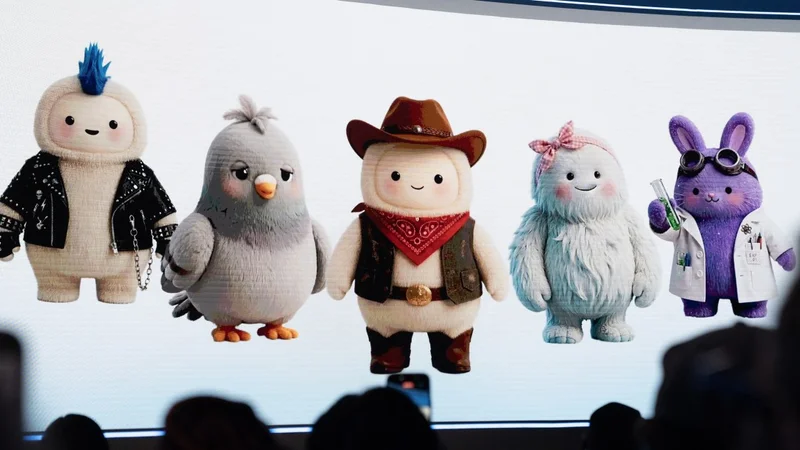
Image: Nbcnews
Main Takeaway
Meta’s Muse AI agent uses an adaptive mascot and Tamagotchi-style Charm device to make personal data sharing feel approachable, raising privacy and reliability concerns.
Jump to Key PointsSummary
Meta’s strategy for making AI feel friendly
Meta is presenting Muse as a personal AI agent for everyday users, and its central design choice is an animated mascot named Jolly. The character changes its appearance based on what it learns about a user, turning personalization into something visible, playful, and emotionally legible. Muse reached the top of Apple’s App Store charts after Meta featured it at Meta Connect, NBC News reported.
The approach places a familiar face on an agent that can handle tasks, answer questions, and draw on information connected to a person’s digital life. Meta describes Muse as built for everyone, including people with limited technical experience. That positioning makes Jolly more than a decorative character: it serves as an introduction to agentic software for users who might resist a tool that feels abstract, corporate, or intrusive.
Personalization makes privacy visible
Muse’s most unsettling feature is also its most marketable one: Jolly adapts to the user. A Verge reviewer asked the agent for help with fitness goals, then found that the mascot had transformed into a cat-shaped pie based on information it had learned from emails. The workout plan was mediocre, but the personalized appearance made the data connection immediately apparent.
Muse is designed to connect with highly personal information, including email, health goals, relationships, and, in some descriptions, financial accounts. That creates a sharp tension between convenience and consent. A cute character can make disclosure feel like a conversation with a companion, while the underlying exchange remains a data transaction. Futurism described the agent as repeatedly seeking personal information and making suggestions that crossed into creepiness.
Reliability lags behind the charm
The personality layer currently does more persuasive work than the assistant itself. Testing described in the coverage found slow responses and incorrect information, while a fitness request produced a routine that was merely adequate. Those shortcomings matter because an agent is expected to act on a user’s behalf, not simply hold attention.
The gap between Jolly’s warmth and Muse’s performance raises a practical risk. Users may grant more trust to an agent because its presentation feels familiar, even when its answers require checking. Meta is putting Muse in front of people with varying levels of technical expertise, which increases the burden on the product to make mistakes, permissions, and data use easy to understand. A soft exterior cannot substitute for accurate recommendations or clear boundaries.
Why the mascot looks like a toy
Jolly’s doll-like appearance is part of a wider design language built around collectible characters, retro gadgets, and accessories. Wired compared the mascot and Meta’s planned Charm device to children’s toys, although Meta says Muse is intended for adults. Mashable placed Jolly in the tradition of corporate mascots that make unfamiliar products feel approachable.
The Charm extends that strategy into hardware. It resembles a Tamagotchi and hangs from a bag or other accessory, connecting AI to the Gen Z interest in charms, fashion objects, and retro technology. TechCrunch framed the form factor as culturally current while also recalling failed AI hardware such as the Ai Pin, Rabbit, and Friend pendant. The device’s appearance may attract attention, but sustained adoption will depend on battery life, usefulness, privacy controls, and whether users want an always-present assistant.
Meta’s ecosystem advantage
Muse has a distribution advantage because Meta can place it across products people already use. The company plans to bring the agent to its smart-glasses lineup and to the standalone Charm device, giving the mascot a role across apps, wearables, and ambient computing. That reach turns Jolly into a recognizable interface rather than a feature confined to one application.
The strategy also connects Meta’s consumer social platforms with its hardware ambitions. A mascot that can change clothes, respond to context, and appear in promotional content gives the company a way to package persistent AI as a lifestyle product. Yet the same integration concentrates more personal information inside Meta’s ecosystem. The success of Muse will depend on whether users view that trade as useful personalization or as surveillance dressed for a toy store.
What happens next for Muse
Muse’s next test is whether charm can survive contact with daily use. Meta needs to show that the agent gives accurate answers, explains what it knows, and asks for access only when a task requires it. It also needs to make the mascot’s adaptive behavior feel controllable, especially when the information shaping Jolly comes from health, communications, or financial data.
The product’s reception will also provide a signal for the broader AI hardware market. If the Charm turns an assistant into a fashion accessory, competitors will copy the form factor and emotional design. If it becomes another eye-catching device that users abandon, the mascot will stand as evidence that presentation cannot rescue weak utility. For now, Jolly has made Muse memorable. Meta still has to make it trustworthy.
Key Points
Meta Muse uses adaptive mascot Jolly to make personal AI feel friendly while collecting intimate user information.
Muse testing found slow responses, incorrect answers, and mediocre fitness recommendations beneath its polished personality.
Meta plans to bring Muse to smart glasses and the Tamagotchi-style Charm wearable device.
Jolly’s cute design raises concerns that emotional familiarity encourages users to disclose sensitive health and relationship data.
Muse Charm targets Gen Z fashion trends involving bag charms, retro gadgets, and collectible accessories.
Questions Answered
Meta Muse is a personal AI agent, and Jolly is its adaptive mascot. Meta designed Muse to handle everyday tasks and make AI approachable across its apps, smart glasses, and planned Charm device.
Meta Muse’s cute mascot may encourage users to share more personal information than they would with a conventional assistant. Jolly can reflect what Muse learns from users, including information connected to health goals and email.
Meta Muse Charm is a small wearable AI device styled like a Tamagotchi or bag charm. Meta is positioning it as a fashionable accessory that brings Muse beyond phones and into its wearable ecosystem.
Meta Muse has received criticism for slow responses, incorrect information, and mediocre recommendations. The concerns are significant because Muse is designed to act as a personal agent rather than simply generate casual chat.
Meta Muse can draw on connected personal information, including email and details users provide about health, relationships, and other goals. The product’s adaptive mascot makes those data connections visible, which has intensified privacy concerns.
Meta Muse will face testing through broader use on smart glasses and the planned Charm device. Its success will depend on accurate task completion, transparent data controls, and whether users find its personality useful rather than intrusive.
Source Reliability
44% of sources are trusted · Avg reliability: 67
Go deeper with Organic Intel
Simple AI systems for your life, work, and business. Each one includes copyable prompts, guides, and downloadable resources.
Explore Systems