Microsoft Reboots Copilot as a Unified AI Hub Built to Rival Office’s Reach
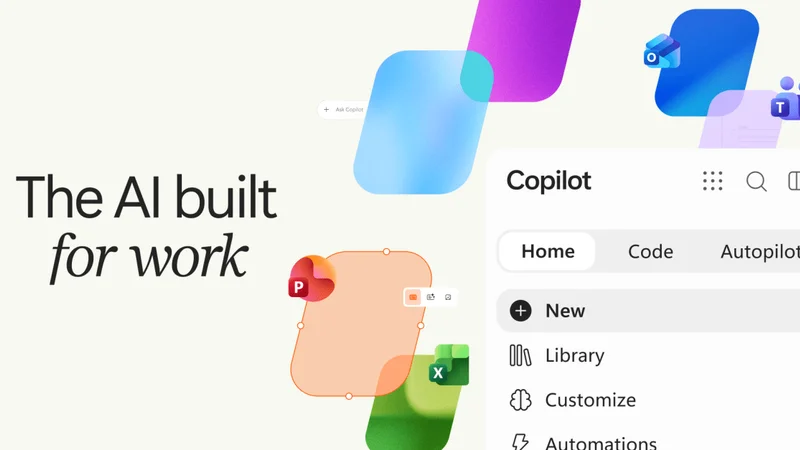
Image: The Verge AI
Main Takeaway
Microsoft has launched a unified Copilot app combining chat, coding, Cowork and Autopilot agents as it shifts the product toward business productivity.
Jump to Key PointsSummary
Microsoft’s new Copilot direction
Microsoft has launched a redesigned Copilot app that combines chat, coding and autonomous agents in one interface, giving the company a single flagship product for consumer and workplace AI. The move is the culmination of plans discussed by CEO Satya Nadella and formalized in Microsoft’s announcement on Sept. 25.
The app is organized around Home, Code and Autopilot. Home brings together chat and Cowork, Microsoft’s workspace for completing tasks with AI. Code is aimed at software development, while Autopilot, formerly called Scout, handles agent-based work. Microsoft describes the redesign as a way to connect existing productivity tools with systems that organizations can build and customize.
Three experiences under one roof
The Copilot app’s central pitch is consolidation. Users will move between general assistance, software development and agentic workflows without switching among separate Copilot products. Microsoft is also bringing Cowork and other tools into the same experience, turning Copilot from a chat window into a front door for work.
The structure reflects the company’s broader product strategy. Microsoft previously maintained a consumer Copilot app and a Microsoft 365 Copilot app across web, desktop and mobile. The Microsoft 365 app is now called the Microsoft Copilot app, with the new name and icon appearing across Windows, iOS, Android and the web. That rebranding links the everyday Office productivity destination directly to Microsoft’s AI identity.
Why Microsoft sees Office-scale influence
Microsoft is positioning Copilot as a platform with the reach of Office because it can sit inside tools that businesses already use. The app combines access to Microsoft 365 work, coding capabilities and agents, giving the company a route to make AI part of routine documents, communication, development and operations.
That strategy places business users ahead of the crowded personal-chatbot market. Microsoft is merging its consumer and workplace assistants into one product aimed more heavily at corporate customers, while competitors such as OpenAI and Anthropic continue to compete for individual users. The bet is that distribution through Microsoft’s existing software footprint matters more than winning every consumer chatbot comparison.
The enterprise rollout challenge
For IT departments, the unified app creates a deployment and governance project as well as a product opportunity. Organizations will need to map licensing, decide which users receive access to agents, establish security controls and determine how Copilot connects to company data. Those decisions become more significant when chat, code generation and autonomous task execution share one interface.
The rollout also puts pressure on Microsoft to make its separate AI tools feel coherent. Enthusiasm around Code Apps, Cowork and Copilot Studio has been tempered by complaints about unfinished experiences and uneven product execution. The integration can reduce fragmentation for users, but it also concentrates scrutiny on the quality, permissions and reliability of every capability exposed through Copilot.
What developers and businesses should watch
Developers will gain a single place to access coding assistance and agent workflows, while business teams will see Cowork and Autopilot presented as parts of the same productivity system. That combination strengthens Microsoft’s argument that Copilot is infrastructure for work, not simply an AI assistant layered onto Office.
The practical test will be adoption inside real organizations. Microsoft must show that agents can complete useful tasks safely, that coding tools fit established development processes and that administrators can control data access across the combined app. The company’s existing distribution gives Copilot an immediate audience, but sustained use will depend on whether the unified experience removes friction instead of moving it into a larger menu.
Microsoft’s next test
Microsoft’s Copilot reboot gives the company a clearer product center: one app, three major modes and a stronger focus on business work. The strategy also narrows the company’s consumer chatbot ambitions, according to Bloomberg, as Microsoft concentrates on the enterprise advantage created by Microsoft 365, Windows and developer tools.
The Office comparison will be decided by habit, not branding. Office became influential because people returned to it for essential work across organizations. Copilot now has the distribution to pursue similar reach, but it must earn that status through dependable agents, clear administration and useful results across the daily tasks Microsoft wants to consolidate.
Key Points
Microsoft launched a unified Copilot app combining chat, coding, Cowork and Autopilot agents for business users.
Copilot now uses Home, Code and Autopilot sections to organize Microsoft’s expanding AI capabilities.
Microsoft renamed the Microsoft 365 app Copilot across Windows, mobile platforms and the web.
The reboot prioritizes enterprise productivity and distribution over direct competition in personal chatbot services.
IT teams must address licensing, security, permissions and governance before broad Copilot deployment.
Questions Answered
Microsoft’s new Copilot super app is a unified interface for AI chat, coding, Cowork workflows and Autopilot agents. It replaces separate consumer and Microsoft 365 Copilot experiences with one broader product.
Microsoft Copilot’s Home, Code and Autopilot sections organize chat and Cowork, software development, and agent-based task execution. Autopilot is the new name for Microsoft’s Scout assistant.
Microsoft compares Copilot with Office because Copilot can reach users through Microsoft 365, Windows, business data and developer tools. The company wants AI to become a routine work interface across organizations.
Microsoft renamed the Microsoft 365 app to the Microsoft Copilot app across web, Windows, iOS and Android. The app continues to provide productivity functions while incorporating broader Copilot capabilities.
Businesses should evaluate Microsoft Copilot licensing, security, data permissions, agent governance and rollout plans. IT teams also need to test how Cowork, Autopilot and coding tools fit existing workflows.
Source Reliability
33% of sources are established · Avg reliability: 64
Go deeper with Organic Intel
Simple AI systems for your life, work, and business. Each one includes copyable prompts, guides, and downloadable resources.
Explore Systems