Flock’s Surveillance Rules Face Scrutiny as Cities Weigh Crime Solving Against Civil Liberties
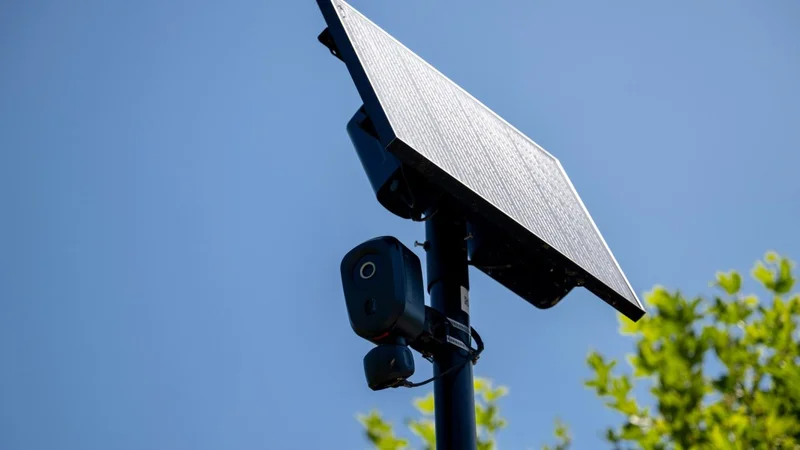
Image: MIT Technology Review AI
Main Takeaway
Flock Safety is tightening controls on its license plate reader network after documented misuse, but critics say software safeguards leave major civil liberties gaps.
Jump to Key PointsSummary
Why Flock faces renewed scrutiny
Flock Safety is under growing scrutiny as cities reconsider a surveillance network spanning roughly 120,000 automatic license plate readers across the United States. The company markets its connected cameras and sensors as tools for helping police identify vehicles linked to crimes, while critics focus on how the same system enables persistent tracking and personal abuse. Bloomberg describes Flock as a fast-growing Atlanta startup whose products have been adopted by thousands of cities and towns, giving law-enforcement agencies the ability to map vehicle movements over long distances.
The debate has sharpened around the distance between a system’s stated purpose and its practical reach. Flock’s defenders emphasize investigations and public safety. Civil-liberties critics argue that the core issue is the creation of a searchable record of where vehicles travel, combined with the risk that officers can exploit access for reasons unrelated to a criminal case.
Misuse has exposed the human risk
Documented cases of officer abuse have made the privacy debate concrete. The Washington Post identified 50 cases involving misuse of Flock and competing systems, including alleged stalking and harassment of women. One Wisconsin woman said her officer ex-boyfriend searched for her car 179 times. In another case, a police chief allegedly used the system to stalk a woman who had no obvious authority within the department to whom she could report him.
Those incidents matter because they show that the threat isn't limited to an abstract government database. A powerful search tool can be turned against former partners, acquaintances, witnesses, or anyone who attracts an officer’s personal interest. Reason’s discussion frames the controversy as a dispute over whether defenders are answering the central objection. Bloomberg’s account adds the broader scale: networked cameras allow agencies to connect individual observations across jurisdictions and time, increasing both investigative value and the consequences of misuse.
Flock’s safeguards target officer behavior
Flock announced platform changes on August 13 aimed at preventing illegal or illegitimate searches. The measures include software designed to flag abnormal search activity and a requirement that officers enter a criminal case number before conducting a search. The company says the changes are intended to ensure that users have a proper cause for accessing the system.
These controls address a real problem, but they focus mainly on whether an officer follows a process. A case-number field creates an audit trail, while abnormal-search detection can identify patterns that deserve review. Neither measure independently proves that a search is justified. MIT Technology Review points out that officers can enter bogus case numbers, leaving the safeguard vulnerable when supervisors fail to verify the underlying investigation. The system therefore shifts part of the burden from software to departmental oversight, recordkeeping, and penalties for abuse.
The central dispute is system design
The fight over Flock is also a fight over design choices. Automatic license plate readers capture vehicle information, attach time and location data, and make those records available for later searches. When agencies share access or connect systems, investigators gain a wider view of travel patterns. That capability can help locate a stolen vehicle or reconstruct a suspect’s movements, but it also turns ordinary driving into data that can be queried after the fact.
Defenders often point to successful investigations as evidence that the technology earns its place. Critics ask a prior question: what rules limit the system when no crime has been established, and who can challenge an inaccurate or abusive search? The difference is significant. A tool designed around broad retention and easy retrospective searching places more trust in police users and internal controls. A tool designed around narrow access and strict deletion reduces the damage when users break rules.
Cities face governance choices
Cities adopting Flock systems are deciding more than whether to buy cameras. They are setting terms for data retention, sharing, search authorization, public disclosure, and independent review. Local officials also determine whether residents can learn how often the system is used, how many agencies can access records, and what happens after an improper search.
The rapid spread of Flock’s network raises the stakes of those decisions. Thousands of local governments now participate in a market built around connected surveillance devices, while the company’s scale makes isolated municipal policies less decisive. A city can impose strong limits, but regional sharing can still expand the reach of records. The reported stalking cases add a practical test for any policy: protections must work against insiders with valid credentials, not only outsiders attempting to break into the system.
What happens next
Flock’s new controls place enforcement and verification at the center of the next phase of the debate. Cities will need to measure whether abnormal-search alerts produce investigations, whether case numbers are checked against real files, and whether officers face meaningful consequences for misuse. Public reporting will determine whether the safeguards function as oversight or remain mostly administrative steps.
The wider question is whether crime-solving benefits justify a network capable of reconstructing vehicle travel at national scale. Flock’s defenders have a strong answer about investigative utility, but the civil-liberties challenge concerns the architecture of access itself. As communities reconsider contracts and rules, the outcome will depend on retention limits, cross-jurisdiction sharing, independent audits, and remedies for people whose movements are searched without legitimate cause.
Key Points
Flock Safety is tightening search controls after documented police misuse of its license plate reader network.
Flock’s cameras let law-enforcement agencies reconstruct vehicle travel across cities and long periods.
Case-number requirements and abnormal-search alerts can be undermined by false entries and weak oversight.
Reported stalking cases show how authorized police access can become a personal surveillance tool.
Cities must weigh investigative benefits against retention, sharing, transparency, and civil-liberties risks.
Questions Answered
Flock Safety is an Atlanta-based company that provides connected cameras, sensors, and automatic license plate readers to law-enforcement agencies. Its network captures vehicle information and location data that agencies use in criminal investigations.
Flock Safety cameras are controversial because they can create searchable records of vehicle movements over time and across jurisdictions. Critics also point to documented cases in which police officers allegedly used the systems for stalking or harassment.
Flock Safety added abnormal-search monitoring and requires users to enter a criminal case number before searching. Critics say those controls can fail when officers submit false case numbers or departments don't verify searches.
Flock Safety operates a network of roughly 120,000 automatic license plate readers in the United States. Bloomberg says thousands of cities and towns have installed Flock’s surveillance tools.
Flock Safety faces closer scrutiny from cities reviewing contracts, data-sharing arrangements, and oversight practices. Officials will need to assess whether search alerts are investigated, case numbers are verified, and misconduct brings meaningful consequences.
Source Reliability
50% of sources are highly trusted · Avg reliability: 82
Go deeper with Organic Intel
Simple AI systems for your life, work, and business. Each one includes copyable prompts, guides, and downloadable resources.
Explore Systems