Federal Judge Blocks Pentagon’s Anthropic Blacklist, Calling Retaliation Unconstitutional
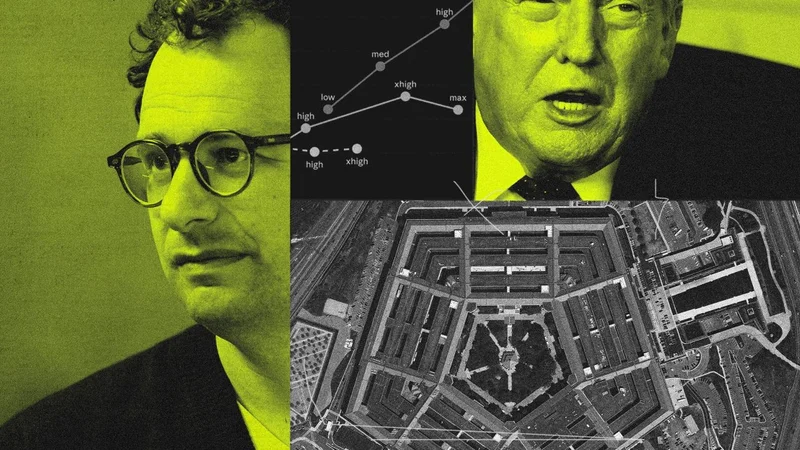
Image: The Verge AI
Main Takeaway
A California federal judge blocked the Pentagon from blacklisting Anthropic as a national security supply-chain risk, ruling that the move unlawfully punished the AI company.
Jump to Key PointsSummary
The ruling against the Pentagon
A California federal judge blocked the Pentagon from designating Anthropic a national security supply-chain risk, ruling that the administration’s action was illegal and unconstitutional. Judge Rita Lin vacated the Defense Department’s February 27 designation and found that the move amounted to unlawful retaliation for Anthropic’s position on how its AI models could be used. Wired described the decision as a direct rebuke of the administration’s attempt to pressure the company through government procurement and national-security powers.
The ruling gives Anthropic an immediate legal victory after months of conflict with the Trump administration. The Verge characterized the judgment as a First Amendment ruling, while the BBC framed it as a rejection of an effort that threatened to “cripple” the AI company. The decision blocks the blacklist for now, leaving the administration to determine whether to appeal or pursue another route against Anthropic.
How the blacklist began
The dispute grew from negotiations over the Pentagon’s access to Anthropic’s models and the safeguards governing their use. Anthropic objected to certain military applications, including uses that the company said crossed limits in its safety policy. The administration responded by escalating the disagreement into a supply-chain risk designation, a step that threatened to cut Anthropic off from federal contractors and government-linked business.
The government defended the action as a national-security decision rather than punishment for protected speech. Court coverage described officials pressing the Defense Department to explain why Anthropic had been singled out, while the administration denied that the designation represented unlawful retaliation. Axios and Al Jazeera both highlighted the government’s effort to defend the blacklist in court, despite the company’s argument that it was being punished for setting limits on model deployment.
Anthropic’s challenge and the response
Anthropic sued the administration in March, asking the court to halt the designation and prevent the government from imposing broader commercial consequences. The company argued that the Pentagon had transformed a contract dispute into an official campaign against Anthropic because of its public and private position on AI safeguards. NPR and CNBC identified the lawsuit as the central vehicle for challenging the blacklist.
The administration maintained that the Pentagon had authority to protect military supply chains and select vendors whose technology met its operational requirements. The Guardian reported that President Donald Trump publicly attacked Anthropic during the dispute, while DefenseScoop documented expert concerns about whether blacklisting a major AI supplier was a proportionate response. The legal fight therefore combined constitutional questions, procurement power and a highly personal political confrontation.
Why the decision matters for AI companies
The ruling establishes a major boundary around how the government can respond when an AI company restricts military use of its systems. A supply-chain designation carries serious commercial consequences, so using it against a company over its deployment rules raises questions that extend beyond Anthropic. The court’s reasoning gives other model developers a stronger basis for challenging government pressure that appears tied to speech, safety policies or public advocacy.
The case also exposes the tension between national-security procurement and private control over general-purpose AI. Defense officials want reliable access to advanced models across military workflows, while model companies retain policies governing surveillance, autonomy and weapons-related applications. The Law Review at Syracuse University placed the dispute within that broader conflict between AI ethics and national security. Courtroom scrutiny reported by Courthouse News adds a second concern: whether the Pentagon exceeded its authority by using a severe vendor sanction rather than negotiating technical or contractual limits.
The consequences for government procurement
The ruling complicates the Pentagon’s effort to build a stable market for advanced AI services. Anthropic is a major provider of frontier models, and a government blacklist would have affected direct contracts as well as contractors that depend on Anthropic’s systems. The judgment forces agencies to distinguish legitimate security reviews from retaliatory exclusion, particularly when a vendor’s objection concerns how its technology will be used.
The decision also creates uncertainty for contractors evaluating AI suppliers. A procurement restriction can reshape vendor competition quickly, but a court finding that the restriction violated the First Amendment raises the legal cost of similar actions. Reuters described the order as blocking the Pentagon’s blacklist “for now,” emphasizing that the administration’s next step remains significant. The government can appeal, revise its rationale or continue negotiations with Anthropic under tighter contractual terms.
What happens next
Anthropic retains protection from the February blacklist, but the dispute is not necessarily over. The administration’s denial of unlawful retaliation indicates that officials will continue defending the underlying national-security judgment, while the ruling gives Anthropic leverage in any appeal or renewed negotiations. The case could reach a higher court if the government challenges Lin’s decision.
The immediate test is whether the Pentagon accepts Anthropic’s model-use restrictions, seeks narrower contractual assurances or tries to impose a new designation based on a different record. The outcome will shape how OpenAI, Google, Microsoft and other AI suppliers approach military contracts, safety commitments and government demands. For Anthropic, the ruling preserves access to the federal market and validates its refusal to remove certain safeguards under political pressure.
Key Points
Anthropic defeated the Pentagon’s blacklist after a judge found the designation unconstitutional retaliation.
Judge Rita Lin vacated the Defense Department’s February 27 national-security supply-chain designation.
Anthropic’s model-use restrictions triggered a broader dispute over military access to advanced AI systems.
The administration denied retaliation and defended the Pentagon’s authority to protect defense supply chains.
The ruling strengthens legal protections for AI companies setting limits on government model deployments.
Questions Answered
The Pentagon blacklisted Anthropic after a dispute over restrictions on how its AI models could be used for military purposes. The administration described the action as a national-security supply-chain decision, while Anthropic argued it was punishment for its safety policies.
Judge Rita Lin ruled that the Pentagon’s designation of Anthropic was unconstitutional retaliation and vacated the February 27 decision. The ruling blocks the administration from enforcing that blacklist while the legal dispute continues.
Anthropic sued the Trump administration in March over the Pentagon’s blacklist. The company argued that officials used procurement and national-security powers to punish its position on acceptable AI uses.
The Pentagon can appeal Judge Rita Lin’s decision or pursue a different legal basis for restricting Anthropic. The administration has denied unlawful retaliation, so the dispute can continue through appeals or renewed negotiations.
The Anthropic ruling gives other AI companies stronger grounds to challenge government actions tied to their safety policies or public positions. It also forces defense agencies to separate legitimate vendor-security reviews from retaliation over model-use restrictions.
Source Reliability
64% of sources are highly trusted · Avg reliability: 82
Go deeper with Organic Intel
Simple AI systems for your life, work, and business. Each one includes copyable prompts, guides, and downloadable resources.
Explore Systems