Trump’s Russian Diesel Deal Reverses Sanctions Policy as Fuel Prices and Ukraine War Intensify
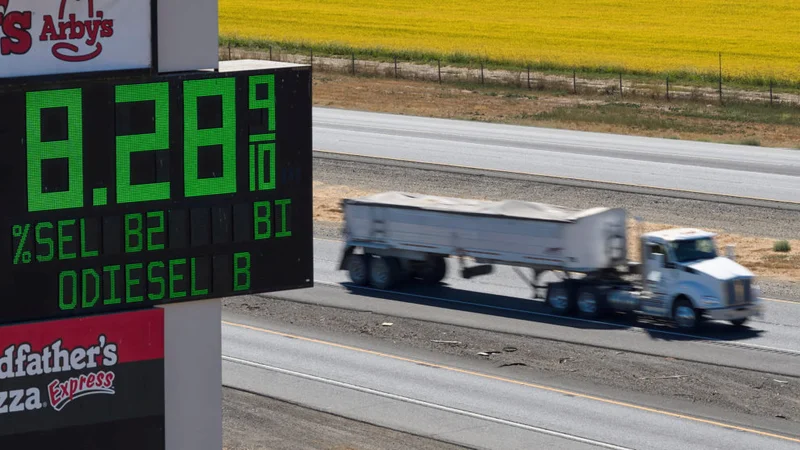
Image: Pbs
Main Takeaway
Donald Trump says Russia will supply millions of tons of diesel to global markets, reversing recent sanctions policy as U.S. fuel prices climb before midterm elections.
Jump to Key PointsSummary
The deal Trump announced
President Donald Trump says Russia will release diesel to U.S. and global markets after he reached an agreement with President Vladimir Putin. The arrangement begins with more than 300,000 tons immediately, followed by 500,000 tons in November and additional shipments that could bring the total above 4 million tons, CNBC reported. Other accounts describe a commitment for as much as 3 million further tons, depending on refinery conditions.
Trump presented the deal as a response to sharply higher fuel costs ahead of the U.S. midterm elections. The announcement followed a phone call with Putin and was made through Trump’s Truth Social account. The timing gives the White House a visible supply response as diesel prices affect trucking, farming, construction and household costs.
A sharp reversal on sanctions
The agreement reverses a central element of recent U.S. policy toward Moscow. Trump signed legislation authorizing new sanctions and tariffs against countries importing Russian oil and gas roughly 3 weeks before announcing the diesel arrangement, the BBC reported. The deal therefore places fuel-price relief directly against sanctions designed to pressure Russia over its war in Ukraine.
The reported arrangement also raises questions about how Treasury restrictions, shipping rules, payment channels and any congressional sanctions requirements will be handled. Fortune reported that the Treasury Department is easing restrictions on Russian diesel shipments for 6 months. The policy shift gives Moscow access to a major market while Washington attempts to separate fuel availability from its broader confrontation with the Kremlin.
Why prices are driving policy
The administration is responding to a diesel shortage and refinery disruptions that have pushed fuel costs higher across the economy. CNBC attributed the pressure to refinery damage linked to wars in Eastern Europe and the Middle East, while Fortune put U.S. diesel at $6.23 a gallon. Diesel is central to freight, agriculture, industrial equipment and backup power, so sustained increases spread well beyond filling stations.
Energy analysts cited by Al Jazeera and Fortune said the Russian volumes won't substantially reduce prices. Global diesel markets are much larger than the initial shipment, and the fuel must still be transported, insured, refined or distributed through commercial networks. The deal can add supply at the margin, but its effect depends on delivery speed, refinery capacity, sanctions exemptions and whether traders treat the arrangement as durable.
Ukraine condemns the arrangement
Ukrainian President Volodymyr Zelenskyy condemned the deal as a gift to Putin and called it an investment in a war that should be ended rather than prolonged. Fortune reported that Zelenskyy described the decision as weak and said negotiations were being used as a smokescreen. His criticism reflects Kyiv’s concern that Russian fuel revenue will strengthen Moscow while Russian forces continue attacking Ukraine.
That concern was underscored the day after Trump announced the agreement, when Russian strikes killed at least 20 people, including 3 children, in Ukraine’s Zaporizhzhia region, according to CBS News and the Associated Press. The sequence gives the arrangement an immediate human and political cost for Ukraine, which has spent years urging allies to restrict Russian energy income.
The midterm calculation
The diesel agreement arrives as the administration faces pressure to lower prices before November’s midterm elections. Trump’s public framing focuses on immediate relief, while the policy also offers a political answer to voters who see fuel costs as a measure of economic performance. The White House can point to a large headline supply figure even before shipments reach American buyers.
The political benefit depends on results at the pump, and those results depend on logistics and market confidence rather than the announcement alone. If shipments arrive slowly or prices remain high, the agreement may deepen criticism from both sides: opponents can portray it as a concession to Putin, while consumers can view it as an ineffective response. The arrangement also puts Republican lawmakers behind a policy that conflicts with the sanctions posture Trump endorsed weeks earlier.
What happens next
The next test is implementation. Officials and traders will need to establish the shipment schedule, identify buyers, clarify sanctions exemptions and determine whether Russian diesel can enter U.S. markets without violating recently enacted restrictions. The stated sequence begins with 300,000 tons and expands through November, giving markets several near-term checkpoints.
The broader question is whether the deal becomes a temporary fuel exception or a lasting change in U.S.-Russia economic policy. A 6-month easing of restrictions would provide Moscow with revenue and Washington with additional supply, but it would also weaken the credibility of sanctions as a tool of pressure. The conflict in Ukraine, the scale of refinery damage and the trajectory of U.S. diesel prices will determine whether Trump’s agreement is remembered as a practical intervention or a costly policy reversal.
Key Points
Donald Trump announced Russian diesel shipments to address high U.S. fuel prices before midterm elections.
Russia will initially release more than 300,000 tons of diesel, with millions of tons planned afterward.
The agreement reverses sanctions policy Trump approved against Russian energy importers roughly 3 weeks earlier.
Ukraine’s Volodymyr Zelenskyy condemned the deal as financial support for Russia’s continuing war.
Energy analysts said the promised volumes are unlikely to significantly reduce diesel prices.
Questions Answered
Donald Trump said Vladimir Putin agreed to release Russian diesel to U.S. and global markets. The plan starts with more than 300,000 tons and includes additional shipments that could total several million tons.
Donald Trump is seeking Russian diesel to address sharply higher fuel costs before the U.S. midterm elections. Diesel prices affect freight, agriculture, construction and other parts of the economy.
Donald Trump’s Russian diesel deal reverses recent U.S. sanctions policy toward Russian energy. Trump approved new sanctions and tariffs targeting countries that import Russian oil and gas only weeks before announcing the arrangement.
Volodymyr Zelenskyy condemned Donald Trump’s diesel agreement as a gift to Vladimir Putin. He argued that purchases of Russian fuel help finance a war that should be ended.
Donald Trump’s Russian diesel deal is unlikely to cause a major price decline by itself, according to energy analysts cited by Fortune and Al Jazeera. The outcome depends on shipment timing, logistics, sanctions exemptions and the size of global demand.
Source Reliability
77% of sources are highly trusted · Avg reliability: 84
Go deeper with Organic Intel
Simple AI systems for your life, work, and business. Each one includes copyable prompts, guides, and downloadable resources.
Explore Systems