Trump Administration Suspends Microsoft Green Card Filings as Vance Accuses Company of Visa Abuse
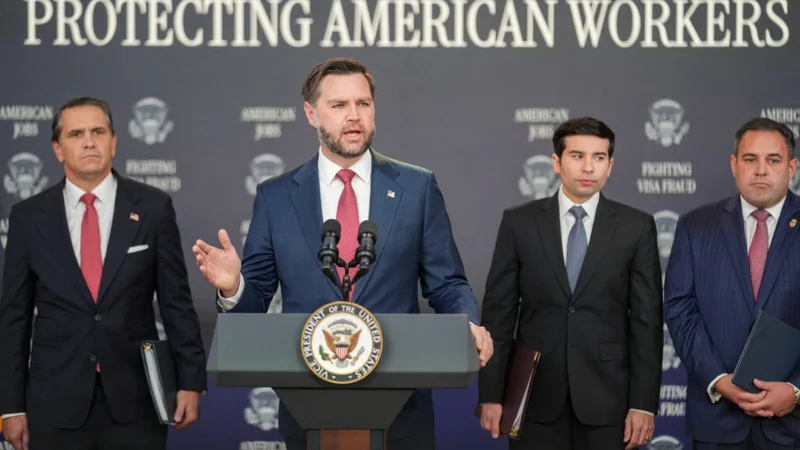
Image: Pbs
Main Takeaway
The Trump administration suspended Microsoft and Adobe from a green card program for H-1B workers as Vice President JD Vance accused companies of abusing the visa system.
Jump to Key PointsSummary
The administration’s action
The Trump administration suspended Microsoft, Adobe and other companies from the federal program that lets employers seek permanent residency for foreign workers employed in the United States on H-1B visas. Vice President JD Vance and Labor Department officials announced the action on Thursday, citing alleged fraud and abuse of the Permanent Labor Certification Program, known as PERM.
PERM requires employers to certify that hiring a foreign worker won't displace qualified American workers. The suspension blocks the named companies from sponsoring affected H-1B employees for green cards while the administration investigates its allegations. The action forms part of a broader campaign against H-1B and J-1 visa programs, which administration supporters say have been used at the expense of U.S. workers.
Why Microsoft was singled out
Microsoft became the administration’s most prominent target after Vance accused the company of replacing laid-off American workers with foreign employees. Vance said the company replaced each laid-off worker with 1.5 foreign workers, describing those employees as “foreign indentured servants,” according to accounts from The Independent and other outlets.
The allegation centers on Microsoft’s workforce reductions and its continued use of H-1B labor, but the public announcements did not establish that the company violated PERM rules. The administration also named Adobe and other technology and outsourcing companies, framing the crackdown as an enforcement response rather than a policy change affecting every H-1B employer. Microsoft’s suspension immediately raised questions about how the government will distinguish ordinary visa sponsorship from fraud.
A striking White House contradiction
The suspension came on the same day President Donald Trump honored Microsoft CEO Satya Nadella with the National Medal of Technology and Innovation. Nadella joined other technology leaders at the White House hours after Vance accused his company of abusing the visa system.
The timing created an unusually visible split between the administration’s treatment of Microsoft as an employer and its recognition of Nadella as a technology leader. Five of the 6 leaders receiving the award were born outside the United States, according to Fortune and ABC News. Coverage from Business Insider, The New Republic and Firstpost focused on the contrast: the administration celebrated immigrant-led technological achievement while restricting one of the recipient’s companies from sponsoring foreign workers for permanent residency.
What the suspension means for workers
The immediate effect falls on H-1B employees whose employers use PERM to begin the employment-based green card process. A suspension can interrupt new filings and delay workers’ path toward permanent residency, a serious consequence for employees tied to visa timelines and employer sponsorship.
The policy also adds uncertainty for companies that rely on international recruiting while managing layoffs and restructuring. H-1B workers can remain valuable to technology employers, but restrictions on green card sponsorship make long-term retention harder. The administration’s move signals closer scrutiny of workforce changes, recruitment records and claims that foreign hiring complements, rather than replaces, U.S. labor. Microsoft’s response and the Labor Department’s evidence will determine whether the measure remains temporary or expands.
The broader fight over skilled immigration
The case reflects a long-running dispute over whether H-1B hiring fills specialized labor shortages or allows employers to reduce costs by replacing American workers. Supporters of tighter restrictions argue that technology companies and outsourcing firms have used the program to undercut domestic employees and students. Technology companies and immigration advocates have generally argued that skilled foreign workers support innovation and fill roles that employers struggle to staff domestically.
The PERM action extends that conflict beyond temporary visas to permanent residency. It also puts major employers under political pressure to document layoffs, recruitment efforts and the qualifications of sponsored workers. Because Microsoft and Adobe are large, highly visible employers, the decision gives the administration a prominent test case for its broader immigration enforcement agenda.
What happens next
The next phase will center on the government’s fraud allegations, the scope of the suspensions and Microsoft’s response. Officials have not publicly resolved how long the companies will remain barred from PERM filings or what evidence will lift the restrictions.
Employers affected by the decision will have to review pending sponsorship cases and prepare for closer scrutiny of labor certifications. Workers face delays while the dispute develops, and the technology industry will watch whether the administration extends the policy to additional companies. The White House’s simultaneous award to Nadella ensures that the issue will remain tied to a larger question: how the United States can promote technology leadership while tightening the immigration channels that supply much of its technical workforce.
Key Points
Microsoft faces suspension from PERM green card sponsorship amid Trump administration allegations of H-1B visa abuse.
JD Vance accused Microsoft of replacing laid-off American workers with foreign employees.
Donald Trump honored Microsoft CEO Satya Nadella hours after the administration targeted Microsoft’s visa practices.
The suspension affects H-1B workers seeking employer-sponsored permanent residency in the United States.
Adobe and other technology and outsourcing companies were also included in the crackdown.
Questions Answered
The Trump administration suspended Microsoft over allegations that it abused the H-1B visa system and violated the purpose of PERM labor certification. JD Vance accused the company of replacing laid-off American workers with foreign employees, while officials cited alleged fraud.
PERM is the Department of Labor’s Permanent Labor Certification Program, which employers use before sponsoring many foreign workers for employment-based green cards. The process requires employers to certify that hiring a foreign worker won't displace qualified U.S. workers.
Microsoft’s suspension can delay new employer-sponsored green card filings for H-1B employees. Workers relying on Microsoft for permanent residency face added uncertainty about their immigration timelines and long-term ability to remain in the United States.
Donald Trump honored Microsoft CEO Satya Nadella with the National Medal of Technology and Innovation on the same day the administration suspended Microsoft from the PERM program. The timing highlighted the contrast between recognizing Nadella’s technology leadership and accusing his company of visa abuse.
Adobe was named alongside Microsoft, and officials referred to other technology and outsourcing companies affected by the action. The administration has framed the move as part of a wider crackdown on H-1B and J-1 visa abuse.
The Labor Department’s allegations and the duration of the suspensions will determine the next stage of the Microsoft dispute. Employers will review affected sponsorship cases while workers and the technology industry await further enforcement details.
Source Reliability
40% of sources are highly trusted · Avg reliability: 82
Go deeper with Organic Intel
Simple AI systems for your life, work, and business. Each one includes copyable prompts, guides, and downloadable resources.
Explore Systems