Spain’s Housing Crisis Erupts After Eviction of 87-Year-Old Woman, Forcing Government Action
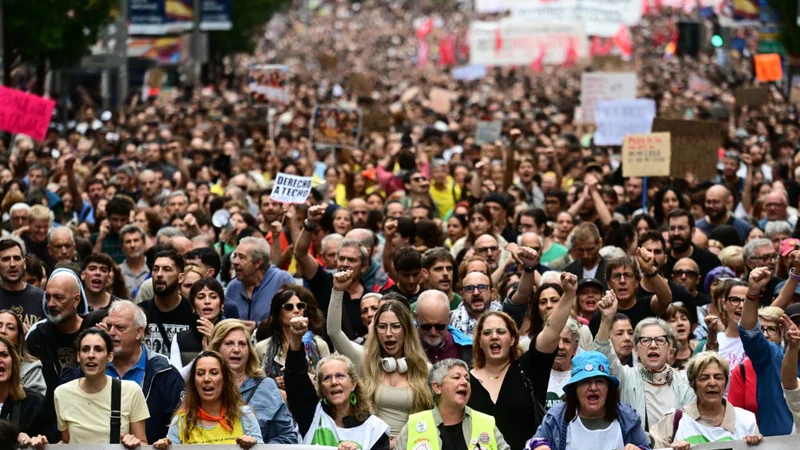
Image: Pbs
Main Takeaway
Spain’s eviction of 87-year-old Maricarmen Abascal fueled protests in more than 50 cities, pushed housing to the center of politics and preceded new emergency measures.
Jump to Key PointsSummary
The eviction that ignited Spain
Maricarmen Abascal, an 87-year-old wheelchair user, was forcibly removed from her Madrid apartment on September 23 after living there for more than 70 years. Images of her being carried out on a stretcher and taken to hospital turned a private housing dispute into a national symbol of Spain’s affordability crisis.
The eviction took place in Madrid’s Retiro neighborhood and drew immediate outrage from housing activists, renters and political opponents of Prime Minister Pedro Sánchez. Abascal’s lawyer later said she would be able to return home, a development also reported by the BBC and NPR. Abascal has urged Spaniards to fight to avoid suffering the same fate.
Protests spread across the country
Tens of thousands of people marched across Spain after lawmakers rejected emergency housing legislation. About 50 demonstrations took place in cities including Madrid, Valencia and Barcelona, with protesters demanding stronger tenant protections, affordable rents and limits on evictions.
Madrid saw large crowds call for a general strike and rattle keys during marches through the capital. Organizers estimated that as many as 500,000 people attended in Madrid, though that figure was not independently established in the available coverage. Police used tear gas and rubber bullets in Valencia, where clashes broke out, while violence was also reported in Barcelona.
Housing costs drive the anger
Spain’s housing crisis has deepened as rents rise faster than household incomes. Average rent has nearly doubled over the past decade, and more than one-quarter of renters spend at least 40% of their income on housing, according to figures cited by Fortune.
The pressure is especially visible in large cities, where limited supply, tourism and short-term rentals have intensified competition for homes. Abascal’s case gave the crisis a human face, but the protests reflected broader frustration among renters who say existing safeguards leave them exposed when landlords seek possession or housing costs become unaffordable.
The rejected bills were designed to support renters and prevent evictions. Their defeat sharpened criticism of a government that presents itself as progressive but has struggled to deliver relief through a divided parliament.
Political pressure forces a response
The government approved 21 urgent housing measures after the protests and overnight violence. The package includes a tax on seasonal rentals and a €10 billion fund intended to support first-home loans, according to Fortune. The measures came as housing protests placed fresh pressure on Sánchez and contributed to his decision to call early elections, according to ABC News.
The response marks a shift from parliamentary deadlock to executive action, but it also raises questions about implementation. Renters’ groups want immediate protection from displacement, while policies aimed at home purchases address a different group: households able to qualify for financing. Taxing seasonal rentals may help redirect homes toward long-term residents, but its effect will depend on enforcement and the availability of replacement housing.
Why the case resonates beyond Madrid
Abascal’s eviction has become a test of whether Spain treats housing as a basic social need or primarily as a property-market issue. Her age, disability and decades in the same apartment made the removal especially powerful, while the images gave protesters a shared emblem across regions and political movements.
The demonstrations also exposed a widening gap between public demand and parliamentary capacity. A protester in Madrid told Deutsche Welle that political parties were forcing citizens to adapt to them rather than responding to public needs. Tenant organizers in Valencia described widespread anger as clashes with police underscored the stakes.
What happens after Abascal returns
Abascal’s return would resolve her immediate housing crisis, but it won't settle the national dispute over rents, evictions or access to ownership. The government’s 21 measures now face scrutiny from renters, landlords, local authorities and opposition parties, while early elections raise the political cost of any failure.
The next test is whether the new policies reduce displacement and expand the supply of affordable long-term homes. Protests have already linked a highly personal eviction to a structural crisis affecting millions of renters. Spain’s leaders now have to convert that anger into protections that survive parliamentary conflict and reach households before another eviction becomes a national flashpoint.
Key Points
Maricarmen Abascal’s eviction from her Madrid home sparked nationwide protests over Spain’s housing crisis.
Spain approved 21 housing measures after parliament rejected emergency bills supporting renters and preventing evictions.
More than 50 demonstrations demanded affordable housing, stronger tenant protections and action on soaring rents.
Average Spanish rents nearly doubled in a decade, while over one-quarter of renters spend 40% on housing.
Abascal’s planned return home eased her immediate crisis but left Spain’s broader affordability problems unresolved.
Questions Answered
Maricarmen Abascal’s eviction became a symbol of Spain’s housing crisis because she was 87, disabled and had lived in her Madrid apartment for more than 70 years. Images of her removal on a stretcher fueled anger over rents, evictions and weak tenant protections.
Tens of thousands protested across Spain, with demonstrations in about 50 cities. Organizers estimated that up to 500,000 people marched in Madrid, while protests also took place in Valencia and Barcelona.
Maricarmen Abascal can return to her Madrid home, according to her lawyer. She was hospitalized after the September 23 eviction, and her case remains a national symbol of tenant insecurity.
Spain approved 21 urgent housing measures, including a tax on seasonal rentals and a €10 billion fund for first-home loans. The government introduced the package after nationwide protests and violence in Barcelona.
Spain’s housing costs have risen sharply because rents have nearly doubled in a decade while affordable supply remains limited in major cities. Tourism and seasonal rentals have added pressure, and more than one-quarter of renters spend at least 40% of their income on housing.
Source Reliability
89% of sources are highly trusted · Avg reliability: 89
Go deeper with Organic Intel
Simple AI systems for your life, work, and business. Each one includes copyable prompts, guides, and downloadable resources.
Explore Systems