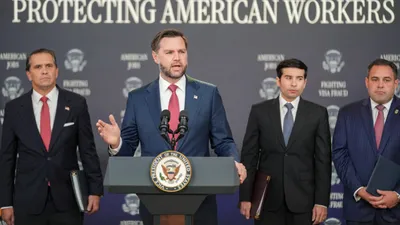
Vance Questions Pentagon Livestream Plan for Fort Hood Shooter’s Planned Execution
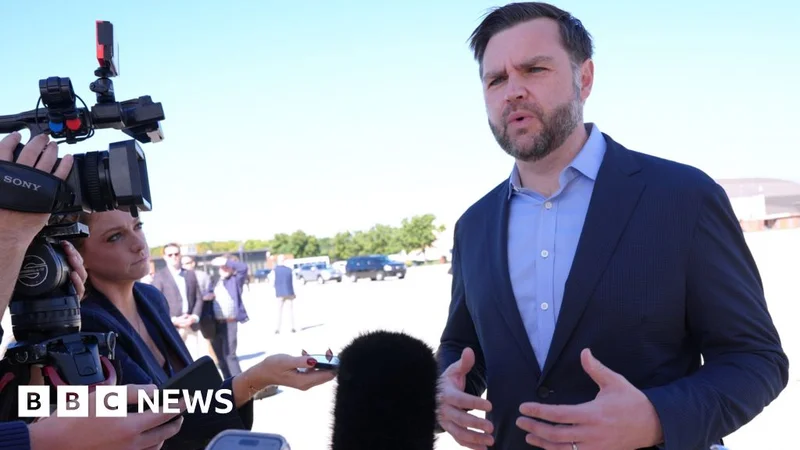
Image: Bbc
Main Takeaway
Vice President JD Vance questioned whether the Pentagon will livestream Nidal Malik Hasan’s December execution, while saying he would not watch.
Jump to Key PointsSummary
Vance questions the Pentagon plan
Vice President JD Vance has cast doubt on whether the Pentagon will livestream the planned execution of former Army Major Nidal Malik Hasan, convicted in the 2009 Fort Hood shooting. Asked about the December plan, Vance said, “I don’t know that that’s actually going to happen,” according to Reuters and the BBC. He added that he wouldn’t watch the broadcast if it proceeds.
Vance still defended the underlying punishment and emphasized Hasan’s responsibility for the attack, saying public debate over the execution method shouldn’t eclipse the deaths of innocent people. The remarks introduce uncertainty into a plan Defense Secretary Pete Hegseth announced publicly, even as the execution itself remains scheduled for December.
Why Hasan’s case matters
Nidal Malik Hasan was convicted of killing 13 people and wounding more than 30 others during the 2009 Fort Hood shooting in Texas. His planned execution by firing squad would be the first U.S. military execution in more than 60 years, giving the case significance beyond the livestream dispute.
The military has not carried out an execution since 1961, when Army soldier John Bennett was executed for rape and attempted murder. Hasan’s case therefore combines an exceptionally rare military punishment with a method that has drawn renewed public attention. The proposed livestream adds a separate question about whether the government should transmit an execution directly to the public.
The Pentagon’s controversial announcement
Defense Secretary Pete Hegseth announced that the execution would be carried out by firing squad and livestreamed. The proposal immediately drew criticism from Catholic leaders and death-penalty opponents, who argued that broadcasting the killing would turn state punishment into a public spectacle.
The U.S. Conference of Catholic Bishops’ president, Archbishop Paul Coakley, described the plan as a “barbaric promotion of a culture of death,” according to Fortune. Vance’s comments don’t resolve whether the Defense Department has abandoned, revised or merely reconsidered the broadcast. They do show that the proposal has generated disagreement inside the administration’s public messaging.
Pope Leo condemns capital punishment
Pope Leo XIV used the World Day Against the Death Penalty to declare capital punishment “inadmissible,” repeating the Catholic Church’s revised teaching that the death penalty violates human dignity. His statement came as the United States, his native country, faced criticism over the planned livestream.
The pope’s post on X said the common good and the demands of justice can be protected without capital punishment. Several accounts noted that he didn’t explicitly identify Hasan’s case, but the timing placed his remarks alongside the Pentagon announcement and the wider debate over state executions. His intervention also followed Tennessee’s failed execution of Christa Pike, which intensified scrutiny of lethal punishment and execution procedures.
A second execution controversy
The debate has unfolded days after Tennessee’s attempted execution of Christa Pike failed. Pike survived 2 doses of pentobarbital during the Sept. 30 lethal-injection procedure and was hospitalized before returning to prison, according to Fortune. Her survival raised fresh questions about execution protocols, medical oversight and the state’s ability to carry out lethal injections.
Pike’s case and Hasan’s planned firing squad represent different procedures, but they have been discussed together because both place the reliability and presentation of capital punishment under scrutiny. One involves a failed lethal injection; the other involves an unusually public military execution plan. Pope Leo’s statement connected the broader controversy to the moral question of whether executions can be justified at all.
What happens next
The immediate issue is whether the Pentagon will proceed with a livestream in December. Vance’s uncertainty leaves the broadcast plan unsettled, while the announced execution method and date remain the central points of the Defense Department’s public position.
Any change would carry political and institutional consequences. Proceeding could make Hasan’s execution the first U.S. military execution in decades and the first widely distributed military execution of the modern digital era. Cancelling or restricting the livestream would answer the spectacle criticism without changing the underlying punishment. The administration now faces pressure from death-penalty opponents, Catholic leaders and observers focused on military justice, while victims’ families and supporters of Hasan’s conviction remain central to the public debate.
Key Points
JD Vance questioned whether the Pentagon will livestream Nidal Malik Hasan’s planned December execution.
Nidal Malik Hasan’s firing squad execution would be the first U.S. military execution in more than 60 years.
Pete Hegseth’s livestream proposal triggered criticism from Catholic leaders and death-penalty opponents.
Pope Leo XIV called capital punishment inadmissible during renewed U.S. execution controversy.
Christa Pike’s failed lethal injection intensified scrutiny of American execution procedures.
Questions Answered
The Pentagon has announced a plan to livestream Nidal Malik Hasan’s execution, but JD Vance questioned whether the broadcast will actually happen. The Defense Department has not been described as formally cancelling the proposal.
Nidal Malik Hasan was convicted for the 2009 Fort Hood shooting, and the military has announced a firing squad execution. The method is drawing attention because it would accompany the first U.S. military execution in more than 60 years.
JD Vance said he did not know whether the livestream would happen and said he would not watch it. He also stressed Hasan’s responsibility for killing innocent people.
Pope Leo XIV called capital punishment inadmissible and said justice can be achieved without executions. His statement came as the United States faced criticism over the proposed livestream of Hasan’s execution.
Christa Pike’s failed lethal injection renewed scrutiny of execution procedures while Hasan’s planned firing squad raised questions about method and public broadcasting. Pike survived 2 doses of pentobarbital before returning to prison.
Source Reliability
50% of sources are highly trusted · Avg reliability: 80
Go deeper with Organic Intel
Simple AI systems for your life, work, and business. Each one includes copyable prompts, guides, and downloadable resources.
Explore Systems