Elroy Air Nears $1 Billion SPAC Deal to Take Autonomous Cargo Drone Public
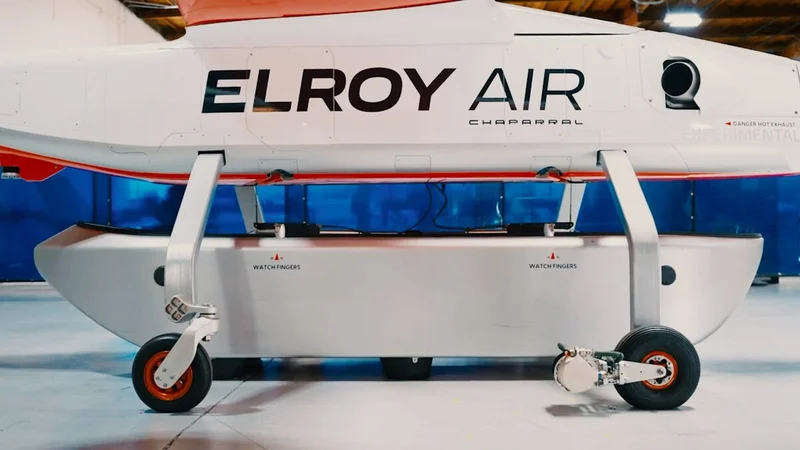
Image: Bloomberg AI
Main Takeaway
Elroy Air agrees to $1 billion SPAC merger with Columbus Circle Capital to fund Chaparral cargo drone production.
Jump to Key PointsSummary
Why Elroy Air is betting on going public now
Elroy Air has struck a definitive agreement to merge with Columbus Circle Capital Corp II, a SPAC sponsored by Inflection Point Asset Management and Cohen & Company, in a transaction that values the autonomous cargo drone developer at approximately $800 million pre-money. The deal, announced June 26, 2026, includes over $165 million in committed PIPE capital intended to fund commercial-scale production of the company's Chaparral aircraft. According to the company's press release, the transaction is expected to close in the fourth quarter of 2026.
The SPAC route marks a notable revival for blank-check vehicles, which had been declared moribund after a frenzy of deals during 2020-2021 soured on poor post-merger performance. Elroy Air's decision to pursue this path rather than traditional venture rounds or an IPO reflects both the capital intensity of aerospace manufacturing and the narrowing window for autonomous aviation startups to achieve scale before larger competitors dominate. TheNextWeb notes that the SPAC structure keeps finding new applications despite repeated obituaries, with cargo drones now emerging as a fresh niche.
What the Chaparral drone actually does
The Chaparral is an autonomous vertical takeoff and landing (VTOL) aircraft designed to carry 500+ pounds of cargo over long distances without requiring traditional airport infrastructure. Its first flight occurred on November 12, 2023, according to Wikipedia's entry on the aircraft. The system targets what logistics operators call the "middle mile," the segment between distribution centers and final delivery points that currently relies heavily on trucking.
Elroy Air's pitch centers on replacing delivery trucks for routes where ground transportation is slow, expensive, or impractical. The aircraft uses a hybrid-electric propulsion system and can operate from unprepared surfaces, a critical feature for reaching remote or disaster-affected areas. AutonomyGlobal reported in May 2026 that the company emphasizes "no infrastructure required" as a core selling point, distinguishing it from competitors building aircraft for established airports or vertiports. CEO Andrew Clare, who holds a Ph.D. and co-founded the company with David Merrill and Clint Cope, has positioned the Chaparral as a dual-use platform serving both commercial logistics and defense applications.
How Washington is clearing the runway
Regulatory tailwinds have strengthened Elroy Air's position ahead of its public debut. In March 2026, the company was selected for the U.S. Department of Transportation's eVTOL Integration Pilot Program (eIPP), established under President Trump's "Unleashing American Drone Dominance" Executive Order. Elroy Air was the only original equipment manufacturer chosen for the program, according to its own announcement, giving it privileged access to federal airspace integration testing and direct regulatory feedback channels.
The eIPP selection carries both practical and symbolic weight. Practically, it accelerates certification timelines by allowing coordinated testing with FAA and local authorities. Symbolically, it signals federal prioritization of autonomous cargo over passenger air taxis, a sector that has attracted more media attention but faces steeper certification hurdles and public acceptance challenges. The White House program explicitly aims to establish "American drone dominance," language that aligns with Elroy Air's defense partnerships and suggests potential future military contracts that could provide revenue stability while commercial operations scale.
Who is backing this bet
Elroy Air's investor base mixes strategic aerospace players with financial sponsors. Its $40 million Series A in 2021, which brought total funding to $48 million, included Lockheed Martin Ventures, the venture arm of one of America's largest defense contractors. Marlinspike Capital, Prosperity7 Ventures (Saudi Aramco's venture fund), and existing backers including Catapult Ventures and Shield Capital Partners also participated, as reported by MIT Media Lab and TechCrunch at the time.
The Lockheed Martin connection is particularly significant. The defense giant's venture investment suggests potential future integration into military logistics networks, where autonomous resupply could reduce risk to personnel in contested environments. Prosperity7's involvement indicates Middle Eastern interest in diversifying logistics infrastructure, potentially opening export markets. The transition from this venture-backed cap table to public markets through Inflection Point's SPAC represents a bet that these relationships will convert into purchase orders and revenue faster than traditional certification timelines would allow.
What could go wrong with the SPAC route
SPAC mergers carry distinctive risks that Elroy Air cannot escape. The vehicle's sponsors, Inflection Point Asset Management and Cohen & Company, bring financial structuring expertise but no aerospace operational experience. Post-merger SPACs have historically underperformed the broader market, with many trading below their $10 redemption price within a year of deal completion. Elroy Air's $800 million pre-money valuation assumes rapid execution of a manufacturing plan that aerospace incumbents have repeatedly missed.
The company also converse must also navigate certification timelines that have delayed or destroyed competitors. While the eIPP program helps, FAA type certification for autonomous aircraft remains uncharted territory with no established precedent. Revenue visibility is limited: Elroy Air has announced partnerships and pilot programs but has not disclosed firm order backlog or unit economics. The $165 million PIPE commitment provides runway, but commercial aircraft programs typically require billions in capital before achieving positive cash flow. Investors buying into the public entity will need patience that SPAC structures, with their redemption mechanisms and sponsor incentives, are poorly designed to provide.
What this signals for autonomous aviation
Elroy Air's SPAC attempt represents a test of whether autonomous cargo can succeed where passenger air taxis have faltered. Competitors like Joby Aviation and Archer have struggled to meet production timelines and achieve profitability, while cargo-focused rivals including Zipline and Wing have scaled more modestly with smaller aircraft. Elroy Air's 500-pound payload capacity positions it between these categories, targeting a market segment with clearer unit economics than passenger transport but heavier regulatory requirements than small-package delivery.
The deal's reception will indicate whether public markets are ready to fund pre-revenue autonomous aviation again after the 2021-2022 correction. A successful close would likely trigger a wave of similar SPAC attempts from drone and eVTOL startups that have exhausted private capital. Failure would reinforce the sector's reliance on defense contracts and deep-pocketed strategic investors, extending timelines for commercial autonomous flight by several years. Either outcome, the attempted public listing forces the question of when, not whether, autonomous aircraft will operate at commercial scale.
Key Points
Elroy Air agrees to $800 million pre-money SPAC merger with Columbus Circle Capital Corp II.
The Chaparral drone carries 500+ pounds with vertical takeoff and no airport infrastructure needed.
Over $165 million in committed PIPE capital will fund commercial-scale production.
Elroy Air was the only OEM selected for USDOT's eVTOL Integration Pilot Program in March 2026.
Lockheed Martin Ventures backed the company's $40 million Series A in 2021.
Questions Answered
Elroy Air's merger with Columbus Circle Capital Corp II values the company at approximately $800 million pre-money, with over $165 million in committed PIPE financing. The transaction, announced June 26, 2026, is expected to close in the fourth quarter of 2026.
The Chaparral autonomous VTOL drone is designed to carry more than 500 pounds of cargo. It uses a hybrid-electric propulsion system and can operate from unprepared surfaces without traditional airport infrastructure.
Elroy Air was selected for the U.S. Department of Transportation's eVTOL Integration Pilot Program in March 2026. The company was the only original equipment manufacturer chosen for the program, which was established under a White House Executive Order on American drone dominance.
Elroy Air raised $48 million total, including a $40 million Series A in 2021 led by Marlinspike Capital and Prosperity7 Ventures with Lockheed Martin Ventures. Existing investors included Catapult Ventures, DiamondStream Partners, and Shield Capital Partners.
The Elroy Air Chaparral completed its first flight on November 12, 2023. The autonomous cargo aircraft had been in development since the company's founding by MIT Media Lab alumni David Merrill and Clint Cope along with CEO Andrew Clare.
Elroy Air focuses on heavy-cargo middle-mile logistics rather than passenger transport or small-package delivery. Its 500-pound payload capacity targets a gap between small drones and crewed cargo aircraft, with dual-use applications in commercial logistics and defense resupply missions.
Source Reliability
33% of sources are highly trusted · Avg reliability: 67
Go deeper with Organic Intel
Simple AI systems for your life, work, and business. Each one includes copyable prompts, guides, and downloadable resources.
Explore Systems