Orbán Falls as Magyar Wins Hungary Super-Majority
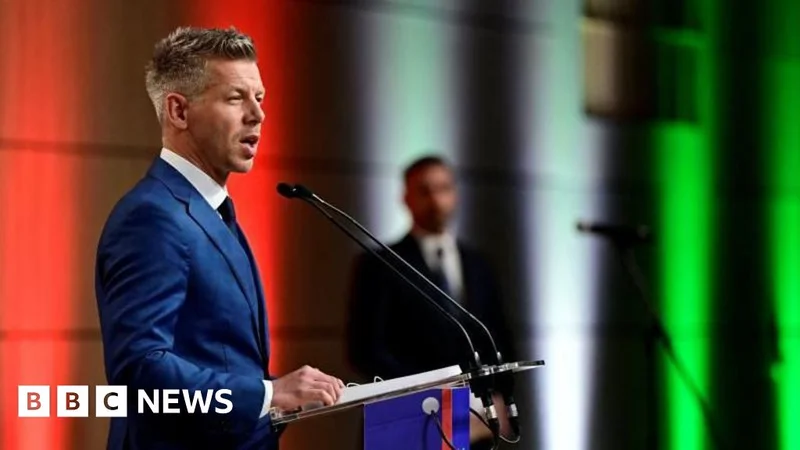
Image: Bbc
Main Takeaway
Péter Magyar's Tisza party seizes 138 of 199 seats, ending Viktor Orbán's 16-year rule and promising swift EU re-alignment.
Summary
Orbán’s 16-year rule ends in electoral earthquake
Péter Magyar’s centre-right Tisza party has seized 138 of 199 parliamentary seats—an outright two-thirds super-majority—toppling Viktor Orbán after 16 uninterrupted years in power. With 97.35 % of votes counted, Tisza took 53.6 % of ballots while Orbán’s Fidesz slumped to 37.8 % and just 55 seats, its worst result since 2006. Celebrations erupted in downtown Budapest as Magyar told supporters beside the Danube: “Together we overthrew the Hungarian regime.”
Who is the man who turned on his mentor
A former Fidesz insider and justice-ministry lawyer, Magyar, 45, broke with Orbán in 2024 over corruption scandals and quickly stitched together a pro-EU, anti-graft movement that sanded down old ideological edges. His campaign focused on everyday grievances—health-care queues, inflation, and cronyism—while promising to “re-Hungarianise” EU relations without surrendering national identity. European leaders swarmed to congratulate him, sensing a partner after years of vetoes and rule-of-law battles.
What this means for Brussels and NATO
Magyar says his first act will be to unlock roughly €20 billion in frozen EU funds tied to judicial reforms and to back joint EU defence initiatives—moves Orbán blocked. Diplomats expect Hungary to pivot from Kremlin-friendly obstructionism to reliable NATO ally, a shift Washington and Kyiv greeted with thinly-veiled relief. Moscow signalled it will pursue “pragmatic relations,” acknowledging the loss of its closest EU friend.
Timeline to power transfer
Magyar has asked President Katalin Novák to convene parliament “as quickly as possible” so he can be sworn in by 5 May. The super-majority gives Tisza carte blanche to rewrite the constitution, replace state-media boards, and fast-track anti-corruption laws. Orbán conceded defeat within hours, ending speculation he might challenge the count or cling to emergency powers.
The symbolic end of illiberal democracy
Orbán never settled on a label for his hybrid system—“illiberal democracy,” “national conservatism,” or simply “the Hungarian model.” Whatever the branding, voters appear exhausted by constant culture-war tension and economic drift. As one Budapest resident told DW, “We just want normal European problems, not permanent siege mentality.” The defeat reverberates through Europe’s populist right, stripping its most successful practitioner of institutional power.
What happens next for Hungary and the region
Expect an emergency EU summit within weeks to unfreeze funds and invite Magyar to join joint procurement schemes he once derided as “Brussels imperialism.” Domestically, Tisza will launch anti-corruption probes and media pluralisation bills that could splinter Fidesz’s business networks. Regionally, Poland’s Tusk government gains a liberal partner against Slovak and Czech populists, tilting Central Europe’s balance westward. Orbán’s departure also removes the loudest voice against further EU enlargement—good news for Ukraine and Moldova.
Key Points
Magyar's Tisza won 53.6 % of votes and 138 of 199 seats, giving constitutional amendment power.
Orbán conceded within hours, ending Europe’s longest-serving populist tenure.
Incoming government promises immediate EU re-engagement and release of €20 billion in blocked funds.
Shift removes Hungary’s veto against joint EU defence and Ukraine support packages.
Magyar, once Orbán’s insider, framed victory as ‘complete regime change,’ not mere rotation.
FAQs
He aims for 5 May if parliament convenes quickly after official results are certified.
He conceded defeat on election night; constitutional avenues for delay are limited given Tisza’s super-majority.
With two-thirds of seats, they can amend the constitution, replace media-council appointees, and fast-track anti-corruption statutes.
Expect Budapest to drop obstruction, making unanimous EU sanctions renewal smoother and quicker.
No—Magyar campaigned on stronger NATO and EU ties, reversing Orbán’s eurosceptic drift.
European liberals hope so; Orbán’s loss punctures the aura of inevitability around entrenched populist parties.
Source Reliability
67% of sources are highly trusted · Avg reliability: 83
Go deeper with Organic Intel
Our AI for Your Life systems give you practical, step-by-step guides based on stories like this.
Explore ai for your life systems