$90B Rural Data Center Gold Rush Sparks Water Wars and Power Struggles
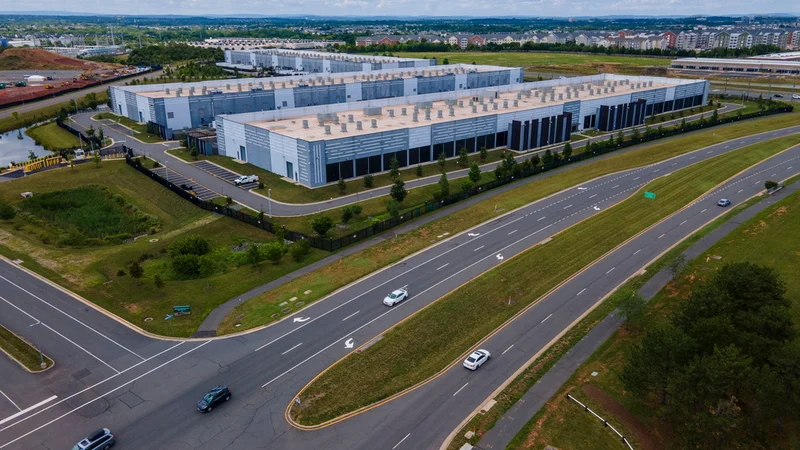
Image: News.harvard
Main Takeaway
Big Tech's rural land grab for AI data centers is reshaping small towns with promises of jobs but delivering power grid strain, water shortages, and.
Summary
Why rural America just became Big Tech's favorite real estate
The AI boom has triggered a land rush that looks nothing like Silicon Valley's usual playbook. Instead of sprawling campuses in Mountain View, companies are buying up cornfields and cow pastures across rural America. Bloomberg reports that $90 billion worth of data centers are now planned or under construction, with most headed to small towns that have never seen this kind of investment.
The math is brutal but simple. A single hyperscale facility can consume as much electricity as 80,000 homes and guzzle millions of gallons of water daily for cooling. That's why companies are bypassing cities where utilities are already maxed out and heading straight to places like Richland Parish, Louisiana and Saline, Michigan where land is cheap and regulators are friendly.
Local officials are being courted with promises that sound too good to refuse. Meta's Louisiana project alone claims it'll bring 500 construction jobs and $20 million in annual tax revenue. But as Brookings researchers note, these numbers rarely account for the hidden costs that show up later: strained emergency services, higher electricity rates for everyone, and roads crumbling under 18-wheeler traffic.
The environmental math nobody wants to do
Data centers aren't just big buildings. They're essentially power plants that don't generate electricity—they just consume it. The World Resources Institute found that new facilities in Virginia alone could require 6.5 billion gallons of water annually by 2030. That's enough to supply a city of 200,000 people.
The water problem is particularly acute in drought-prone areas where companies are building anyway. Arizona approved three massive facilities last year despite warnings from water managers that the state's aquifers can't sustain them. The Lincoln Institute reports that each facility can evaporate 1-3 million gallons daily through cooling towers—water that literally disappears into the air.
Then there's the heat. These facilities run so hot they require industrial cooling systems that make the surrounding area measurably warmer. In northern Virginia, where over 300 data centers already operate, local temperatures have risen 2-3 degrees in some neighborhoods according to Harvard researchers. The Sierra Club warns this creates heat islands in previously rural areas, affecting everything from crop yields to human health.
When promised jobs don't match delivered reality
The economic pitch sounds compelling: high-tech jobs in areas that lost manufacturing decades ago. But TechPolicy's analysis of actual hiring shows a different story. Most permanent positions go to specialized technicians who commute from cities, not locals. The 500 construction jobs at Meta's Louisiana facility? They're temporary and mostly filled by out-of-state crews with data center experience.
Good Jobs First found that typical community benefit agreements deliver about 15 cents in public benefit for every dollar in tax breaks granted. The real winners are often the utility companies and land speculators who flip property to data center developers at massive markups. One farmer in Virginia sold his 200-acre dairy operation for $1.2 million—six times its agricultural value—then watched his neighbors' property taxes jump 40% to pay for infrastructure upgrades.
The Harvard Gazette reports that local resistance is growing precisely because the economic benefits aren't trickling down. In Saline, Michigan, residents organized against a $7 billion Stargate project after learning it would create just 50 permanent jobs while consuming 15% of the county's water supply.
How communities are fighting back (and winning)
The backlash isn't just happening—it's working. NPR documented how Archbald, Pennsylvania residents forced developers to scrap a $3 billion facility after organizing teachers, nurses, and retirees into a coalition that packed town halls and pressured local officials.
Their playbook is spreading. Sanders' call for a national moratorium gained traction after similar fights erupted in 15 states. Vermont passed the nation's strictest data center regulations, requiring full environmental impact assessments and community benefit agreements worth at least 20% of project costs. Even Texas, normally business-friendly, rejected three major proposals after local opposition campaigns.
The most effective resistance combines environmental concerns with kitchen-table economics. When residents learn their electric bills could jump 15-20% to subsidize power-hungry facilities, opposition becomes bipartisan. A PennEnvironment study found that communities with active resistance campaigns see project approval rates drop from 85% to 35%.
What smart towns are demanding before signing
Forward-thinking communities aren't saying no—they're saying prove it. The University of Michigan's research shows towns that negotiate hard get dramatically better deals. Loudoun County, Virginia extracted $500 million in road improvements and school funding by threatening to block expansion. Douglas County, Nevada required developers to fund a new fire station and guarantee 30% local hiring.
Key demands gaining traction include water use caps tied to drought conditions, requirements for renewable energy, and clawback provisions that reclaim tax breaks if promised jobs don't materialize. Some towns are insisting on "data center impact fees" that function like development impact fees, ensuring growth pays for itself.
The Brookings Institution recommends communities hire independent economic analysts before negotiations, not after. Their symposium found that towns with outside expertise secured 3-4 times more public benefits than those relying on company-provided studies.
The global pattern repeating everywhere
Spain's Aragón region shows this isn't just an American phenomenon. Bloomberg's investigation revealed identical patterns: tech giants promising economic transformation while locals deal with water shortages and power grid instability. The same companies making pitches in Michigan and Louisiana are using identical playbooks in Europe.
The difference is regulatory. EU rules require environmental assessments and community consultations that US developers can often bypass. Spanish farmers successfully blocked a €4 billion project by arguing it would deplete aquifers already stressed by climate change.
This global consistency suggests the conflicts aren't about specific communities being difficult—it's about an industry growth model that externalizes costs onto small towns. As one Virginia resident told Harvard researchers, "They want to use our water, our power, our land, but somehow we're the ones who are supposed to be grateful."
The coming reckoning for tech's growth model
The $90 billion buildout is accelerating, not slowing. Industry analysts predict another $200 billion in projects by 2028. But the resistance is spreading faster than the concrete can cure.
What started as isolated NIMBY fights has evolved into a coordinated movement. National groups like Good Jobs First and local coalitions are sharing strategies across state lines. Vermont's new regulations are being copied by Colorado and Oregon. Even industry-friendly states are realizing that unfettered development threatens their own political futures.
The question isn't whether data centers will get built—they will. It's whether they'll be built under terms that benefit anyone besides the companies building them. The communities that figure this out first won't just survive the AI boom. They'll actually profit from it.
What happens next: The three scenarios
Three paths are emerging. In scenario one, communities continue current patterns—accepting projects with minimal concessions until local resources are exhausted. This ends with ghost facilities abandoned when water runs out or power becomes prohibitively expensive.
Scenario two involves coordinated federal regulation similar to Vermont's approach. The EPA could require environmental assessments for large data centers, while tax reforms might eliminate the worst subsidy races to the bottom.
Scenario three is already happening in places like Loudoun County: communities using their leverage to become genuine partners in development. These towns are extracting infrastructure investments, job guarantees, and environmental protections that make the projects net positives.
The $90 billion isn't just investment—it's leverage. Communities that recognize this distinction will determine whether the AI boom creates a new rust belt or a new middle class. The clock is ticking. Every week, another small town decides which path to take.
Key Points
$90 billion in data center projects are targeting rural America, consuming resources equivalent to cities of 80,000+ people per facility
Community resistance has grown from isolated NIMBY fights to coordinated movements dropping project approval rates from 85% to 35%
Water consumption is the hidden crisis: single facilities can evaporate 1-3 million gallons daily, depleting drought-stricken aquifers
Economic promises rarely materialize: typical projects create 50 permanent jobs after receiving hundreds of millions in tax breaks
Three scenarios emerging: resource exhaustion, federal regulation, or communities leveraging development for genuine public benefit
FAQs
University of Michigan research shows hyperscale facilities evaporate 1-3 million gallons daily through cooling towers—equivalent to the water use of 10,000-30,000 residents. Virginia's new data centers alone could consume 6.5 billion gallons annually by 2030.
Analysis by Good Jobs First reveals most permanent positions go to specialized technicians who commute from cities. Meta's Louisiana facility promised 500 jobs but delivered 50 permanent positions, mostly filled by out-of-state workers.
Currently minimal. Vermont passed the strictest requirements demanding environmental assessments and 20% community benefit agreements. Most states still offer tax breaks with minimal oversight, though resistance is driving regulatory reforms.
Spain's Aragón region shows identical patterns: companies promising economic transformation while creating water shortages and grid instability. EU regulations require more environmental review, leading to successful farmer opposition against €4 billion projects.
Industry analysts predict the current $90 billion will complete by 2028, with another $200 billion in projects already planned. However, growing resistance is slowing approvals, with some communities seeing 2-3 year delays in project timelines.
Source Reliability
67% of sources are highly trusted · Avg reliability: 74
 Paenvironmentdaily.blogspot
Go deeper with Organic Intel
Our AI for Your Life systems give you practical, step-by-step guides based on stories like this.
Explore ai for your life systems