Global Social Media Bans for Kids Face Legal, Technical and Freedom Hurdles
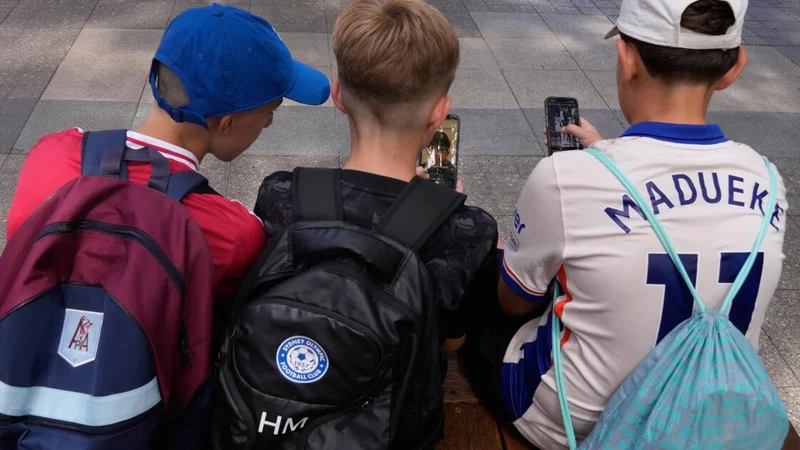
Image: Latimes
Main Takeaway
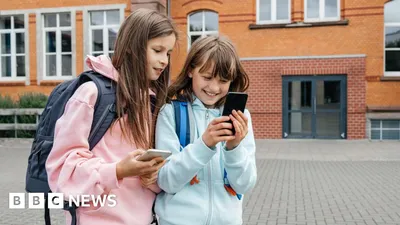
Australia’s under-16 ban sparks copycat laws worldwide, but enforcement gaps, court challenges and patchwork rules expose the messy reality of protecting.
Summary
Why Australia fired the starting gun
Australia became the first nation to outlaw social-media use for anyone under 16, with Prime Minister Anthony Albanese urging kids to “start a new sport, learn a new instrument, or read that book that has been sitting there on your shelf.” The law took effect in December 2025 and triggered an immediate lawsuit from Reddit, whose lawyers argue the ban violates free-speech protections and is technically impossible to enforce. Canberra’s e-safety minister, Julie Inman Grant, told the LA Times she always viewed the measure as “the first domino,” a signal that the global conversation had shifted from parental controls to outright prohibition.
The copycat wave across Europe and Asia
Denmark, Norway, France, Germany, Greece, Portugal, Spain, Slovenia, Austria and the United Kingdom have all tabled or passed similar statutes in the six months since Australia moved. Malaysia is drafting its own version for kids under 15. The bills vary: Denmark wants a blanket ban until 15, Norway is raising its existing age floor from 13 to 15, and France is floating tiered access that would throttle algorithmic feeds for 15- to 17-year-olds. The wide range of cut-offs creates what Bloomberg calls a “patchwork fashion” that leaves tech firms scrambling to build separate age-verification flows for each market.
Enforcement reality check
Every platform already claims a minimum age of 13 under COPPA and GDPR-K, yet children routinely bypass the gate by lying about birth years. Australia’s law demands that companies use “reasonable steps” to verify age, but neither regulators nor industry agree on what that means. Options floated include government-issued digital IDs, third-party age-estimation APIs that scan faces, or credit-card checks. Privacy advocates warn that any of these could create new honeypots of sensitive data, while civil-liberties groups predict a flood of court cases arguing compelled identity verification violates anonymity rights.
Legal pushback gathers steam
Reddit filed the opening salvo in Australia’s Federal Court on December 11, arguing the ban is “over-broad” and “technologically unworkable.” Industry lobbyists echo the claim, noting that VPNs and account sharing make geofencing trivial to defeat. European digital-rights NGOs are preparing parallel suits in Strasbourg, contending that age-based speech restrictions breach the EU’s Charter of Fundamental Rights. Meanwhile, U.S. platforms are quietly funding local advocacy groups to challenge state-level clones of the Australian rule, hoping to stop the spread before it reaches American teenagers.
California starts eyeing its own ban
Momentum is finally hitting Big Tech’s home turf. California lawmakers introduced the “Protecting Kids Online Act” in March 2026, setting 15 as the minimum age for Facebook, Instagram, TikTok and Snapchat. The bill’s author, Assemblymember Buffy Wicks, cites the same mental-health evidence that swayed Canberra: rising teen depression, body-image issues and cyber-bullying linked to algorithmic feeds. Meta has already dispatched lobbyists to Sacramento, arguing the law would “undermine parental choice” and “drive young users to unregulated corners of the internet.”
What happens next
Courts in Australia and Europe will rule on the constitutional questions before year-end, setting precedents for how far democracies can go in age-gating speech. If bans survive judicial review, expect a two-speed internet: platforms may ship “kids offline” versions in restrictive markets while keeping full feeds everywhere else. For parents, the practical effect could be more paperwork and biometric scans, not less screen time. For developers, the patchwork means extra compliance layers, region-specific builds and a new market for privacy-preserving age-verification startups.
Key Points
Australia’s December 2025 under-16 social-media ban is the first of its kind worldwide and has inspired copycat legislation across Europe and Asia.
Enforcement hinges on age-verification tech that either invades privacy or is trivial to circumvent, leaving regulators without proven tools.
Reddit has filed a federal lawsuit in Australia, and European civil-rights groups are preparing constitutional challenges that could halt the bans.
California introduced its own under-15 ban in March 2026, bringing the fight to Silicon Valley’s doorstep.
Companies now face a splintered compliance map with different age thresholds, verification methods and legal risks in each country.
FAQs
Australia bans anyone under 16. Denmark and Norway are finalizing under-15 bans, while France, Germany, Greece, Portugal, Spain, Slovenia, Austria, the U.K. and Malaysia have bills in motion with varying age cut-offs.
They require platforms to verify age through methods like government digital IDs, facial age estimation or credit-card checks. None are foolproof, and kids can still use VPNs or borrow accounts.
Reddit sued in Australia arguing free-speech violations. European NGOs plan constitutional cases claiming the bans breach the EU Charter. U.S. firms are funding local groups to fight state-level clones.
California’s legislature introduced an under-15 ban in March 2026. If it passes and survives court review, other states may follow, but First Amendment hurdles are higher than in Australia or Europe.
More paperwork, possible biometric age checks, and a two-tier internet where kids in restrictive regions see stripped-down or offline versions of popular apps while peers elsewhere retain full access.
Meta, TikTok and Snap are lobbying against the laws, funding advocacy groups, and quietly building region-specific compliance flows while warning the rules could push kids to even less regulated corners of the web.
Source Reliability
67% of sources are highly trusted · Avg reliability: 83
Go deeper with Organic Intel
Our AI for Your Life systems give you practical, step-by-step guides based on stories like this.
Explore ai for your life systems