China's CXMT Readies $4.3 Billion IPO, Armed With a Tencent Deal and a Shield Against US Sanctions
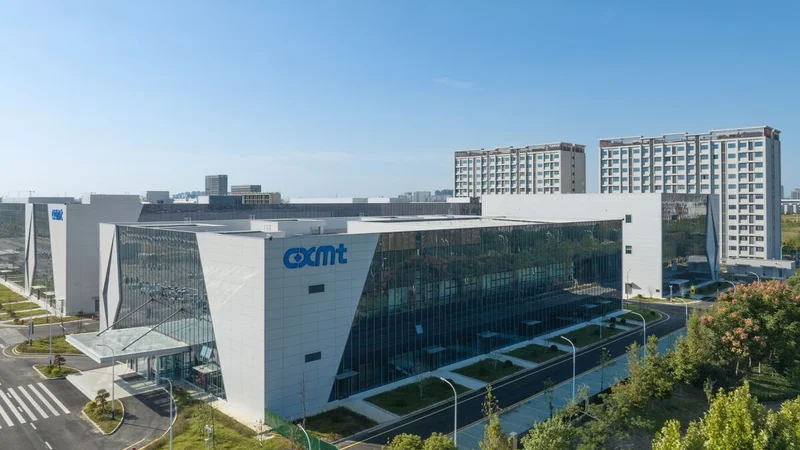
Image: Bloomberg AI
Main Takeaway
China's leading memory chipmaker CXMT is launching a $4.3 billion IPO after securing a $3 billion DRAM supply deal with Tencent, built on a domestic.
Jump to Key PointsSummary
The IPO that signals China's chip ambitions
ChangXin Memory Technologies (CXMT) will begin taking investor subscriptions for its Shanghai Star Market listing on July 15, according to Reuters, kicking off the final stretch of what Bloomberg calls the year's most anticipated public offering in China. The Hefei-based DRAM maker is targeting 29.5 billion yuan, roughly $4.3 billion, a figure that instantly ranks it among the largest semiconductor IPOs in the country's history.
CXMT enters the public markets at a uniquely favorable moment. A global memory chip shortage, fueled by surging demand for artificial intelligence computing, has triggered a massive upcycle in DRAM pricing. The South China Morning Post reports that CXMT booked windfall earnings in the first quarter, riding a wave that has lifted memory makers worldwide. The IPO isn't just a capital raise. It's a test of whether China's most advanced homegrown memory company can convert a cyclical boom into permanent industry leadership.
A $3 billion anchor deal with Tencent
Ahead of the listing, CXMT locked in a long-term supply agreement with Tencent Holdings valued at more than 20 billion yuan, or $2.94 billion, Reuters exclusively reported, citing three people with knowledge of the matter. The multi-year deal covers DRAM chip supply for Tencent's sprawling server infrastructure, with two sources indicating the contract spans up to three years.
The timing is deliberate. Securing a flagship customer of Tencent's scale provides a powerful signal to public market investors that CXMT's chips are production-grade and trusted by the country's largest tech platforms. The South China Morning Post separately confirmed that CXMT is already taking orders for its advanced DDR5 server memory from both Tencent and ByteDance after completing customer validation. That means CXMT isn't just promising future capability. It's shipping next-generation memory into China's AI data centers right now.
Engineered from the ground up to resist US sanctions
CXMT was founded by a US-trained entrepreneur, but its operational architecture is designed for a world where Washington can cut off access to Western technology at any moment. Bloomberg reports that the company relies on a largely domestic supplier network, deliberately insulating itself from the export controls that have crippled other Chinese chip ambitions.
That structural choice matters enormously in the current geopolitical landscape. The US Department of Commerce's Bureau of Industry and Security has imposed layered export controls aimed at impeding China's advanced semiconductor production. A House Select Committee investigation found that while those controls have achieved some success, they contain significant gaps. China spent $38 billion in 2024 alone on semiconductor manufacturing equipment from five leading toolmakers based in the US, Japan, and the Netherlands, according to the committee's findings. CXMT's domestic-first strategy is a direct answer to that vulnerability.
Racing to close the technology gap
CXMT is still chasing the industry leaders. Samsung, SK Hynix, and Micron dominate the global DRAM market with more advanced process nodes and higher yields. But the gap is narrowing faster than many Western observers expected. The company is now producing DDR5 memory, the latest mainstream standard, and has qualified those chips with hyperscale customers who would have defaulted to Korean or American suppliers just two years ago.
The broader context sharpens the stakes. CNBC reports that US export controls on Nvidia have simultaneously incentivized China to develop domestic alternatives and made that development harder by restricting access to the full semiconductor value chain, from design tools to manufacturing equipment. CXMT's progress on memory, a category less directly targeted than AI accelerators, represents a flanking maneuver in China's broader push for semiconductor self-sufficiency.
The AI boom as a double-edged catalyst
Artificial intelligence is the engine behind CXMT's current prosperity and its biggest risk factor. The memory upcycle is directly tied to insatiable AI computing demand. Every large language model training run and inference deployment consumes enormous quantities of high-bandwidth memory. That demand isn't theoretical for CXMT. Its DDR5 chips are already feeding Tencent and ByteDance servers that power some of the world's largest consumer AI applications.
But the cyclical nature of the memory industry is notorious. Booms are followed by busts with punishing regularity. The South China Morning Post frames the critical question for IPO investors bluntly: can CXMT convert its cyclical windfall into permanent industry leadership, or will it be exposed when the pricing cycle inevitably turns? The Tencent deal provides some revenue visibility, but it doesn't eliminate the commodity risk inherent in DRAM manufacturing.
What the IPO means for the global chip order
A successful CXMT listing would reshape the competitive landscape in ways that extend beyond memory chips. It would validate China's ability to build advanced semiconductor companies despite US export controls, creating a template for other domestic chip efforts. It would also inject billions of dollars of fresh capital into a company that has already proven it can qualify next-generation products with top-tier customers.
The timing intersects with another revealing development. Bloomberg reported on July 8 that China will allow select AI companies to buy limited quantities of Nvidia H200 chips, signaling a partial easing of restrictions on US technology. That apparent pragmatism, allowing some imports while simultaneously listing a domestic champion, suggests Beijing is pursuing a dual-track strategy rather than betting everything on self-sufficiency.
The investor bet and what comes next
Investors subscribing to CXMT shares starting July 15 are essentially betting on three things: that the AI-driven memory boom has more room to run, that US export controls won't find new ways to choke the company's domestic supply chain, and that CXMT can continue closing the technology gap with the Korean and American incumbents. The Tencent deal de-risks the revenue side. The domestic supplier network de-risks the geopolitical side. The technology trajectory remains the open variable.
CXMT's Wikipedia entry traces the company's roots to Innotron Memory and its base in Hefei, Anhui province, a city that has become a hub for China's semiconductor ambitions. The company has evolved from a speculative venture into a legitimate second-tier DRAM player. The IPO will determine whether the market believes it can become something more: a first-tier competitor that reshapes the global memory industry's balance of power.
Key Points
CXMT is launching a $4.3 billion Shanghai Star Market IPO with book-building starting July 15, making it China's largest semiconductor listing.
CXMT secured a $3 billion multi-year DRAM supply deal with Tencent, covering server memory for the tech giant's AI infrastructure.
The company is already shipping advanced DDR5 memory to Tencent and ByteDance after completing customer validation for next-generation server chips.
CXMT relies on a largely domestic supplier network, deliberately engineered to shield the company from US export controls on semiconductor technology.
The IPO rides a global memory chip upcycle driven by surging AI computing demand, but exposes CXMT to the memory industry's notorious boom-and-bust cycles.
Questions Answered
CXMT (ChangXin Memory Technologies) is China's leading domestic DRAM manufacturer, based in Hefei. Its $4.3 billion Shanghai Star Market IPO is significant because it is the most anticipated Chinese listing of the year and represents a major test of whether China can build globally competitive semiconductor companies despite US export controls.
The Tencent-CXMT supply agreement is worth more than 20 billion yuan ($2.94 billion) and spans multiple years, with sources indicating up to three years. It covers DRAM chip supply for Tencent's server infrastructure, providing CXMT with a flagship customer ahead of its IPO.
CXMT uses a largely domestic supplier network, deliberately designed to insulate the company from US export restrictions that limit China's access to advanced semiconductor technology and manufacturing equipment. This structural choice is a direct response to Washington's layered export controls on China's chip industry.
Yes, CXMT is producing DDR5 memory, the latest mainstream DRAM standard, and has completed customer validation with major Chinese tech companies. The company is already taking orders for DDR5 server memory from Tencent and ByteDance, according to the South China Morning Post.
CXMT faces the inherent cyclical risk of the memory industry, where pricing booms are typically followed by sharp downturns. It also faces the technology gap with global leaders Samsung, SK Hynix, and Micron, and the ongoing risk that US export controls could find new ways to disrupt its domestic supply chain.
CXMT represents a flanking maneuver in China's push for semiconductor self-sufficiency, focusing on memory chips rather than the AI accelerators more directly targeted by US sanctions. Its progress demonstrates China's ability to advance in categories where export controls are less comprehensive, while Beijing simultaneously allows limited imports of Nvidia H200 chips for select AI companies.
Source Reliability
67% of sources are highly trusted · Avg reliability: 81
Go deeper with Organic Intel
Simple AI systems for your life, work, and business. Each one includes copyable prompts, guides, and downloadable resources.
Explore Systems