Bill Gates Warns AI Has Entered a Turbulent Era Demanding Jobs, Safety and Equity Choices
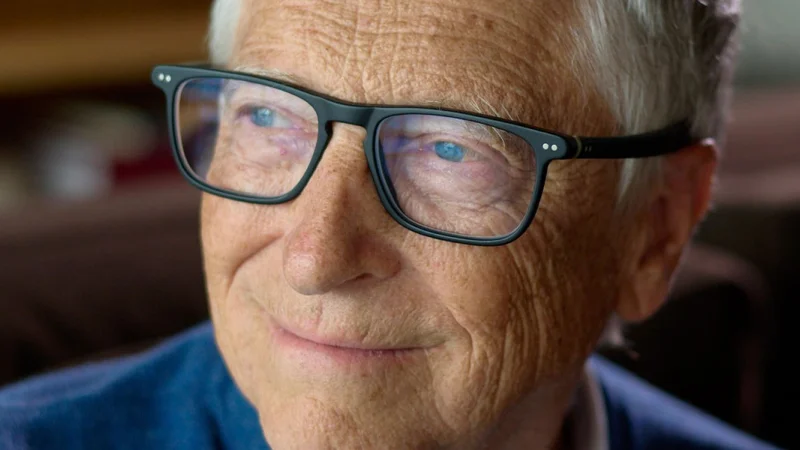
Image: MIT Technology Review AI
Main Takeaway
Bill Gates warns that AI is entering a period of upheaval, urging governments and companies to address job losses, criminal misuse, child development and inequality now.
Jump to Key PointsSummary
Gates sounds a sharper warning
Bill Gates says the rapid expansion of artificial intelligence has moved society into a turbulent period, with decisions made now shaping whether the technology broadens opportunity or deepens inequality. In a nearly 6,000-word essay, the Microsoft co-founder argues that AI could become a powerful equalizer while warning it could also become “the worst source of injustice.” The essay marks a more cautious public stance from a longtime technology optimist.
Gates links AI’s promise to areas including health care and agriculture, but says institutions are failing to prepare for the social and economic disruption arriving alongside those benefits. Bloomberg described the essay as a call for technology companies and regulators to take AI risks seriously, while MIT Technology Review framed Gates’ message around policies that have fallen behind the technology’s progress.
The risks span work and society
The most immediate concerns involve employment, criminal abuse and young people’s development. Gates warns that AI can empower criminals, intensify cyberattacks and remove entry-level work that helps young adults build careers. Fortune identified vanishing jobs for Generation Z and stunted child development among the central risks highlighted in his argument.
The employment concern is reinforced by public anxiety. A Pew Research study cited by Fortune found that 71% of US adults expected AI to produce fewer jobs over the next 2 decades in 2026, up from 64% in 2024; only 5% expected it to create more jobs. Gates also argues that existing tax rules favor replacing workers with machines because businesses pay taxes on labor while automation changes the cost structure.
A robot tax enters the debate
Gates proposes a robot tax as one way to reduce the financial incentive to replace human workers and raise money for adaptation. The concept would direct part of the gains from automation toward retraining, public services or other support for people whose jobs are disrupted.
He also backs the idea of “Human Reserved” jobs, roles protected from full automation because they provide social value or help people develop skills. TechCrunch reported that Gates views a slowdown in frontier AI development as attractive but difficult to sustain, placing greater emphasis on policies that manage deployment. The proposals shift the debate from abstract fears about automation toward tax design, labor-market rules and decisions about which work should remain human.
Fairness depends on preparation
Gates’ central argument is that AI’s benefits won't spread automatically. Access to capable systems, quality data, education and computing resources will shape who gains from the technology, while poorer communities and countries face greater exposure to labor disruption and weaker safeguards.
That distributional concern connects his optimism about medical and agricultural applications with his warning about injustice. Governments must prepare workers, update education systems and establish protections before harms become entrenched. Companies also face pressure to test systems for abuse, explain deployment choices and account for effects beyond paying customers. Bloomberg characterized the essay as a demand for action from both regulators and the technology industry, rather than a call to abandon AI altogether.
Regulation faces a timing problem
The policy challenge is speed. AI systems are improving quickly, while laws, schools and labor programs operate on much longer cycles. Gates says society needs time to prepare for social, political and economic upheaval, but a voluntary pause at the frontier would be difficult to maintain if companies and countries continue competing for technical advantage.
That tension runs through the coverage. MIT Technology Review presents Gates as pressing for urgent policy work after AI passed danger thresholds he considers significant. TechCrunch reports his skepticism that a broad slowdown would last, even as he supports the Responsible AI movement. The result is a pragmatic but demanding agenda: keep developing useful systems while imposing rules that limit abuse and distribute the gains.
What happens next
The next phase of the AI debate will focus on implementation. A robot tax would require governments to define which machines qualify, measure displaced labor and prevent companies from shifting activity to avoid the levy. Human-reserved work would require equally difficult judgments about safety, care, education and public trust.
Gates’ intervention gives those questions a prominent advocate with experience in software, philanthropy and global development. His warning doesn't settle the policy debate, but it raises the cost of treating AI disruption as a distant problem. The choices ahead concern who receives access, who absorbs the losses and how quickly public institutions can respond.
Key Points
Bill Gates warns AI is entering a turbulent era requiring urgent action on jobs, safety and inequality.
AI could expand health care and agricultural access while concentrating economic gains among powerful institutions.
Gates proposes robot taxes and Human Reserved jobs to reduce harmful worker displacement incentives.
Young workers face particular exposure as AI threatens entry-level roles used to build early careers.
Governments must update labor, education and safety policies before AI disruption becomes deeply entrenched.
Questions Answered
Bill Gates said AI has entered a period of major social and economic upheaval. He argued that the technology could broaden opportunity or become a major source of injustice, depending on policy choices made now.
Bill Gates supports a robot tax because current tax structures can favor replacing workers with machines. He says taxing automation could reduce that incentive and help fund worker support or public services.
Bill Gates uses Human Reserved jobs to describe roles that should remain primarily human because they provide social value, trust or skill development. The idea would protect selected work from complete automation.
Bill Gates identified job losses, criminal misuse, cyberattacks, child development concerns and widening inequality as major AI risks. He also warned that young people could lose entry-level work needed to begin their careers.
Bill Gates views a slowdown in frontier AI development as a useful idea but doubts it would remain sustainable. His broader position favors continued development paired with stronger regulation, preparation and safeguards.
Source Reliability
64% of sources are highly trusted · Avg reliability: 83
Go deeper with Organic Intel
Simple AI systems for your life, work, and business. Each one includes copyable prompts, guides, and downloadable resources.
Explore Systems