Anthropic Introduces Model Hardware Standard to Help AI Agents Control Labs, Factories, and Robots
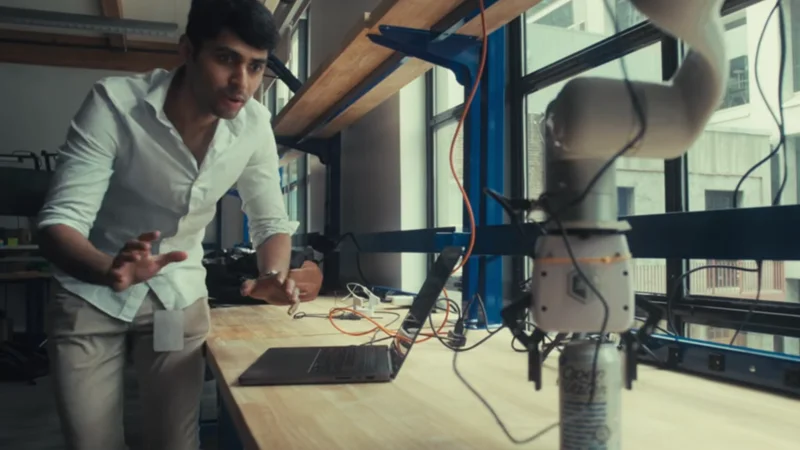
Image: Ars Technica AI
Main Takeaway
Anthropic introduced the Model Hardware Standard, a framework for connecting AI agents with microscopes, robots, and industrial equipment while imposing rules for safer physical control.
Jump to Key PointsSummary
Anthropic’s physical AI framework
Anthropic has introduced the Model Hardware Standard, or MHS, a framework designed to connect AI agents with physical equipment such as microscopes, robotic arms, liquid-handling systems, quantum computing hardware, and manufacturing machines. The research preview marks Anthropic’s first major push into physical AI, according to Fortune and Wired.
MHS defines how models interact with hardware, giving equipment a common interface rather than requiring a separate custom integration for every machine. Anthropic said the approach can reduce deployments that normally take weeks or months to work that takes hours or minutes. The standard is designed for any AI model, although access to the research preview is initially limited to a small group of companies.
How agents operate equipment
MHS lets an agent sequence actions across multiple devices, inspect results, and alter its next step as conditions change. Anthropic demonstrated Claude controlling a laser, checking its output through a separate camera, and repeating the process to calibrate the system automatically, Ars Technica AI reported.
The same structure applies to scientific workflows. An agent can focus a microscope, analyze an image, identify an area requiring closer inspection, and move the instrument to continue the experiment. Anthropic also showed Claude directing a robotic arm to pick up an aluminum can without being trained specifically on that task, then using API scripts to reuse and adjust the sequence rather than reasoning through every action from scratch. Fortune AI described the standard as a way to let equipment share a common language, while Wired AI placed the examples in the broader drive to automate laboratories and factories.
Hardware constraints become machine-readable
A central part of MHS is a tagging system that describes the physical limits and operating conditions of hardware. Those tags give an AI model information about what a machine can do, how it should be controlled, and which actions require caution, addressing a gap between models trained largely in software environments and equipment governed by physical constraints.
That layer matters because physical systems carry consequences that ordinary software errors don't. A bad API call can damage equipment, spoil an experiment, or create a safety hazard. Wired AI said Anthropic’s framework specifies how agents should, and should not, interact with hardware. The approach also gives manufacturers and laboratories a shared vocabulary for exposing capabilities without building a bespoke interface for each model, a goal reflected in the integration claims described by Fortune AI and Ars Technica AI.
Labs and factories are the first targets
Scientific research and manufacturing stand out as the clearest early uses for MHS. In a laboratory, an agent could run experiments continuously, coordinate instruments, and search samples for a target molecule. In a factory, connected machines and robot arms could exchange instructions through standardized interfaces, allowing an AI system to manage multi-step assembly or inspection workflows.
Anthropic frames the benefit as continuous operation and faster deployment, with autonomous experiments running beyond normal working hours. Fortune AI highlighted the prospect of round-the-clock laboratory workflows, while Wired AI emphasized that manufacturing and research require reliable interaction with complex physical systems. The early focus on specialized equipment also limits the initial scope: MHS is aimed at controlled environments where machines already expose programmable functions, rather than unrestricted control of everyday objects.
Safety remains the central test
Anthropic’s standard addresses a basic problem in physical AI: an agent needs enough freedom to adapt, but enough structure to keep mistakes contained. Rules, hardware tags, and separated APIs can help define boundaries, yet they don't remove the need for monitoring, authorization, testing, and emergency controls.
The safety question becomes sharper when one agent can coordinate several machines. A mistaken interpretation can propagate from a sensor to a robot or from an experiment plan to hazardous equipment. Wired AI connected MHS to the wider concern that AI agents can become confused or access systems in unintended ways. Ars Technica AI’s examples show the usefulness of feedback loops, but those same loops require carefully validated measurements and limits. The standard’s success will depend on how consistently companies enforce those controls in real deployments.
What happens during the research preview
MHS is currently a research preview, so its immediate importance lies in establishing an integration pattern rather than announcing a fully mature commercial platform. Anthropic’s work is being tested with a limited set of companies, while the framework’s model-agnostic design positions it as infrastructure that could extend beyond Claude.
That openness gives equipment makers, laboratories, and competing AI developers a reason to evaluate the standard before committing to proprietary integrations. Anthropic’s UST initiative, highlighted on the company blog, also points to efforts to bring Claude into physical AI applications. The next milestones are practical: broader access, published implementation details, demonstrations with independent hardware, and evidence that standardized controls reduce deployment time without weakening safety.
Key Points
Anthropic introduced MHS, a standard interface for AI agents operating laboratory and industrial equipment.
MHS lets agents coordinate microscopes, cameras, lasers, robotic arms, and other programmable machines.
Anthropic says standardized integrations can shrink deployment timelines from months to hours or minutes.
Machine-readable hardware tags describe physical constraints that software-trained AI models must respect.
The research preview targets autonomous experiments and manufacturing workflows while keeping safety controls central.
Questions Answered
Anthropic’s Model Hardware Standard is a framework for connecting AI agents with physical equipment through common interfaces and APIs. It includes machine-readable descriptions of hardware capabilities and physical limits.
Anthropic’s MHS lets an agent coordinate instruments, inspect results, and adjust later actions. Demonstrated uses include calibrating a laser with camera feedback and directing a microscope toward areas requiring closer examination.
Anthropic designed MHS to work with AI models beyond Claude. The initial research preview remains limited to a small group of companies, so wider compatibility will depend on adoption and implementation.
Anthropic is developing MHS to reduce the time and specialist effort required to connect AI agents with machines. The company targets scientific research and manufacturing workflows that involve several programmable devices.
Anthropic’s MHS sets rules for how agents should interact with hardware and describes physical constraints in machine-readable form. Operators still need permissions, monitoring, testing, and emergency controls because mistakes can damage equipment or create hazards.
Anthropic’s MHS will undergo research-preview testing with a limited set of companies before broader access. Adoption, independent hardware demonstrations, and evidence of safe deployment will determine whether it becomes a widely used standard.
Source Reliability
60% of sources are highly trusted · Avg reliability: 82
Go deeper with Organic Intel
Simple AI systems for your life, work, and business. Each one includes copyable prompts, guides, and downloadable resources.
Explore Systems