Meta’s Muse Gains an Early Lead as OpenAI Enters the Consumer AI Agent Race With Dots
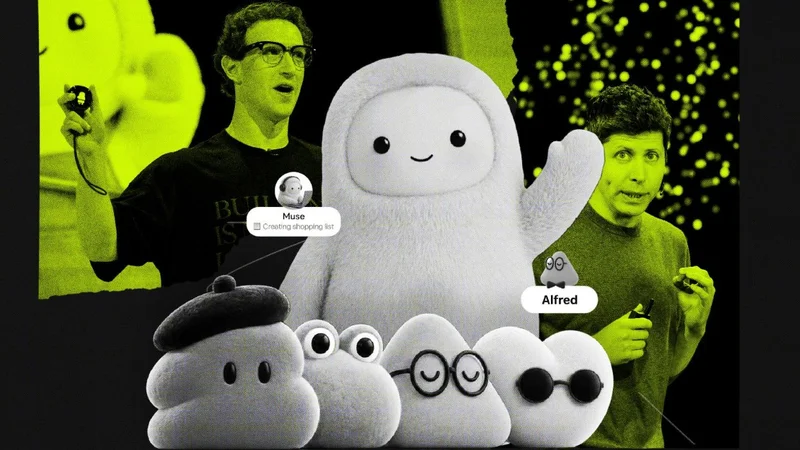
Image: The Verge AI
Main Takeaway
Meta’s Muse has taken an early lead over OpenAI’s Dots by pairing consumer reach with a friendlier agent experience, intensifying competition over privacy and autonomy.
Jump to Key PointsSummary
Muse’s early advantage
Meta’s Muse gained an early lead in the consumer AI agent race because distribution and product familiarity mattered as much as model quality. The agent entered a market shaped by OpenClaw experiments, Mac Mini purchases, and growing interest in software that can act across a user’s digital life, according to The Verge AI. That timing gave Meta a head start before OpenAI introduced Dots at DevDay.
Muse’s advantage rests on access to Meta’s large consumer ecosystem and a product positioned for ordinary users rather than only developers. OpenAI, Google, Anthropic, and smaller builders are competing for the same personal-assistant role, but the early contest is being defined by how quickly agents become useful in daily routines. The available comparison pieces frame Muse and Dots as the central matchup, while the stronger reporting emphasizes Meta’s distribution advantage over a decisive technical victory.
OpenAI brings Dots to market
OpenAI’s Dots is the company’s answer to Meta Muse, with an emphasis on always-on assistance and autonomous task execution. Sam Altman unveiled the agent at OpenAI DevDay, presenting privacy as a central product promise and positioning Dots for a broader enterprise push, according to The Verge AI and UK.finance.yahoo.
The launch turns the race into a direct contest between OpenAI’s model brand and Meta’s consumer reach. Dots arrives after Muse has already shaped user expectations around persistent agents, so OpenAI must persuade customers that its system is safer, more capable, or easier to control. Coverage from Live.euronext and several comparison articles describes the release as part of a wider autonomous AI push, extending the fight beyond chat interfaces into software that remains active and performs tasks over time.
Privacy becomes the battleground
Privacy is now a core competitive issue because always-on agents handle more personal information than conventional chatbots. OpenAI used DevDay to promise a new standard for privacy in frontier AI and criticized Muse over data protections, while Meta had previously presented Muse as a safer alternative to OpenClaw, according to The Verge AI.
That exchange gives users a practical question to resolve: which company can explain what an agent sees, stores, and does without permission? The comparison articles repeatedly frame Dots and Muse around personal control, safety, and background operation, although their available text provides few independently verifiable technical details. The competition therefore hinges on product policies, permission systems, and visible safeguards as much as on task performance.
Distribution beats model prestige
Meta’s lead shows how consumer distribution can outweigh model prestige during the first phase of an agent market. Muse benefits from Meta’s established applications and daily contact with users, while OpenAI brings a powerful brand and a large developer community to Dots. Neither advantage guarantees long-term leadership, but Meta can place an agent in front of consumers at a scale that standalone products struggle to match.
The broader field includes Google, Anthropic, xAI, Manus, and custom agent developers. Articles comparing Dots, Muse, Manus Cue, and custom systems show that buyers are already evaluating agents as products rather than treating them as interchangeable language models. The decisive factors include reliability, autonomy, privacy, setup time, and whether an agent can complete useful work without constant supervision.
Enterprise adoption raises the stakes
OpenAI’s enterprise framing expands the contest from personal productivity into workplace automation. Dots is described as an always-on agent aimed at autonomous work, while Muse’s early consumer traction gives Meta a testing ground for interaction patterns, permissions, and recurring tasks. Enterprise customers will demand stronger controls than consumer users, including audit trails, administrative policies, and predictable behavior.
The next phase will test whether either company can convert attention into dependable outcomes. A flashy demonstration has limited value if agents misread instructions, expose sensitive data, or require frequent correction. OpenAI’s enterprise push, Meta’s distribution, and competition from Google and Anthropic place pressure on all major providers to prove that agents can operate safely inside real workflows.
What happens next
The agent race now turns on retention, trust, and execution quality. Muse has the early lead described by The Verge AI, but Dots gives OpenAI a direct response with a privacy-centered launch and an always-on operating model. User adoption will reveal whether Meta’s reach produces lasting habits or whether OpenAI’s capabilities and developer relationships pull customers away.
Competition will also expose the limits of current agents. OpenClaw helped seed demand among enthusiasts, while Muse and Dots are pushing the category toward mainstream use. The companies that win will need to make autonomy feel useful without making control feel optional.
Key Points
Meta Muse gained an early consumer lead over OpenAI Dots through distribution, timing, and product familiarity.
OpenAI launched Dots as an always-on agent aimed at autonomous personal and enterprise tasks.
Privacy and data permissions became central battlegrounds between Meta Muse and OpenAI Dots.
Meta’s consumer ecosystem gives Muse a distribution advantage during the market’s early adoption phase.
Enterprise buyers will judge agents on reliability, auditability, controls, and task completion quality.
Questions Answered
Meta Muse gained an early lead because Meta could distribute the agent through an established consumer ecosystem. Muse also arrived before OpenAI introduced Dots, giving it time to shape user expectations around always-on assistance.
OpenAI Dots is an always-on AI agent designed to perform autonomous tasks for consumers and enterprises. Sam Altman introduced Dots at OpenAI DevDay with privacy as a central product promise.
Meta Muse and OpenAI Dots are competing over data access, permissions, and user control. OpenAI presented Dots as setting a higher privacy standard, while Muse had earlier been positioned as a safer alternative to OpenClaw.
OpenAI Dots is explicitly positioned to challenge Meta Muse in enterprise AI through always-on assistance and autonomous work. Its progress will depend on reliability, administrative controls, auditability, and safe handling of workplace data.
Meta Muse and OpenAI Dots will compete for lasting user retention, trust, and dependable task execution. Google, Anthropic, xAI, Manus, and custom agent developers will add pressure as the market expands.
Source Reliability
46% of sources are unrated · Avg reliability: 51
Go deeper with Organic Intel
Simple AI systems for your life, work, and business. Each one includes copyable prompts, guides, and downloadable resources.
Explore Systems