Aina’s Smart Ring Puts AI-Agent Approvals, Calls and Controls on Your Finger
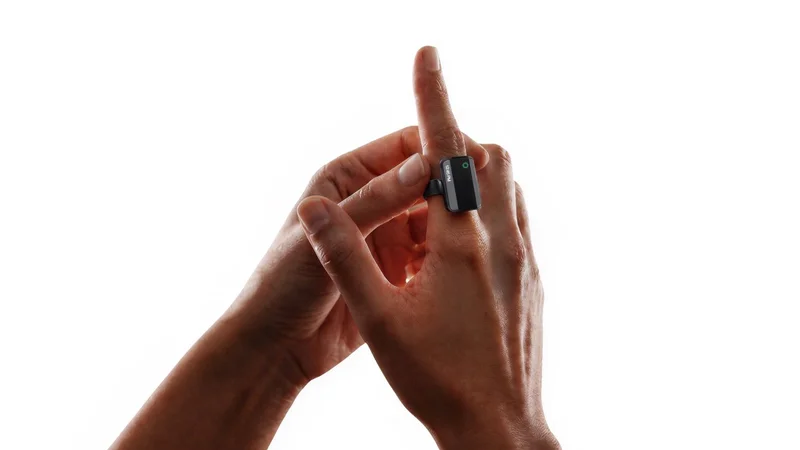
Image: TechCrunch AI
Main Takeaway
Aina’s $399 smart ring combines a screen, joystick, microphone and speaker to let users approve AI-agent actions, dictate notes and control connected devices.
Jump to Key PointsSummary
A ring built for quick approvals
Aina is positioning its $399 smart ring as a physical controller for AI agents, connected devices and everyday phone functions. The startup’s core idea is simple: people can approve or reject an agent’s proposed action with a tap, swipe or button press while leaving their phones in their pockets. The ring includes a small display, a joystick-like control, a microphone, a speaker and Bluetooth connectivity.
That design targets a future in which assistants ask for confirmation before ordering a ride, selecting lunch or completing another task. Aina founder Apoorv Shankar describes repeated phone checks as a bottleneck when agents send frequent requests, Wired AI reported. The product’s earlier crowdfunding campaign also framed it as a shortcut for smart-home control, cab bookings and device unlocking, while presenting fitness and sleep tracking as secondary functions.
Hardware packed into a small wearable
Aina’s hardware combines interaction tools that are unusual for a conventional fitness ring. The device has an OLED display, a 6-axis motion sensor, Bluetooth-enabled Qualcomm silicon and a microphone, according to Hackster. Other coverage describes dual noise-canceling microphones, touch-sensitive surfaces and a speaker for calls, giving the ring both visual and audio feedback.
Users can swipe across the ring, move through options with the joystick and speak commands or notes. TechCrunch reported that the ring supports calls, reminders, prompts to AI agents and dictation on a Mac through Wispr Flow or Aina’s own engine. Earlier descriptions also presented thumb-over-index-finger gestures as a way to trigger controls. The crowded hardware package raises an immediate usability test: the ring has to make interactions faster than reaching for a phone without turning tiny controls into a fiddly chore.
From crowdfunding to commercial launch
The product’s history stretches back to a Kickstarter campaign that surpassed its $30,000 target. Earlier coverage identified the company behind Aina as Lazy Co., a Bengaluru- and US-based startup, and described the ring as a multipurpose remote for smart-home products, voice assistants, calls and connected locks. Hackster said the campaign was nearing its close after passing its funding goal.
The 2026 launch gives the project a broader AI focus and a higher stated price of $399. Aina had spent about 15 months in stealth and previously showed experimental devices at CES 2026 under the Project Mirage name, according to Wired AI. TechCrunch reported that the company raised $5.5 million in July. The transition from crowdfunding concept to financed hardware startup matters because reliability, software support and delivery will determine whether the ring becomes a useful controller or another ambitious wearable experiment.
A controller for agents and apps
Aina’s strongest distinction is its attempt to place agent approval inside a dedicated physical interface. Rather than making the ring a miniature phone, the company is treating it as a remote with context-aware controls. A user might accept an agent’s recommendation, reject it, invoke an assistant or issue a spoken instruction without opening a separate app.
The approach builds on Mirage, a 3-key controller that mapped buttons to actions based on the application shown on a Mac screen. In a video call, for example, its controls could mute the microphone, switch off the camera or leave the meeting. Aina extends that principle with a wearable that handles AI and non-AI tasks, including notes, reminders, calls and smart-home commands. The value depends on software integrations, since a ring with limited services will have fewer useful decisions to present.
The tradeoffs behind hands-free control
Aina’s promise rests on convenience, but the same small form factor creates practical constraints. A screen must communicate enough context for a safe approval, while a gesture or joystick must distinguish an intentional command from an accidental touch. Voice input brings another layer of friction in public spaces, and calls through a ring require acceptable microphone, speaker and battery performance.
The product also places trust at the center of agent interaction. Approving an Uber booking or a smart-home command is quick only when the user can clearly understand what the agent wants to do. Aina’s screen, tactile controls and audio hardware address that need from different directions, while its Bluetooth connection keeps the phone in the system. Coverage from Wareable, Livemint and Thegadgetflow emphasized the ring’s broad remote-control ambitions, but the newer launch centers those functions on a narrower question: whether people want a wearable approval surface for autonomous software.
What happens next for Aina
Aina’s next test is execution across hardware, software and integrations. The company has to deliver a ring that feels responsive, maintain reliable links to phones and computers, and support enough agents and apps to justify a $399 purchase. Its previous Mirage controller provides a software and interaction foundation, while the Kickstarter campaign provides evidence of early interest.
The wider market is also changing as AI assistants shift from answering prompts to taking actions. Aina is betting that approval and rejection will become frequent enough to deserve a dedicated wearable. That bet gives the ring a clear identity beyond health tracking, but adoption will depend on whether users encounter meaningful agent requests often enough to keep wearing it. Calls, dictation, reminders and connected-device controls broaden its usefulness while the company builds that agent ecosystem.
Key Points
Aina launched a $399 smart ring for approving AI-agent actions and controlling connected devices.
Aina combines an OLED display, joystick, microphone, speaker, motion sensors and Bluetooth in a wearable controller.
Aina extends the company’s Mirage controller concept from Mac shortcuts to AI agents, calls and dictation.
Aina’s earlier Kickstarter campaign surpassed its $30,000 funding target before the newer commercial launch.
Aina must prove tiny controls, reliable integrations and clear confirmations justify replacing phone-based interactions.
Questions Answered
Aina’s smart ring is designed to control AI agents, connected devices and selected phone or computer functions. Users can approve or reject agent actions, issue voice prompts, take calls, set reminders and dictate notes.
Aina’s AI smart ring costs $399. The company previously tested demand through a Kickstarter campaign that exceeded its $30,000 funding goal.
Aina lets users control AI agents through a small display, joystick-like button, touch gestures and voice input. Those controls can confirm or reject proposed actions without requiring users to take out their phones.
Aina’s ring includes an OLED display, Bluetooth connectivity, a Qualcomm chip, motion sensors, microphones and a speaker. The hardware supports agent prompts, calls, dictation, reminders and connected-device controls.
Aina must expand software integrations and demonstrate reliable everyday performance after launch. Adoption will depend on battery life, comfortable interaction, clear agent confirmations and enough useful tasks to justify a dedicated wearable.
Source Reliability
50% of sources are trusted · Avg reliability: 74
Go deeper with Organic Intel
Simple AI systems for your life, work, and business. Each one includes copyable prompts, guides, and downloadable resources.
Explore Systems