Nothing Teases Screen-Free AI Device for December Launch as It Bets on Post-Smartphone Tools
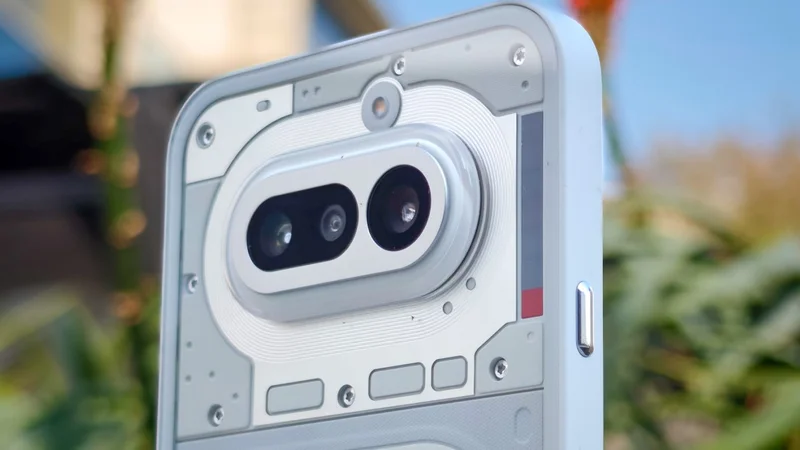
Image: The Verge AI
Main Takeaway
Nothing will launch its first screen-free AI-native device in December, with CEO Carl Pei positioning it as a productivity tool rather than a phone app.
Jump to Key PointsSummary
Nothing sets a December launch
Nothing will launch its first AI-native device in December, CEO Carl Pei said on November 4. The product will have no traditional display, making it the company’s clearest attempt yet to build hardware around artificial intelligence rather than adding AI features to a phone.
Pei described the product as “a tool” built with a purpose that “couldn’t have been an app.” Nothing hasn’t disclosed the name, price, dimensions, operating system, or exact interaction model. Multiple accounts identify the device as screen-free, while TechCrunch and 9to5Google place the announcement within Nothing’s broader push toward AI-first hardware.
A tool before a consumer gadget
Nothing is framing the device around productivity and work, rather than presenting it as a direct replacement for the smartphone. That distinction separates the company’s announcement from the familiar pitch for a new consumer electronics category, even as the product remains aimed at everyday use.
The positioning also gives Nothing room to define the hardware around voice, audio, sensors, connected services, or another interaction method that does not require a screen. Fonearena describes Pei’s message as a rejection of an “iPhone moment” for consumer AI, while Ground characterizes the product as a workplace tool. The exact experience remains undisclosed, leaving the December launch as the point when the concept will face practical scrutiny.
Nothing’s AI strategy takes shape
The device follows more than a year of preparation for an AI operating system and marks Nothing’s move beyond its distinctive Android phones. The company has presented AI-native hardware as a broader platform effort, with the first product serving as an early test of how software and hardware should work together when a screen is no longer central.
Nothing’s 2025 Series C announcement said the company had raised $200 million at a $1.3 billion valuation to begin a new phase focused on consumer AI. Techbuzz connects that funding with the company’s AI operating-system ambitions, although its account also contains claims that are not corroborated by the more direct announcement coverage. Company background listings identify Nothing as a private consumer electronics business founded by Carl Pei in 2020.
The screen-free hardware race
Nothing is entering a crowded effort to make AI a standalone product category. Screenless devices promise a simpler interface for tasks such as reminders, communication, search, and work assistance, but they also remove the visual feedback people use to confirm what a system heard, did, or shared.
That tradeoff makes the product’s design choices central to its reception. A successful device will need fast responses, clear status signals, dependable connectivity, and a useful reason to carry it alongside a phone. The Verge, Notebookcheck, and 9to5Google all emphasize the absence of a display, but none provides confirmed specifications or a complete description of how users will control the device. Nothing’s industrial design reputation gives it a recognizable starting point, while the lack of details keeps the announcement firmly in teaser territory.
What developers and buyers need to know
Developers and buyers have little actionable information before the December launch because Nothing has confirmed the product category more clearly than the product itself. There is no announced price, compatibility list, application framework, release date within December, or explanation of whether the device depends on a Nothing phone.
The launch will reveal whether Nothing has built a standalone assistant, a connected work accessory, or a new interface layer for existing services. TechCrunch highlights productivity gains as the central promise, while Ground and Fonearena place the product in a work-tool context. That focus will make reliability and integration more important than novelty: users will judge whether the device saves time without forcing them to manage another battery, account, and subscription.
December will test the pitch
Nothing’s December release will determine whether its AI-native strategy has substance beyond a carefully timed teaser. The company has supplied a firm launch month and a clear screen-free premise, but the practical story depends on demonstrations, pricing, availability, and the tasks the device handles better than a phone app.
The announcement gives Nothing a month to build anticipation while preserving the mystery around its first AI product. It also places Carl Pei’s company among hardware makers trying to establish a new relationship between people and assistants. If the device’s tool-first approach delivers a focused experience, it can give Nothing a distinct opening. If the interaction feels slower or less dependable than a phone, the missing screen will become the product’s central liability.
Key Points
Nothing will launch its first screen-free AI-native device in December 2026.
Carl Pei positions Nothing’s mystery hardware as a productivity tool rather than an app.
Nothing has not disclosed pricing, specifications, controls, or the product’s exact capabilities.
The device extends Nothing’s strategy to develop an AI operating system and dedicated hardware.
December testing will focus on reliability, phone independence, connectivity, and everyday usefulness.
Questions Answered
Nothing’s screen-free AI device is an upcoming AI-native hardware product designed as a productivity tool. Nothing has not revealed its name, specifications, controls, or exact capabilities.
Nothing will launch its AI-native device in December 2026. CEO Carl Pei announced the launch month on November 4 without providing a specific day.
Nothing is building the device to create an AI-first tool that performs a function a smartphone app cannot provide. Carl Pei has emphasized productivity and workplace use rather than a direct smartphone replacement.
Nothing has not said that its AI device will replace a smartphone. The company describes it as a complementary tool, and the product’s phone requirements remain undisclosed.
Nothing’s December launch will reveal the device’s price, interaction model, operating system, connectivity, and practical use cases. Buyers and developers will then be able to assess whether screen-free hardware offers an advantage over phone-based AI apps.
Source Reliability
33% of sources are established · Avg reliability: 58
Go deeper with Organic Intel
Simple AI systems for your life, work, and business. Each one includes copyable prompts, guides, and downloadable resources.
Explore Systems