AI Giants Spent $27 Million to Sway a Single House Race. It Ended in a Draw
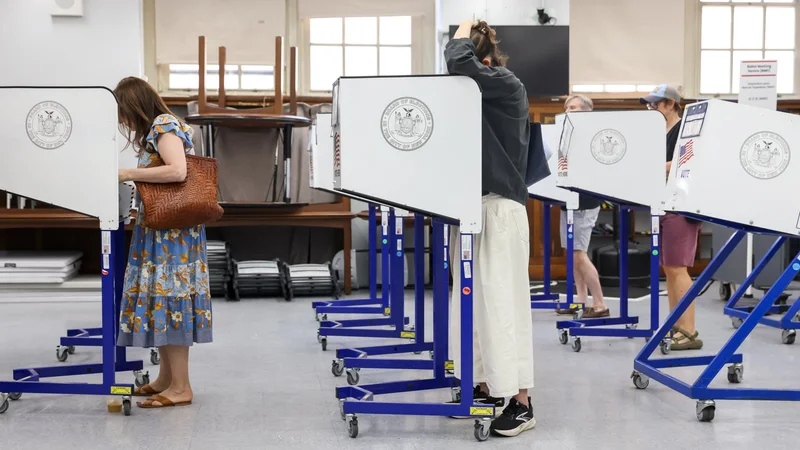
Image: Cnbc
Main Takeaway
AI super PACs spent $27 million in a Manhattan House primary, but candidate Alex Bores lost narrowly, leaving the regulation battle unresolved.
Jump to Key PointsSummary
Why one congressional seat drew Silicon Valley's millions
A Democratic primary for a Manhattan House seat became the most expensive proxy battle over artificial intelligence regulation in U.S. history. State Assemblyman Alex Bores, a former Palantir engineer who championed New York's RAISE Act, one of the first state-level AI safety laws, faced a barrage of spending from super PACs tied to major AI companies. The Verge reports that the race attracted $27 million in outside spending, with OpenAI-linked groups attacking Bores while Anthropic-backed entities supported him. The spending dwarfed typical House primaries and turned a local race into a national referendum on whether AI can be regulated at all.
Bores framed the contest as existential for democratic oversight of technology. In The Nation, he wrote that tech billionaires had named him their number one enemy to send a message to every other politician considering AI safeguards. The super PAC offensive began in November 2025 and accelerated through the spring, flooding television, mail, and digital channels with messaging about his record on tech regulation.
How the money split between rival AI camps
The spending did not align neatly along partisan lines but rather reflected competing corporate visions for AI governance. CNBC reports that AI companies poured more than $20 million into the race, while Gothamist puts total super PAC spending closer to $30 million across six different committees. OpenAI-affiliated groups largely funded attacks on Bores, portraying his safety-focused approach as anti-innovation. Anthropic-backed PACs countered with support for his candidacy, seeing in him a potential ally for measured federal oversight.
The New York Times notes that billionaire Chris Larsen alone planned to spend $3.5 million in the race, part of a broader tech industry mobilization for the midterms. Politico's analysis framed the expenditure as a $26 million industry war, with the Bores race serving as its opening salvo. The asymmetry was notable: Bores entered the race with modest name recognition and was not the establishment favorite even before the AI money arrived.
What voters actually decided
Despite the unprecedented spending, the outcome offered no clean victory for either side. Bores narrowly lost the Democratic primary to Micah Lasher, a more conventional Democrat who had not made AI regulation central to his campaign. The Washington Post results cited by The Verge show Lasher prevailed by a slim margin in a low-turnout contest, suggesting the AI advertising may have moved few voters while potentially mobilizing opposition.
The draw characterization matters. Anthropic did not get its preferred candidate to Congress, but OpenAI did not manage to destroy Bores politically either. He outperformed expectations for a first-time House candidate facing a multimillion-dollar negative campaign. For a race that AI interests treated as a must-win proof of concept, the muddled result sends an ambiguous signal about whether massive super PAC spending can determine AI's regulatory future.
What this signals for AI's political future
The Manhattan race previews a much larger fight. Notus reported in January that an AI industry PAC planned to spend over $100 million across midterm elections to elect regulation-friendly lawmakers, with Bores as its first target. That strategy now faces questions. If $27 million cannot secure a favorable outcome in a favorable district, the industry's political return on investment looks uncertain.
Widespread voter discomfort with AI, documented by Pew Research and cited by WBHM, may limit how much super PAC messaging can move public opinion. The Bores case also demonstrates that AI regulation has become a salient enough issue to attract countervailing spending from factions within the industry itself, not just civil society opposition. Future races may see this dynamic repeat, with different AI companies backing different candidates based on their regulatory preferences.
Why lawmakers beyond New York are watching
The unresolved outcome leaves the central question of the campaign hanging: whether any politician can survive advocating AI safeguards against organized tech money. Bores argued explicitly that his race would tell every other elected official whether AI could be checked at all. His narrow loss neither confirms nor refutes that proposition.
For Democrats nationally, the race illustrates the party's internal fracture over technology policy, with some factions embracing industry partnerships and others pushing for stronger oversight. For Republicans, it shows AI regulation becoming a live issue in Democratic primaries that could spill into general elections. The Wall Street Journal's characterization of the contest as a bitter AI war suggests media and political elites now recognize these races as bellwethers. With the 2026 midterms ongoing, both parties will parse the Bores result for lessons about how to handle AI industry engagement without appearing captured by it.
What happens next in AI's Washington strategy
Industry groups will likely refine their approach before committing the full $100 million midterm budget. The Bores race proved that blanket spending invites scrutiny without guaranteeing results, and that internal AI industry divisions can neutralize each other's efforts. Anthropic and OpenAI's opposing investments in the same race may look, to future strategists, like a wasteful collision.
Policymakers considering AI legislation now know they face a well-funded opposition but also that money alone does not determine outcomes. Bores's strong showing under fire may encourage others to take similar positions, particularly if they can raise funds from safety advocates and concerned citizens to match some portion of industry spending. The real test will come in races where AI is not the only issue, where voters are less attentive, and where super PAC messaging can operate with less counterprogramming. The Manhattan draw sets up those contests as the decisive battles for whether AI regulation advances or stalls in Congress.
Key Points
AI super PACs spent $27 million on a single House primary in Manhattan.
OpenAI-linked groups attacked Alex Bores while Anthropic-backed PACs supported him.
Bores, a former Palantir engineer, championed New York's RAISE Act AI safety law.
Bores narrowly lost to Micah Lasher despite the unprecedented spending against him.
The race was the opening salvo of a planned $100 million AI industry midterm campaign.
Questions Answered
AI super PACs spent approximately $27 million on the Manhattan House primary featuring Alex Bores, according to The Verge. Some estimates put total super PAC spending closer to $30 million across six different committees.
OpenAI-linked groups attacked Bores for his AI safety regulation stance, while Anthropic-backed entities supported him as a potential ally for measured federal oversight. The spending reflected competing corporate visions for AI governance rather than partisan alignment.
No, Alex Bores narrowly lost the Democratic primary to Micah Lasher. However, his strong performance against unprecedented opposition spending prevented a clear victory for the anti-regulation forces, leading analysts to characterize the outcome as a draw.
The RAISE Act is one of the first state-level AI safety laws in the United States. Bores, a former Palantir engineer, successfully pushed for its passage in the New York State Assembly before running for Congress.
The race's ambiguous outcome leaves uncertain whether massive tech spending can block AI regulation. While Bores lost, his narrow margin against $27 million in spending may encourage other politicians to take pro-regulation positions.
Source Reliability
50% of sources are highly trusted · Avg reliability: 80
Go deeper with Organic Intel
Simple AI systems for your life, work, and business. Each one includes copyable prompts, guides, and downloadable resources.
Explore Systems