Trump's On-Again, Off-Again Iran Strikes Define a Five-Month War and a Shifting Strategic Balance
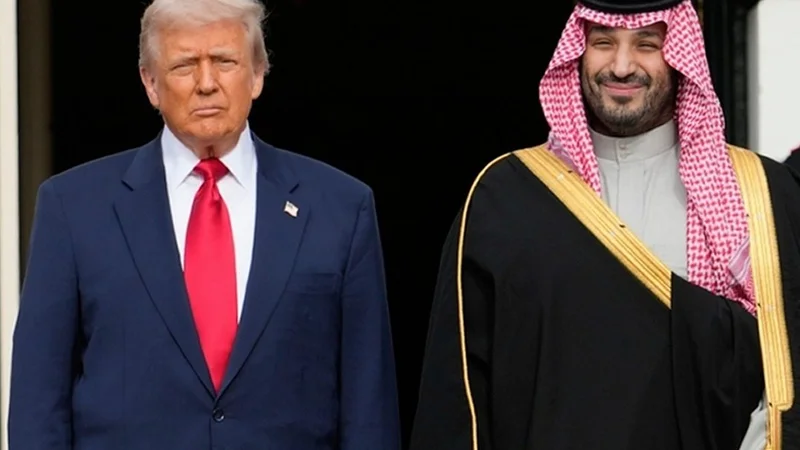
Image: Fortune AI
Main Takeaway
President Trump canceled planned strikes on Iran after Gulf allies outlined an emerging deal to reopen the Strait of Hormuz, then warned of escalation as Tehran denied direct talks were underway.
Jump to Key PointsSummary
The latest reversal in a five-month pattern
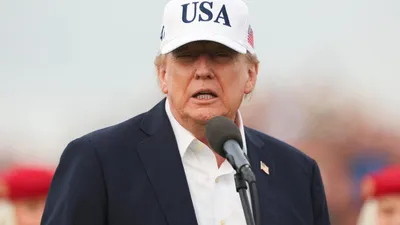
President Donald Trump said late Saturday that he would hold off on ordering new strikes against Iran, the latest in a series of abrupt reversals that have come to define the five-month conflict. The planned operation, which Trump described as potentially the biggest attack since World War II, was scrapped after he received appeals from Gulf allies and unnamed Iranian officials. The president made the announcement in a social media post, claiming that Mideast allies had reached the parameters of a deal to end the war.
This zigzag of threatened escalation followed by sudden restraint has become the hallmark of the U.S. approach. The Fortune analysis of the war's trajectory notes that Trump has repeatedly made announcements threatening massive strikes only to later call them off. These abrupt shifts have sent prices of oil and basic goods soaring as global markets react to the uncertainty surrounding the Strait of Hormuz, a critical chokepoint for energy shipments that has seen cargo traffic stall during the fighting.
What the emerging deal promises to deliver
According to Trump's Saturday statement, the emerging agreement would include the immediate, complete, and total opening of the Strait of Hormuz and an end to Iran's nuclear threat. The president framed his decision to cancel the strikes as a concession made for the future benefit of the world and the survival of a prosperous Iran, subject to the rapid completion of a deal. He also stated that Israel has agreed to join the US in the commitment to try to complete the agreement with Iran.
On Sunday, Trump elaborated that he expected negotiations to resume Monday afternoon, though he did not specify who would participate. The AP reports that the president credited Gulf leaders including Saudi Crown Prince Mohammed bin Salman, along with Qatar and the United Arab Emirates, for urging him to give diplomacy more time. The Scrippsnews report further indicates that Iran publicly pushed back on the American framing, stating that no direct talks were underway, a contradiction that raises questions about the substance of the diplomatic track.
Iran's growing strategic advantage
Experts cited by Fortune see signs that Iran is gaining the upper hand in the conflict. One assessment notes that the events underscore a reality becoming increasingly difficult to ignore: Iran appears to hold the strategic advantage in deterrence. Tehran has used its proxies to expand the war across the region, most notably through Houthi rebels threatening ships in the Red Sea. This broader regional pressure, combined with the US pattern of backing down from threatened strikes, creates what analysts describe as a perception of blood in the water.
The strategic calculus shifted further when Trump declared a ceasefire was over, prompting new US strikes on Iran as reported by CBS News and Time. This on-again, off-again dynamic complicates deterrence. When Washington follows threats with restraint, it signals to adversaries that escalation threats may not be credible. The result is a conflict where neither side has established a stable escalation ladder, and where Iran exploits the ambiguity to advance its position through proxy forces while engaging in indirect diplomacy through Oman.
The economic toll of uncertainty
The five-month war has sent prices of oil and basic goods soaring, a direct consequence of the disruption to shipping through the Strait of Hormuz. The strait is a vital artery for global energy markets, and its effective closure has rippled through supply chains worldwide. Each new threat of strikes and subsequent cancellation injects fresh volatility into markets that are already strained by the conflict. The AP report highlights the direct link between the military standoff and the surge in oil prices.
Businesses and consumers alike have absorbed the cost of this strategic ambiguity. The pattern of threatened escalation followed by diplomatic overtures creates a cycle of uncertainty that prevents markets from pricing in any stable outcome. The Fortune analysis connects these abrupt shifts directly to the soaring costs of basic goods, suggesting that the economic damage is not merely a side effect of the war but a central feature of how it is being fought.
The diplomatic track and its contradictions
Trump's Sunday announcement that negotiations would resume Monday afternoon came with few details about the format or participants. Iran's denial of direct talks, as reported by Scripps, introduces a fundamental contradiction into the diplomatic narrative. The US president has framed the pause on strikes as a response to allied requests and an emerging deal, but the Iranian government's public stance does not align with that framing. This gap suggests that whatever backchannel communications exist, they have not yet produced a unified public position.
The involvement of Oman as a mediator for Hormuz talks provides one concrete diplomatic channel, but the disconnect between the American and Iranian accounts of the state of negotiations points to a fragile process. The pattern of threats and reversals has not created a stable foundation for talks, and each cycle risks eroding trust on both sides. The question remains whether the emerging deal Trump referenced is a genuine diplomatic opening or a temporary reprieve in a conflict that continues to escalate through other means.
What happens next
The immediate path forward depends on whether the Monday afternoon negotiations that Trump referenced materialize into a substantive process. If Iran continues to deny direct talks, the diplomatic track that Trump has used to justify holding off strikes may collapse, and the pressure to escalate will return. The economic stakes are enormous: the reopening of the Strait of Hormuz would relieve a chokehold on global oil markets, but the conditions for that reopening remain unclear.
The broader trajectory points to a conflict where the US has not established a coherent strategy for escalation or de-escalation. The pattern of threats and reversals has given Iran the time and space to expand its proxy operations and harden its negotiating position. The next phase of the war will likely be shaped by whether the Gulf allies who urged restraint can translate their influence into a durable agreement, or whether the cycle of strikes and cancellations continues to define a conflict with no clear end in sight.
Key Points
President Trump canceled planned strikes on Iran after Gulf allies outlined an emerging deal to reopen the Strait of Hormuz.
The five-month conflict has been defined by a pattern of threatened massive strikes followed by abrupt reversals.
Iran has expanded the war through proxy forces while experts say Tehran now holds the strategic advantage in deterrence.
Global oil and basic goods prices have soared as the Strait of Hormuz remains disrupted by the ongoing instability.
Iran publicly denied direct talks were underway, contradicting Trump's claims of an emerging diplomatic agreement.
Questions Answered
Trump canceled the strikes after Gulf allies including Qatar, Saudi Arabia, and the UAE urged him to give diplomacy another chance and presented the outlines of an emerging deal to end the war and reopen the Strait of Hormuz.
Trump stated the deal would include the immediate, complete, and total opening of the Strait of Hormuz and an end to Iran's nuclear threat, with Israel agreeing to join the US commitment to complete the agreement.
Iran has publicly denied that direct talks are underway with the US, though Trump claimed negotiations would resume and Oman has been mediating separate discussions with Tehran regarding the Strait of Hormuz.
The five-month conflict has sent oil and basic goods prices soaring as the disruption to shipping through the Strait of Hormuz, a critical global energy chokepoint, has stalled cargo traffic and injected persistent volatility into markets.
Trump has repeatedly threatened massive strikes against Iran, including an attack he described as the biggest since World War II, only to cancel them at the last moment, creating a cycle of escalation threats and abrupt reversals that has defined the conflict.
Source Reliability
83% of sources are highly trusted · Avg reliability: 87
Go deeper with Organic Intel
Simple AI systems for your life, work, and business. Each one includes copyable prompts, guides, and downloadable resources.
Explore Systems