Hong Kong Unveils First Five-Year Plan With Near-Doubling of Innovation and Technology Spending
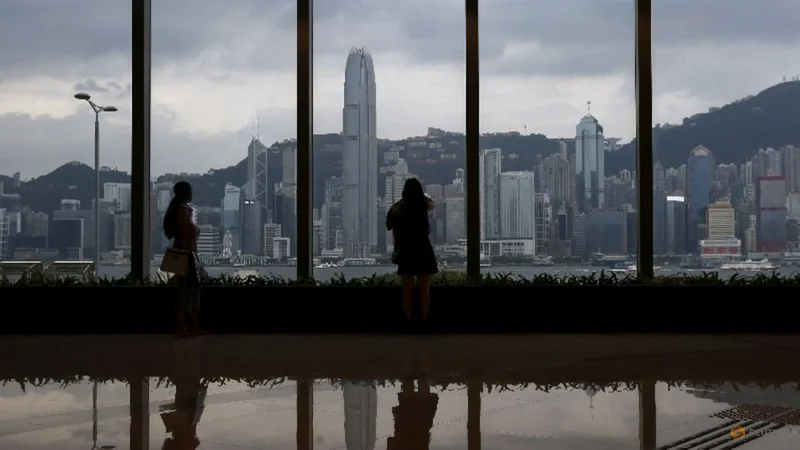
Image: Channelnewsasia
Main Takeaway
Hong Kong Chief Executive John Lee unveiled the city’s first five-year plan, including a near-doubling of innovation spending and closer alignment with China’s national strategy.
Jump to Key PointsSummary
A new planning framework
Hong Kong has unveiled its first socioeconomic five-year plan, covering 2026 to 2030 and aligning the city with China’s national 15th Five-Year Plan. Chief Executive John Lee Ka-chiu presented the blueprint alongside his annual policy address on Sept. 16, marking a shift from predominantly annual policymaking toward a longer-term framework.
The plan is designed to coordinate economic, infrastructure and technology priorities while preserving Hong Kong’s market-based system. Its six pillars include the Northern Metropolis, financial and trade development, innovation and technology, and closer integration with the Guangdong-Hong Kong-Macao Greater Bay Area. The Hong Kong government began preparing the plan after Lee announced the initiative in February, with coordination led through a steering group focused on integrating the city into national development priorities.
Technology gets a larger allocation
Innovation and technology spending is set to nearly double under the new blueprint, making research, commercialization and technology infrastructure central to Hong Kong’s economic strategy. The spending increase reflects an effort to turn the city’s universities, financial institutions and international connections into a more substantial technology base.
The technology push also fits the national plan’s emphasis on the Greater Bay Area as a growth engine. Regional cooperation will involve closer alignment of rules and mechanisms in technology, economic development and public services, alongside expanded use of major cooperation platforms for pilot projects. Hong Kong’s role is therefore being defined through both local investment and deeper links with mainland innovation centers, according to the Bay Area Development Office’s policy summary and reporting on the plan.
Markets remain part of the design
John Lee has stressed that the five-year plan sets goals without converting Hong Kong into a planned economy. The document includes binding indicators alongside anticipatory targets, allowing the government to commit to measurable priorities while retaining room to adjust longer-range ambitions.
That distinction addresses the plan’s central political and economic tension: Hong Kong is adopting a stronger industrial and technology policy while seeking to preserve capitalism and the “one country, two systems” framework. The blueprint’s blue cover symbolizes openness, progress and steadiness, while its policy structure gives government agencies a clearer role in directing land, infrastructure and investment. Analysts cited by Channel NewsAsia said a longer planning horizon can give businesses more certainty about government priorities and improve confidence in large projects.
Northern development meets innovation
The Northern Metropolis is a major delivery mechanism for the plan, linking new urban development with research, technology and cross-border economic activity. The project is intended to address land constraints that have limited technology expansion and to create space for businesses, laboratories and supporting infrastructure.
Hong Kong’s planners are also trying to close the gap between research strength and commercial results. The city has long had internationally recognized universities and a major financial sector, but technology companies have faced limited land and weaker commercialization channels. The five-year framework brings those structural issues into one policy agenda, connecting the Northern Metropolis, innovation spending and Greater Bay Area cooperation rather than treating them as separate initiatives.
Investors watch execution
The plan gives investors a clearer map of sectors receiving public attention, but its economic value will depend on delivery. Family-office investors are examining opportunities created by technology funding, Northern Metropolis construction and Hong Kong’s closer connection to mainland development priorities. Full Vision Capital managing partner Alan Chan discussed the investment outlook in a Bloomberg interview.
Businesses will be watching how quickly funding reaches laboratories, startups and commercial projects, as well as whether cross-border rules become easier to navigate. The plan’s binding targets can provide accountability, while anticipatory targets leave flexibility as technology and economic conditions change. That balance will shape whether the blueprint produces new companies and products or remains primarily a statement of intent.
What happens through 2030
Implementation now becomes the central test. Hong Kong’s government must translate the six pillars into budgets, land approvals, infrastructure projects and measurable technology outcomes between 2026 and 2030. The near-doubling of innovation spending creates a substantial policy commitment, but results will be judged by research commercialization, company formation and the city’s ability to attract capital and talent.
The plan also establishes a durable channel for aligning Hong Kong with national priorities while maintaining its separate economic character. Its progress will be measured inside Hong Kong and across the Greater Bay Area, where rules, public services and technology links are expected to become more connected.
Key Points
Hong Kong nearly doubles innovation spending under its first 2026-2030 socioeconomic five-year plan.
John Lee’s blueprint aligns Hong Kong’s priorities with China’s national 15th Five-Year Plan.
Northern Metropolis development links new land supply with technology infrastructure and Greater Bay Area integration.
Binding and anticipatory targets preserve policy flexibility while establishing clearer government accountability.
Greater Bay Area cooperation will focus on technology, public services, economic rules and legal protection.
Questions Answered
Hong Kong’s first five-year plan is a socioeconomic blueprint covering 2026 to 2030. Chief Executive John Lee designed it to coordinate local priorities with China’s national 15th Five-Year Plan while preserving Hong Kong’s market-based system.
Hong Kong plans to nearly double spending on innovation and technology in coming years. The funding targets research, commercialization, technology infrastructure and broader development of the city’s technology sector.
Hong Kong is creating the plan to replace predominantly annual policymaking with longer-term coordination. The framework also aligns the city more closely with national and Greater Bay Area development priorities.
John Lee says Hong Kong’s plan does not create a planned economy. It combines binding indicators with anticipatory targets while retaining capitalism and allowing flexibility in longer-range policy goals.
The Northern Metropolis provides land and infrastructure for technology, research and cross-border development. It is intended to address Hong Kong’s space constraints and connect innovation activity more closely with the Greater Bay Area.
Hong Kong’s government must convert the blueprint into budgets, infrastructure projects, land approvals and measurable technology outcomes. Businesses will track research commercialization, startup creation, cross-border rules and the delivery of binding targets through 2030.
Source Reliability
43% of sources are highly trusted · Avg reliability: 70
Go deeper with Organic Intel
Simple AI systems for your life, work, and business. Each one includes copyable prompts, guides, and downloadable resources.
Explore Systems