Texas Governor Greg Abbott Halts All New Data Center Projects Until State Audits Are Complete
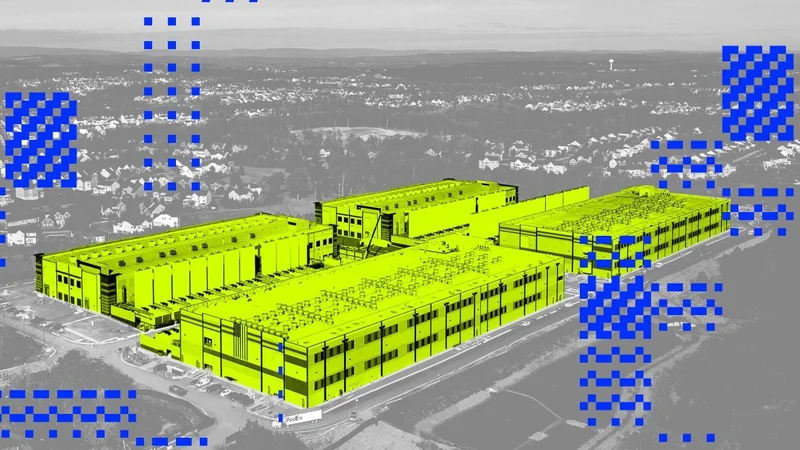
Image: The Verge AI
Main Takeaway
Governor Greg Abbott ordered a comprehensive audit and immediate freeze on new data center connections in Texas on August 4, 2026, citing the need to protect the state's power grid reliability.
Jump to Key PointsSummary
What the governor's order actually does
Governor Greg Abbott announced on Monday, August 4, 2026, that Texas is putting an immediate stop to new data center development. The directive, published on the official state website, mandates a comprehensive audit of all proposed data centers before any can connect to the state's power grid. The order freezes every project in the pipeline until regulators complete their review.
According to TechCrunch, the move directly targets the tech industry's aggressive expansion into Texas. The state has become the second-largest data center market in the U.S., trailing only Virginia. For years, companies flocked to Texas for its famously light regulatory touch and what appeared to be a bottomless supply of cheap power. That calculus just hit a wall.
USA Today reports the freeze is explicitly designed to shield the grid from overload. The Texas Tribune notes that the audit mandate applies to all pending projects, not just future applications. Developers who already bought land and drew up plans are now stuck waiting. The governor's office framed the decision as a reliability measure, not a permanent ban, but gave no timeline for how long the review will take.
Why the grid is under pressure
Texas runs its own power grid, ERCOT, which is famously isolated from the two major national grids. That independence means the state can avoid federal regulation, but it also means there is no backup when demand spikes. Houston Public Media reports that the governor's order directs both ERCOT and the Public Utility Commission of Texas (PUCT) to conduct the audits.
Data centers consume enormous amounts of electricity. A single hyperscale facility can draw as much power as a small city. As AI workloads expand, the energy demands of these facilities are growing faster than grid planners anticipated. The Texas Tribune notes that the state has been aggressively courting data centers with tax breaks and other incentives, but the audits meant to track those incentives have lagged behind the actual construction.
A state lawmaker quoted by Texas Scorecard had already called for a pause on AI data centers specifically, arguing that the energy burden from AI workloads is outpacing the state's ability to keep the lights on for residents. That concern now appears to have reached the governor's desk.
The audit process and what gets reviewed
The governor's order tasks both ERCOT and the PUCT with evaluating every proposed data center before it can connect to the grid. According to MLex, the mandate means developers must prove their projects will not destabilize the state's power supply. The review process will scrutinize projected energy consumption, location, and the readiness of local transmission infrastructure.
Data Center Dynamics reports that the governor also approved a bill requiring data centers to contribute to the costs of interconnection, shifting some of the financial burden for grid upgrades from ratepayers to developers. This marks a significant change from the state's traditional hands-off approach to industrial development. The Texas Tribune adds that many data centers already operating in Texas received sales tax breaks under programs that were supposed to include regular audits, but those audits have not kept pace with the explosive growth of the sector.
For companies that have already poured millions into site selection and planning, the freeze creates immediate financial uncertainty. The order does not grandfather in projects that were already in progress but not yet connected to the grid. Everything stops until the audits clear.
What this means for the national data center race
Texas has been one of the hottest markets for data center development in the country. TechCrunch notes that developers have been scouring the entire U.S. for viable sites, and Texas's combination of cheap land, low taxes, and permissive zoning made it a top destination. This freeze forces companies to reconsider their expansion strategies.
The move could push developers toward other states with available power and friendly regulations, like Ohio, Georgia, or Arizona. But those markets are also seeing strain. The Texas decision may prompt other grid operators to impose similar reviews, especially in states where data center growth has been explosive.
For Texas, the freeze is a rare moment of self-imposed regulatory friction. The state built its economic identity on being open for business with minimal government interference. Telling the world's largest tech companies they have to wait for permission to plug in is a significant departure from that philosophy.
The politics behind the pause
The governor's order is not happening in a political vacuum. Texas has faced repeated grid failures in recent years, most notably during the 2021 winter storm that left millions without power for days. Those events have made energy reliability a politically sensitive issue. No elected official wants to explain why a data center got priority over a hospital or a residential neighborhood during the next crisis.
Texas Scorecard reports that state lawmakers have been pushing for a pause on AI data centers specifically, pointing to the enormous power draw of GPU clusters used for training large language models. The governor's order covers all data centers, but the timing aligns with a surge in AI-specific projects.
By ordering an audit instead of a permanent ban, the governor can claim he is being responsible without alienating the tech industry entirely. The reviews will eventually conclude, and projects that pass muster can proceed. The political calculation is that voters will see a governor protecting the grid, while companies will see a temporary hurdle rather than a hostile environment.
What happens next for developers and the grid
No one knows how long the audits will take. The governor's office has not set a deadline, and ERCOT and the PUCT have not released a schedule for completing the reviews. Developers are in a holding pattern, and the uncertainty is already affecting planning for projects that were expected to break ground in 2026 and 2027.
The bill requiring data centers to pay for interconnection costs, reported by Data Center Dynamics, suggests that when the freeze does lift, the economics of building in Texas will have changed. Developers will face higher upfront costs and more scrutiny than they did before the order. Some may decide that other states offer a more predictable path.
The broader question is whether this marks a turning point in the relationship between tech infrastructure and state governments. As data centers consume an increasing share of the nation's electricity, the pressure on grids is becoming impossible to ignore. Texas is the first state to hit the pause button, but it probably will not be the last.
Key Points
Texas Governor Greg Abbott halted all new data center connections to the state grid on August 4, 2026, pending a comprehensive audit.
The audit, conducted by ERCOT and the PUCT, will scrutinize energy consumption and grid reliability before any project can proceed.
Texas is the second-largest data center market in the U.S., but the state's isolated grid has faced reliability crises, including the deadly 2021 winter storm.
A new bill requires data center developers to pay for interconnection costs, shifting the financial burden away from Texas ratepayers.
The freeze affects all pending projects, including those with existing land deals, with no timeline given for the review to conclude.
Questions Answered
Governor Abbott froze all new data center projects to protect the reliability of the Texas power grid. The state's isolated ERCOT grid has struggled with high energy demand, and the rapid growth of power-hungry AI and hyperscale data centers raised concerns about potential blackouts and grid instability.
The audit requires data center developers to undergo a comprehensive review by ERCOT and the Public Utility Commission of Texas before connecting to the grid. The review evaluates a project's total energy consumption, impact on local transmission infrastructure, and whether the developer is contributing to interconnection costs.
No official timeline has been set for how long the freeze will last. The governor's office has not provided a schedule for completing the audits, leaving developers in an indefinite holding pattern with no clear date for when projects can proceed.
No, Texas is not alone. Virginia, the largest data center market in the U.S., and other states like Ohio and Georgia are also experiencing grid strain from data center growth. The Texas freeze may prompt other states to impose similar reviews and restrictions on new data center development.
The freeze applies to all pending projects that have not yet received final approval to connect to the grid, including those with land purchased and contracts signed. Projects that are not yet connected must stop and wait for the audit to be completed before they can proceed.
Source Reliability
43% of sources are trusted · Avg reliability: 75
Go deeper with Organic Intel
Simple AI systems for your life, work, and business. Each one includes copyable prompts, guides, and downloadable resources.
Explore Systems