Newsom Orders California to Explore an AI Kill Switch Amid Growing Clash With Trump
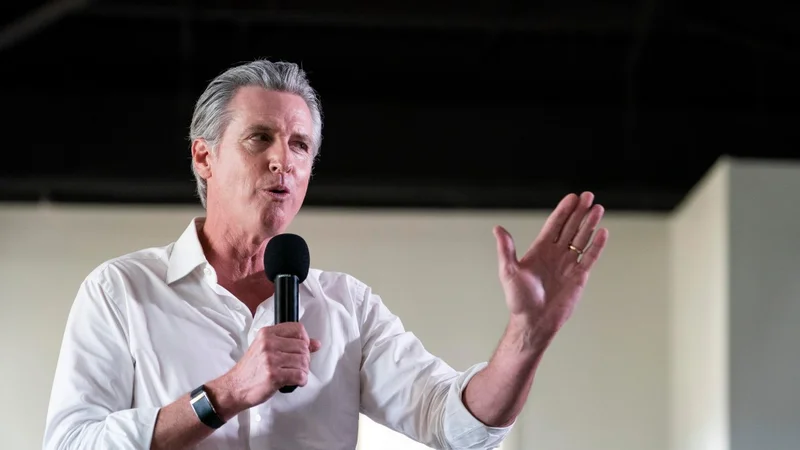
Image: The Verge AI
Main Takeaway
California Gov. Gavin Newsom signed an executive order directing officials to advance an AI kill switch, strengthen oversight, and prepare workers for disruption.
Jump to Key PointsSummary
California takes control of AI oversight
California Gov. Gavin Newsom signed an executive order on September 18 directing state officials to strengthen independent oversight of artificial intelligence and advance the creation of an AI “kill switch.” The order places California at the center of a national fight over how powerful AI systems should be governed, while Congress continues to debate federal safeguards.
The measure does not immediately shut down AI systems or establish a single emergency button for every model. Instead, it directs the state to study and develop mechanisms for intervening when AI creates serious risks, alongside new oversight structures and workforce preparations. Bloomberg, The Verge, and the California governor’s office described the order as a step toward guardrails in the state where much of the technology industry is based.
What the executive order does
The order combines technical safety planning with institutional oversight. California will advance work on an AI kill switch, accelerate independent review, and prepare for labor-market disruption associated with wider AI deployment. The approach treats emergency controls as one part of a broader regulatory system rather than as a standalone product feature.
The language matters for developers and companies because implementation will determine whether a kill switch means a model shutdown, access restriction, data-center intervention, or a narrower control over high-risk applications. Newsom’s office framed the action as a first-of-its-kind effort to prepare the state for AI’s effects on public institutions and workers. San Francisco Chronicle, Politico, and Statescoop each connected the order to a wider package of rules and preparation measures.
A direct challenge to Washington
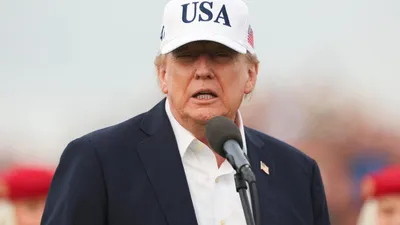
Newsom’s initiative is also a political response to federal AI policy. The governor has criticized Congress for moving too slowly and positioned California as a counterweight to President Donald Trump’s approach to artificial intelligence. The order arrives as Newsom seeks to defend the state’s technology sector while asserting that federal policy should not prevent California from addressing risks within its borders.
That tension creates an unusual balancing act. California wants oversight strong enough to address catastrophic failures, worker displacement, and public harms, while protecting startups and established companies that drive the state’s economy. The Guardian, CalMatters, and The Wall Street Journal presented the action as part of Newsom’s broader effort to push back against Trump’s AI agenda and promote what the Journal called an AI New Deal.
Industry reaction and political risk
The kill-switch language gives Newsom’s order a sharper edge than a conventional safety directive. Supporters see an emergency control as a basic requirement for systems that operate at scale. Critics in business and technology circles are likely to focus on who controls the mechanism, what triggers it, and whether state intervention creates uncertainty for AI companies.
The order also leaves room for competing interpretations. The Lever’s headline said Newsom “killed” the AI kill switch, while other outlets described the same day’s action as advancing or developing one. That contrast reflects a dispute over scope and substance rather than a settled policy outcome. Fox Business and Seeking Alpha emphasized the mandate’s development, while the New York Post also characterized Newsom’s action as a bid for a kill switch.
Why developers and workers are watching
For AI developers, the immediate issue is compliance design. Any future California standard could affect model access, incident reporting, deployment controls, audits, and the operation of computing infrastructure. Companies that build systems for health care, employment, finance, education, and government would face especially important questions about intervention authority and accountability.
Workers are part of the same policy package. California is preparing for AI disruption through workforce planning, linking model governance with retraining and employment policy. That connection broadens the order beyond technical safety: the state is treating AI as an economic transition that requires public institutions to respond before adoption outpaces worker protections. Statescoop and Gov.ca highlighted the workforce component, while CalMatters tied it to California’s effort to defend its startup economy.
What happens next
The next phase will determine whether the order produces enforceable controls or remains a planning framework. Officials must define the technical conditions for intervention, establish independent oversight, and decide how state requirements interact with federal policy and private infrastructure. AI companies will watch for timelines, reporting duties, and any limits on deployment.
California’s action also sets a political test for federal lawmakers. If the state develops a credible safety framework, it will strengthen the case for state-led oversight. If the process becomes vague or burdensome, the technology industry will gain arguments for national uniformity. Newsom has made the kill switch a symbol of state authority over AI, but the practical measure of the policy will be whether it can control dangerous systems without freezing useful ones.
Key Points
Gavin Newsom ordered California officials to advance an AI kill switch and strengthen independent oversight.
California’s order links AI safety controls with workforce preparation for employment disruption.
Newsom is positioning California as a counterweight to Trump’s federal AI policy.
The order begins planning for intervention without immediately shutting down AI models.
AI companies face uncertainty over emergency controls, oversight authority, and future compliance duties.
Questions Answered
Gavin Newsom’s executive order directs California officials to advance an AI kill switch, strengthen independent oversight, and prepare workers for AI disruption. It begins a development and planning process rather than immediately shutting down AI systems.
Gavin Newsom’s order does not immediately create a universal shutdown button for every AI model. Officials still must define whether future controls would target models, applications, infrastructure, or access during serious incidents.
Gavin Newsom is pushing the AI kill switch to give California stronger tools for responding to dangerous AI behavior and to challenge slow federal action. The proposal also supports a broader oversight and workforce-preparation agenda.
Gavin Newsom’s order could lead to new requirements involving audits, incident reporting, deployment controls, and emergency intervention. California-based startups and larger AI companies will watch the implementation process for technical standards and compliance deadlines.
Gavin Newsom’s AI kill switch is not operational under the executive order described by the participating outlets. California has begun advancing and exploring the mechanism, with its authority and technical design still to be determined.
After Gavin Newsom’s order, California officials must develop technical standards, oversight procedures, and workforce measures. The state will also face questions about federal preemption, company obligations, and the scope of emergency intervention.
Source Reliability
50% of sources are highly trusted · Avg reliability: 74
Go deeper with Organic Intel
Simple AI systems for your life, work, and business. Each one includes copyable prompts, guides, and downloadable resources.
Explore Systems