White House Finalizes AI Cybersecurity Framework But Keeps It Secret From the Public
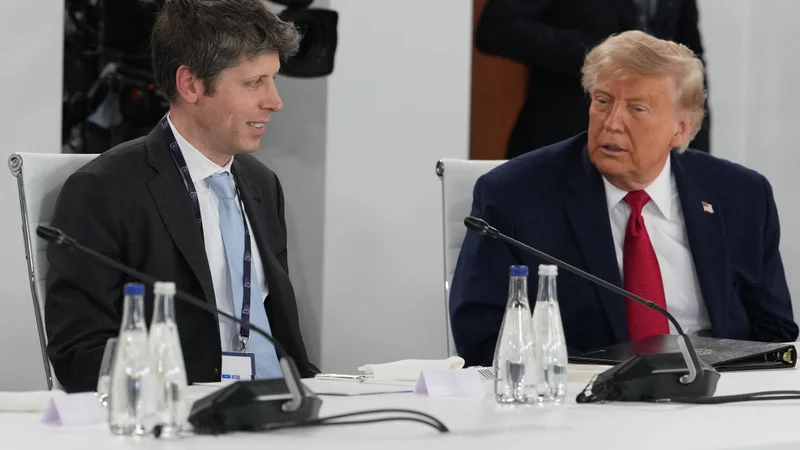
Image: Cnbc
Main Takeaway
The Trump administration completed a voluntary cybersecurity framework for frontier AI models and shared it with OpenAI, Anthropic, and other labs, but has no plans to release it publicly.
Jump to Key PointsSummary
The scope of the secret framework
The Trump administration has finalized a voluntary framework for testing the cybersecurity capabilities of advanced AI models before they are released. A White House official confirmed the plan's completion to WIRED, but people familiar with the matter said the administration is deliberately keeping the details under wraps. The framework was reviewed on Tuesday during a closed-door meeting with staffers from OpenAI, Anthropic, Google, Meta, Nvidia, and Microsoft, according to multiple reports.
The framework stems from a June executive order signed by President Trump that directed officials to develop a process for evaluating the cybersecurity risks posed by increasingly powerful AI systems. The order creates a voluntary review process focused on models with advanced capabilities that could be weaponized for cyberattacks. Companies that choose to participate can give the government early access to their models for testing, though the specifics of what that testing entails remain unknown to anyone outside the room.
Fortune reports that the White House has no plans to publicly reveal the framework's contents. The details will be known only to a select group of companies that may choose to participate in the voluntary process. This secrecy has drawn sharp criticism from lawmakers and advocacy groups who argue the public deserves to know how the government intends to assess the safety of increasingly powerful AI systems.
Why the framework is being kept under wraps
The administration has not offered a clear explanation for why the framework remains classified. According to Fortune, it is unclear why the details are being withheld, especially following a series of high-profile hacks from OpenAI and Anthropic that have spooked the public and raised questions about whether AI companies can be trusted to police their own cybersecurity.
The Record notes that the latest executive order represents a pared-back version of an initial plan that was scrapped last month amid internal dissent. The biggest change between the two iterations is a shift in the voluntary review period for government testing of advanced models. The order states that federal access to the models should be subject to appropriate confidentiality, cybersecurity, insider-risk, and intellectual-property protection requirements, which may partly explain the secrecy.
The lack of transparency has fueled a broader debate about who gets to see and influence the rules governing AI safety. The Electronic Privacy Information Center criticized the framework as protecting AI companies rather than the American people, calling it light on protection and heavy on promotion of dangerous AI systems.
Senate Democrats demand answers
A group of Senate Democrats is pressing the Trump administration for clarity on its AI policies. Senators Kirsten Gillibrand, Adam Schiff, Mark Warner, Christopher Coons, and Mark Kelly sent a letter to senior administration officials demanding visibility into the government's approach to assessing and potentially restricting access to advanced AI models.
The Hill reports that the senators expressed concern about the administration's opaque decision-making process. Fortune adds that Senate Democrats are arguing the lack of clear rules will push American firms toward cheaper Chinese AI alternatives, undermining economic security and competitiveness. The letter, spearheaded by Senator Gillibrand and Intelligence Committee ranking member Mark Warner, spells out concerns about the administration's unfocused, ad hoc approach to AI governance.
Fedscoop reports that Senate Democrats are also ratcheting up pressure over what they describe as sweetheart deals for AI data centers that have driven up utility costs nationwide. The dual pressure campaigns signal a broader legislative push to force transparency on the administration's AI policies.
The competitive and security context
The secretive framework arrives at a moment when AI cybersecurity risks are no longer theoretical. WIRED previously reported on a series of hacking sprees involving models from OpenAI and Anthropic that have raised public alarm. The framework is intended to give the government a mechanism to catch such vulnerabilities before models reach the market.
Fortune reports that the administration's opaque approach has coincided with a rise in American companies outsourcing operations to cheaper Chinese AI alternatives. Senate Democrats argue that without clear domestic rules, U.S. firms will gravitate toward lower-cost foreign options, creating a national security paradox where efforts to secure AI end up driving business to geopolitical rivals.
The Journal notes that the executive order aims to maintain U.S. AI leadership while addressing security risks. However, the voluntary nature of the framework means its effectiveness depends entirely on company cooperation. Without public scrutiny of the testing standards, there is no way for independent researchers or the public to assess whether the government's vetting process is rigorous enough to catch the kinds of cybersecurity threats that have already materialized.
What happens next for AI governance
The closed-door review with major labs is a first step, not an endpoint. CNBC reports that the White House hosted the meeting to review the completed voluntary framework, with Anthropic, OpenAI, and Google expected to participate. The framework allows companies to give the government early access for testing, but participation remains optional.
The Record notes that the executive order downsized an earlier, more ambitious version that was scrapped amid internal dissent. The final plan represents a compromise between industry pressure and security hawks, but the secrecy around its contents means the public cannot evaluate which side won.
The Hill reports that Senate Democrats are demanding written responses from the administration about its policies surrounding American AI models. The coming weeks will reveal whether the White House offers any transparency, or whether the framework remains a private agreement between the government and the handful of companies powerful enough to get a seat at the table.
Key Points
The White House finalized a voluntary AI cybersecurity framework and shared it privately with OpenAI, Anthropic, and other labs at a closed-door meeting.
The administration has no plans to release the framework publicly, keeping the testing standards and review process hidden from the public.
Senate Democrats led by Senators Gillibrand and Warner are demanding answers on the administration's opaque AI governance approach.
The framework stems from a June 2026 executive order that was significantly pared back from an earlier version scrapped amid internal dissent.
Critics argue the secrecy protects AI companies over the public interest and could drive American firms toward cheaper Chinese AI alternatives.
Questions Answered
The White House AI cybersecurity framework is a completed voluntary process for testing the cybersecurity capabilities of frontier AI models before they are released. It was developed under a June 2026 executive order and allows companies to give the government early access to advanced models for security evaluation.
The Trump administration has not provided a clear reason for keeping the framework's details confidential. The executive order references confidentiality, cybersecurity, and intellectual property protections as justifications, but critics argue the lack of transparency shields AI companies from public accountability.
Staffers from OpenAI, Anthropic, Google, Meta, Nvidia, and Microsoft attended the closed-door White House meeting to review the draft framework. The meeting was held on Tuesday, August 4, 2026, in Washington, D.C.
Senate Democrats including Senators Kirsten Gillibrand, Adam Schiff, Mark Warner, Christopher Coons, and Mark Kelly sent a letter demanding visibility into the administration's AI policies. They argue the lack of clear rules threatens U.S. economic competitiveness and could push American firms toward cheaper Chinese AI alternatives.
No, the framework is entirely voluntary. Companies can choose whether to participate in the government's review process. This means the framework's effectiveness depends on whether major AI labs decide to submit their models for testing before public release.
Source Reliability
69% of sources are trusted · Avg reliability: 72
Go deeper with Organic Intel
Simple AI systems for your life, work, and business. Each one includes copyable prompts, guides, and downloadable resources.
Explore Systems