WHO declares Ebola emergency as CDC deploys teams to Congo and Uganda
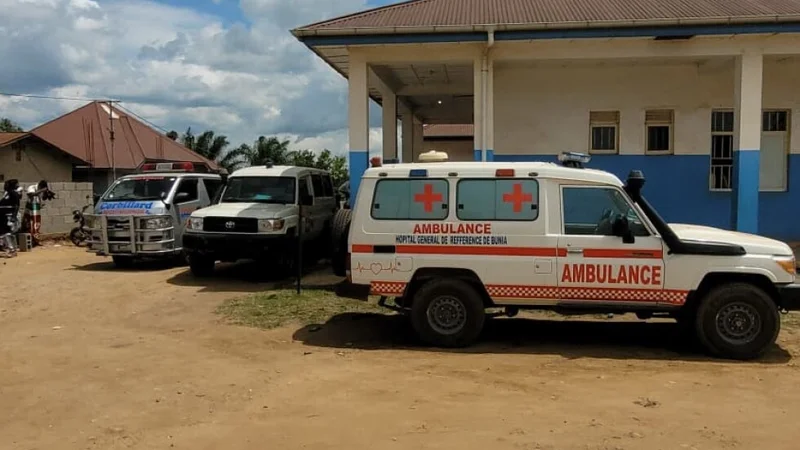
Image: Apnews
Main Takeaway
The WHO declared an Ebola outbreak in Congo and Uganda a global health emergency. The CDC is sending staff and technical support as cases top 300 with 88.
Jump to Key PointsSummary
Why this outbreak is different from past Ebola crises
This outbreak is caused by the Bundibugyo virus, a rare strain that has no approved treatments or vaccines. According to CNN, the Bundibugyo virus is one of several Orthoebolaviruses that can cause Ebola disease, making it distinct from the more common Zaire strain that fueled the 2014 West Africa epidemic and the 2018-2020 Congo outbreak. Fortune reports that health authorities have confirmed all cases are in Congo except for two recorded in neighboring Uganda, signaling cross-border spread that complicates containment efforts.
The case numbers have shifted rapidly. AP News cited more than 300 suspected cases and 88 deaths when the WHO declared the emergency on Sunday, while BBC reported around 246 cases and 80 deaths in its coverage. PBS confirmed the 300 suspected cases and 88 deaths figure, noting the outbreak does not meet pandemic emergency criteria like COVID-19. The WHO explicitly advised against closing international borders, seeking to balance public health response with economic and social continuity.
The Guardian emphasizes that the strain has no vaccine, and conflict in the Democratic Republic of Congo makes containing spread particularly difficult. This combination, unfamiliar virus plus unstable operating environment, has alarmed global health officials who recall how previous Ebola outbreaks spiraled when response efforts were delayed or undermined by local conditions.
How the CDC is ramping up its response
The US Centers for Disease Control and Prevention is escalating its response to the outbreak after the WHO's emergency declaration. According to Fortune, the agency plans to deploy additional staff to affected countries and will provide technical support including laboratory testing, contact tracing, and surveillance through its country offices. Satish Pillai, identified by Fortune as a CDC official, outlined these expanded operations.
The CDC's involvement extends beyond immediate deployment. The CDC Foundation, a separate nonprofit that supports CDC work, has historically channeled private funding toward Congo outbreak responses. Its website notes that the DRC experienced the world's second largest Ebola epidemic in history with 3,250 cases and more than 2,100 deaths in a previous outbreak, context that underscores the stakes of the current emergency. The Foundation's ongoing programs suggest sustained institutional memory and relationships in the region that could facilitate faster coordination.
The technical support model, laboratory capacity, contact tracing infrastructure, and surveillance systems, represents a lower-profile but arguably more sustainable intervention than vaccine campaigns. Without an approved vaccine for this particular strain, these foundational public health tools become even more critical to containment.
Why cross-border spread has officials worried
The outbreak began in Ituri province in eastern DRC, a region characterized by conditions that favor rapid disease transmission. Africa CDC's statement, reported by multiple outlets, highlighted high population mobility, insecurity, and intense cross-border connectivity with neighboring countries including Uganda. These factors create a challenging environment for the contact tracing and isolation protocols that typically contain Ebola outbreaks.
Uganda's involvement changes the calculus significantly. Two confirmed cases in Uganda mean the virus has already crossed an international border, a development that historically precedes wider regional spread. The Guardian notes that cases have been detected elsewhere in Congo beyond the original Ituri province epicenter, suggesting the outbreak was already more extensive than initially detected when the emergency was declared.
The UN News service, cited by News.un, specifically mentioned rising cases, cross-border spread, and significant uncertainties about the true scale of the epidemic as factors in the WHO's emergency declaration. Unlike COVID-19, this emergency does not yet constitute a pandemic threat, but the pattern of cross-border movement in a conflict-affected region mirrors conditions that allowed previous Ebola outbreaks to persist for months or years rather than weeks.
What the emergency declaration actually means
The WHO's declaration of a Public Health Emergency of International Concern is its highest level of alarm, though it comes with specific legal and practical implications that differ from a pandemic designation. According to PBS, the WHO stated the outbreak does not meet pandemic emergency criteria and advised against international border closures. This calibrated messaging aims to mobilize resources without triggering the economically disruptive measures seen during COVID-19.
The declaration triggers formal obligations under the International Health Regulations for member states to report cases, share data, and coordinate responses. For the countries affected, it typically unlocks international funding streams and technical assistance that might otherwise move more slowly through bureaucratic channels. AP News reported the declaration came after more than 300 suspected cases and 88 deaths, suggesting the threshold for emergency status was crossed due to trajectory rather than absolute numbers alone.
Historical context matters here. The New York Times, among the most prominent outlets covering the declaration, has previously documented how WHO emergency declarations for Ebola have sometimes lagged behind the actual severity of outbreaks. The 2014 West Africa emergency declaration came months after the outbreak began, by which point thousands had died. The relatively rapid declaration this time, with case counts still in the hundreds, may reflect institutional learning from that experience.
What happens next for containment efforts
Without approved treatments or vaccines for the Bundibugyo strain, containment depends on classic public health interventions, isolation, contact tracing, safe burial practices, and community engagement. BBC's reporting noted the case count of around 246 suspected cases at the time of its publication, with 80 deaths, suggesting ongoing transmission with a concerning case fatality ratio. The gap between these figures and the higher numbers reported by AP and PBS indicates rapidly evolving data in an active outbreak.
The CDC's deployment of additional staff, reported by Fortune, will focus on laboratory testing, contact tracing, and surveillance. These capabilities are particularly valuable in a region where health infrastructure has been degraded by prolonged conflict. Africa CDC's early alert on May 15, two days before the WHO declaration, suggests regional institutions are attempting faster response coordination than in previous outbreaks.
The coming weeks will test whether this faster global and regional mobilization can overcome the structural challenges of operating in eastern Congo. Previous outbreaks in the region have persisted despite international attention, undone by security incidents, community mistrust, and the logistical difficulties of remote, unstable terrain. Whether the Bundibugyo strain's lack of vaccine options fundamentally changes the containment equation remains the critical unknown.
Why the world is watching this outbreak closely
The global health community's attention to this outbreak extends beyond immediate case counts to broader preparedness concerns. PBS emphasized that the Bundibugyo virus has no approved treatments or vaccines, a gap that highlights how Ebola research has focused on the more common Zaire strain. This narrowness in medical countermeasures leaves populations vulnerable to less-studied variants that may become more prominent as human-wildlife contact patterns shift.
The Guardian's framing, that conflict in DRC makes containing spread difficult, points to a persistent blind spot in global health security. Outbreaks do not occur in abstract epidemiological conditions but in specific political and social contexts that can override even well-funded technical responses. The combination of a novel virus strain, cross-border movement, and active conflict creates a scenario that existing global health architecture was not specifically designed to address.
CNN's technical detail about the Bundibugyo virus being an Orthoebolavirus, while arcane, matters for diagnostic and surveillance purposes. Existing Ebola tests may not detect this strain reliably, potentially leading to undercounting or misidentification. The CDC's laboratory support deployment, noted by Fortune, directly addresses this gap. How quickly accurate diagnostic capacity scales in the region may determine whether this emergency remains contained or follows the tragic pattern of previous Congo Ebola outbreaks.
Key Points
The WHO declared the Ebola outbreak in Congo and Uganda a public health emergency of international concern on May 17, 2026
The outbreak is caused by the rare Bundibugyo virus, which has no approved treatments or vaccines, unlike more common Ebola strains
Over 300 suspected cases and 88 deaths have been reported, with confirmed cross-border spread into Uganda
The CDC is deploying additional staff and technical support including laboratory testing, contact tracing, and surveillance
The WHO explicitly stated this does not constitute a pandemic emergency and advised against international border closures
Questions Answered
This outbreak is caused by the Bundibugyo virus, a rare strain of Ebola that has no approved treatments or vaccines. Most previous major outbreaks, including the 2014 West Africa epidemic, were caused by the more common Zaire ebolavirus, for which vaccines exist. The Bundibugyo strain is an Orthoebolavirus that may not be detected reliably by standard Ebola tests, complicating diagnosis and response.
No. The WHO explicitly stated that this outbreak does not meet the criteria of a pandemic emergency like COVID-19. While it declared a Public Health Emergency of International Concern, its highest alert level, the WHO advised against closing international borders. The current case count is in the hundreds, not the millions, and transmission patterns remain localized to specific regions of Congo and Uganda.
The CDC is escalating its response by deploying additional staff to affected countries and providing technical support through its country offices. This includes laboratory testing capacity, contact tracing expertise, and surveillance systems. The agency is working through established relationships and infrastructure rather than deploying large field hospitals or vaccine campaigns, which reflects the lack of approved medical countermeasures for this particular virus strain.
The outbreak originated in Ituri province in eastern DRC, a region characterized by active conflict, insecurity, high population mobility, and intense cross-border connectivity with Uganda and other neighbors. These conditions make contact tracing, isolation, and community engagement, the core tools of Ebola containment, extremely difficult to implement effectively. Previous Ebola outbreaks in this region have persisted for months or years due to these structural challenges.
No approved treatments or vaccines exist for the Bundibugyo virus specifically. Existing Ebola vaccines, such as the rVSV-ZEBOV vaccine used in previous outbreaks, target the Zaire ebolavirus and would not be expected to protect against this strain. Research and development of broader-spectrum Ebola vaccines has been limited, leaving classic public health measures, isolation, contact tracing, and safe burial practices, as the primary containment tools.
Reporting has varied slightly across sources and dates. AP News and PBS cited more than 300 suspected cases and 88 deaths at the time of the WHO declaration. BBC reported approximately 246 suspected cases and 80 deaths in its coverage. The discrepancy reflects rapidly evolving data in an active outbreak, with case definitions and laboratory confirmation ongoing. All sources agree on dozens of deaths and hundreds of suspected cases.
Source Reliability
58% of sources are highly trusted · Avg reliability: 74
Go deeper with Organic Intel
Simple AI systems for your life, work, and business. Each one includes copyable prompts, guides, and downloadable resources.
Explore Systems