TSMC's Monthly Sales Surge 30% as AI Chip Demand Defies Geopolitical Headwinds
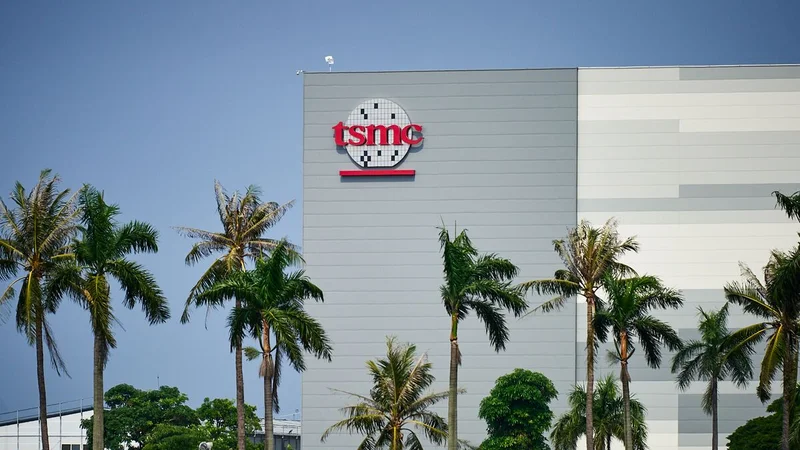
Image: Bloomberg AI
Main Takeaway
TSMC reported 30% monthly sales growth to NT$416.98 billion, driven by sustained AI infrastructure spending from Nvidia and AMD.
Jump to Key PointsSummary
How AI demand reshaped TSMC's revenue trajectory
Taiwan Semiconductor Manufacturing Co. posted May 2026 revenue of NT$416.98 billion, a 30.1% year-over-year increase that underscores the company's central role in global AI infrastructure buildouts. The figure represents a 1.5% sequential gain from April, according to Seeking Alpha data cited by Letsdatascience, showing momentum even against a high comparison base. This latest data point extends a record-breaking streak that began in January, when TSMC logged NT$401.26 billion in sales, up 36.8% annually.
The growth trajectory hasn't been perfectly linear. April's 17.5% year-over-year expansion marked the slowest pace since October 2025, prompting analysts at The Business Times to flag potential challenges in sustaining torrid growth rates. Yet TSMC's first-quarter profit still surged 58%, beating estimates, as CNBC reported. The company has consistently outperformed even when monthly figures occasionally miss analyst expectations. Sherwood noted that January-February 2026 sales rose 30% but fell short of the 33% consensus and TSMC's own 36% growth outlook, illustrating how market expectations have raced ahead of already-strong fundamentals.
What the numbers reveal about chip demand resilience
TSMC's revenue concentration tells a clear story about where the money flows. Nvidia and AMD remain the company's most visible AI customers, with their GPU architectures requiring TSMC's most advanced process nodes. The foundry's capacity for 3nm and upcoming 2nm production, flagged by Techsoda.substack as a capex priority, is effectively sold out through 2026. This supply constraint paradoxically protects margins even as geopolitical risks mount.
The geographic tension is impossible to ignore. Yahoo Finance's Singapore edition highlighted that war fears have failed to dent AI chip demand, referencing ongoing concerns about Taiwan Strait stability. Investors have largely shrugged off these risks, betting that TSMC's technological moat, built over three decades, remains irreplaceable in the medium term. The company's first four months of 2026 saw cumulative revenue rise 29.9% annually, Digitimes reported, suggesting the May acceleration isn't a one-off but part of a durable demand pattern.
Why capacity expansion dominates TSMC's strategy
TSMC's capital allocation reveals management's conviction about demand durability. The company lifted the floor of its 2025 capex range to accelerate 2nm family ramp-up and A16 volume production scheduled for second-half 2026, per Techsoda.substack. This isn't speculative building, it's pre-committed capacity for customers who've already placed orders. The foundry model requires years of lead time, making TSMC's spending decisions among the most reliable forward indicators of semiconductor demand.
The scale of investment underscores a structural shift. AI chips now command premium pricing that absorbs the enormous costs of leading-edge manufacturing. Where smartphone chips once drove TSMC's revenue cycles, data center accelerators have taken the lead. This customer mix shift favors TSMC's profitability, AI chips typically use larger die sizes and more advanced packaging, both areas where the company commands pricing power. Barron's noted the stock's persistent rally, suggesting equity markets have internalized this margin expansion thesis even as some investors fret about eventual demand saturation.
What geopolitical risks mean for supply chains
Taiwan's unique position in semiconductor manufacturing creates concentration risk that no amount of revenue growth eliminates. Yahoo Finance's reporting on war resilience frames the market's current thinking, demand is sufficiently urgent that buyers will accept geopolitical exposure rather than forego access to TSMC's processes. This isn't sustainable indefinitely, and TSMC knows it. The company's Arizona fab investments, while trailing Taiwan capacity, represent a strategic hedge that could expand if policy incentives align.
The competitive landscape offers no immediate relief for customers seeking alternatives. Samsung Foundry continues to struggle with yield issues at advanced nodes, while Intel's foundry ambitions remain years from displacing TSMC at the cutting edge. This duopoly-near-monopoly in advanced logic gives TSMC unusual pricing leverage, but also concentrates systemic risk. Any disruption to Taiwan operations would cascade through global technology supply chains within weeks.
How investors should read the growth signals
The deceleration from January's 37% to May's 30% year-over-year growth merits attention, even as absolute numbers remain impressive. The Business Times' analysis of April's 17.5% expansion as a potential inflection point looks premature in hindsight, May's reacceleration suggests demand merely paused rather than peaked. Analysts now expect June-quarter revenue to grow nearly twice as fast as April's pace, according to the same source, implying consensus sees this as a temporary lull before renewed acceleration.
Valuation remains the persistent question. TSMC trades at a significant premium to historical semiconductor cycles, reflecting AI-driven earnings growth rather than cyclical recovery. The stock's rally, chronicled by Barron's, has compressed future returns unless growth sustains at these elevated levels. For now, the order books suggest it will. Nvidia's Blackwell ramp, AMD's MI300 follow-ons, and custom AI accelerators from cloud hyperscalers all require TSMC fabrication through at least 2027. The foundry's challenge isn't finding demand, it's building factories fast enough to capture it.
What happens next for TSMC and AI chip supply
The second half of 2026 will test whether TSMC's capacity expansion can match demand acceleration. A16 technology, the company's next-generation platform, enters volume production in late 2026 according to Techsoda.substack. This timing coincides with expected ramps of next-generation AI architectures from major customers. The risk of supply-constrained launches, familiar from recent Nvidia product cycles, remains material.
Longer term, TSMC must navigate a transition from pure-play foundry to a more geopolitically distributed manufacturer. Revenue concentration in Taiwan creates both strategic vulnerability and investor anxiety that periodic foreign media coverage of conflict scenarios amplifies. The company's ability to maintain technology leadership while diversifying production geography will shape its valuation multiple over the next decade. For 2026, however, the story remains straightforward, AI infrastructure spending continues to flow through TSMC's financial statements at record rates, and competitors remain years behind.
Key Points
TSMC reported May 2026 revenue of NT$416.98 billion, up 30.1% year over year on sustained AI chip demand from Nvidia and AMD.
Growth moderated to 17.5% in April, the slowest pace since October 2025, before reaccelerating in May.
First-quarter profit surged 58% to a record, beating analyst estimates despite occasional monthly misses.
TSMC lifted its 2025 capex floor to accelerate 2nm and A16 production scheduled for second-half 2026 volume.
Geopolitical risks around Taiwan have not dented demand, though investors closely monitor supply chain concentration.
Questions Answered
TSMC's May 2026 revenue reached NT$416.98 billion, a 30.1% increase from the prior year and a 1.5% sequential rise from April. The growth reflects sustained demand for AI chips from major customers including Nvidia and AMD.
April sales rose 17.5% year over year, the slowest pace since October 2025, which analysts attributed to normal demand fluctuations rather than a fundamental downturn. The company reaccelerated to 30.1% growth in May, suggesting the April figure was a temporary lull.
TSMC increased its 2025 capital expenditure floor to accelerate production of 2nm chips and A16 technology, with volume production targeted for second-half 2026. The company is also expanding its Arizona fab as a geopolitical hedge, though Taiwan remains its primary manufacturing base.
Concerns about Taiwan Strait stability have not reduced customer demand, as TSMC's advanced manufacturing capabilities remain irreplaceable in the medium term. The company is diversifying production geographically through its Arizona investments, though complete relocation is impractical due to the complexity of leading-edge semiconductor manufacturing.
AI chips use larger die sizes and more advanced packaging than smartphone processors, commanding premium pricing that expands TSMC's margins. The company's near-monopoly at the 3nm node and below, with no credible competitor at scale, provides exceptional pricing power for the most demanding customers.
Source Reliability
33% of sources are highly trusted · Avg reliability: 67
Go deeper with Organic Intel
Simple AI systems for your life, work, and business. Each one includes copyable prompts, guides, and downloadable resources.
Explore Systems