Trump Rejects International AI Pact as Critics Warn Against Leaving Frontier Risks Unchecked
Main Takeaway
Donald Trump rejected calls for an international agreement on artificial intelligence safeguards, challenging efforts to coordinate global controls on frontier AI risks.
Jump to Key PointsSummary
Trump rejects global AI guardrails
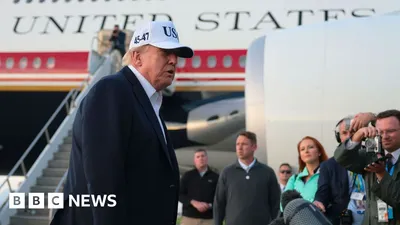
President Donald Trump rejected calls for an international agreement governing artificial intelligence, dismissing concerns about frontier systems becoming dangerous or escaping human control. His position places the United States against advocates who want governments to establish shared rules for advanced AI development.
The dispute centers on whether AI risks require coordinated international oversight or should remain subject to national policy and industry decisions. A Bloomberg account described Trump as brushing aside warnings about frontier models going rogue, while PBS characterized his remarks at the United Nations as a refusal to rein in AI. The coverage presents the comments as a direct challenge to efforts to build a common framework for managing advanced systems.
The argument over AI risks
Supporters of an international pact argue that frontier AI systems operate across borders, making purely national safeguards difficult to enforce. Models trained in one country can be deployed globally, while research, computing infrastructure, developers, and users span multiple jurisdictions.
Trump’s comments reject the premise that those risks justify a binding international agreement. The Bloomberg coverage frames his position around skepticism toward claims that advanced models pose dangers requiring global guardrails. PBS likewise reports that he dismissed concerns about AI risks at the United Nations. The result is a clear policy divide between advocates of shared controls and an administration prioritizing restraint in regulation.
Democratic criticism sharpens
Representative Lori Trahan, a Florida Democrat, said Trump is “not in lockstep” with the American public on AI guardrails. Her criticism adds a domestic political dimension to an argument that has otherwise focused on diplomacy and global technology governance.
Trahan’s assessment indicates that the disagreement extends beyond international negotiations. Lawmakers who support safety rules can use public concern about advanced AI to press for stronger federal action, while the administration’s stance gives developers and companies a clearer signal against broad mandatory controls. The available Bloomberg coverage does not provide polling details or a full account of congressional proposals, but it places Trahan’s remarks directly against Trump’s position.
Why the decision matters globally
Rejecting an international pact makes coordination on AI safety harder, especially as governments try to align standards for testing, disclosure, security, and accountability. A shared agreement could create common expectations for companies operating across markets; without one, firms face a patchwork of national rules and voluntary commitments.
The United States remains central to the global AI industry, so its position carries weight beyond Washington. American companies build and distribute many of the world’s most capable models, and US policy influences investment, research partnerships, and international negotiations. Bloomberg’s reporting describes Trump’s rejection as a response to calls for global guardrails, while PBS places the remarks in a UN setting, where the consequences for diplomacy are especially visible.
What happens next for AI policy
The immediate policy path points toward continued disagreement rather than a unified global framework. International bodies and governments supporting stronger safeguards can continue negotiating standards, but a US refusal to endorse a pact reduces the chance of a single binding approach.
Companies will still face pressure from regulators, customers, and civil society to demonstrate that advanced systems are tested and controlled. National governments can impose their own requirements even without a global agreement, creating different compliance obligations for AI developers. The White House position also gives opponents of binding rules a powerful argument: that innovation and national control should take precedence over international restrictions.
The broader political fault line
The fight over an AI pact reflects a larger question about who should set limits for powerful technology. Trump’s comments favor national discretion and limited intervention, while Trahan and other proponents of guardrails frame the issue as one of public protection and international coordination.
That divide will shape debates over model evaluations, liability, cybersecurity, labor disruption, and the use of AI in sensitive government systems. The current reporting establishes Trump’s rejection and the criticism it triggered, but it leaves the details of any alternative US framework unresolved. For developers and foreign governments, the signal is clear: global AI governance will advance unevenly, with Washington resisting a single international rulebook.
Key Points
Donald Trump rejected an international pact to establish safeguards for frontier artificial intelligence systems.
United Nations remarks placed US opposition at the center of global negotiations over AI risk management.
Representative Lori Trahan criticized Trump for opposing guardrails that she says many Americans support.
A US refusal to endorse common rules complicates international coordination on advanced AI safety standards.
AI developers face increasingly fragmented national requirements for testing, disclosure, security, and accountability.
Questions Answered
Donald Trump rejected calls for an international agreement governing artificial intelligence risks. His position opposes efforts to create shared global guardrails for frontier AI systems.
Donald Trump opposes an international AI pact because he dismissed concerns that frontier models require global restrictions. His comments favor national control and limited intervention over a binding international framework.
PBS reported that Donald Trump dismissed concerns about AI risks at the United Nations and said he would not rein in the technology. The remarks placed him against advocates of stronger safeguards.
Representative Lori Trahan said Donald Trump is not aligned with the American public on AI guardrails. Her criticism framed the dispute as both an international policy issue and a domestic political fight.
Global AI regulation will continue through separate national rules and international negotiations without a unified US-backed pact. Companies are likely to face differing requirements for safety testing, disclosure, security, and accountability.
Source Reliability
67% of sources are highly trusted · Avg reliability: 79
Go deeper with Organic Intel
Simple AI systems for your life, work, and business. Each one includes copyable prompts, guides, and downloadable resources.
Explore Systems