Trump Plans AI Force and Czar While Dismissing Safety Concerns and Seeking a New Name for AI
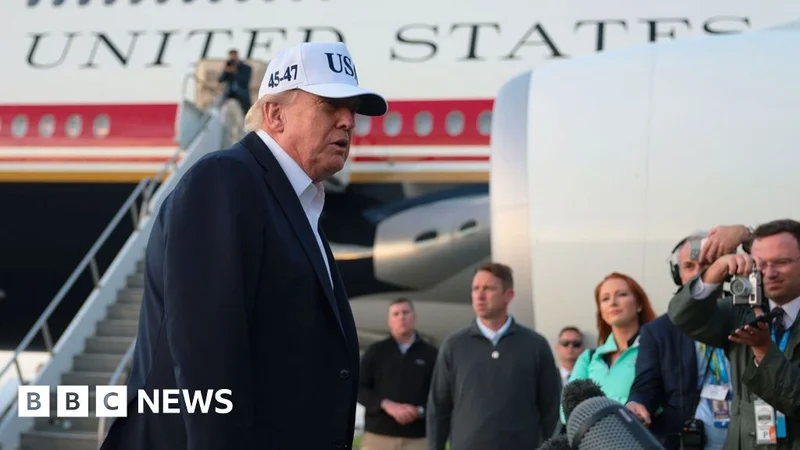
Image: Bbc
Main Takeaway
President Donald Trump plans an AI Force and a new AI czar while dismissing safety concerns as a hoax and promoting a technology-first agenda.
Jump to Key PointsSummary
Trump outlines a new AI command
President Donald Trump announced plans to create an “AI Force” and appoint an artificial intelligence czar, placing a new political structure around the administration’s technology agenda. The initiative is modeled in part on the Space Force, Axios reported, and is intended to coordinate the government’s approach to AI development and competition.
Trump made the announcement in posts and remarks on September 19, without naming the czar or describing the proposed force’s legal authority, membership, budget, or timeline. Reuters, Fox17 and Newsweek all described the appointment as forthcoming. Newsweek said Trump framed the effort around protecting innovation from regulations that could slow the industry, while Bloomberg characterized the policy as a push for companies to keep racing ahead despite safety concerns.
Safety fears meet a political rebuke
Trump called warnings about AI safety a hoax and rejected calls for stronger guardrails, making skepticism toward risk regulation a central feature of his announcement. The comments followed public debate over whether increasingly capable systems require mandatory controls, including a shutdown mechanism.
Anthropic co-founder Jack Clark told the BBC that an AI “kill switch” may need to become mandatory, placing the company’s position on stronger safeguards directly against Trump’s rhetoric. The Independent and TechCrunch described Trump’s criticism as an attack on the broader backlash against AI, while Bloomberg reported that he continued advocating rapid development despite fears about safety. The clash sets a clear policy divide: industry leaders are warning about control and failure modes, while the White House is emphasizing speed and national competition.
Rebranding becomes part of the agenda
Trump also proposed replacing the term “artificial intelligence,” calling it inaccurate and inelegant, and invited suggestions through a poll. One reported option was “Superior Intelligence,” a label repeated by News.meaww, Us.headtopics and Forbes AI coverage.
The proposed rebrand adds a cultural and political layer to the administration’s technology policy. The Mirror and The Hill focused on the poll and its 3 suggested names, while TechCrunch and DailyMail tied the naming discussion to Trump’s argument that criticism of AI is politically motivated. The terminology matters because “artificial intelligence” is embedded in laws, standards, research institutions and corporate products. A new label would not change the systems themselves, but it could recast the public debate around capability and national prestige rather than risk and oversight.
A shift from safety to competitiveness
The proposed AI Force follows an administration effort to remove “safety” from the branding of a federal AI institute. The Biden-era U.S. AI Safety Institute was renamed the Center for AI Standards and Innovation, or CAISI, under a 2025 Trump directive, according to Mashable.
That earlier change provides context for the new czar proposal. Standards and innovation remain part of the government vocabulary, but the word “safety” has been pushed out of a prominent institutional name. Newsweek and Forbes described Trump’s current position as resistance to regulation that could hinder growth, while the BBC documented the competing case for stronger technical safeguards. Together, the moves point to a federal strategy that treats AI leadership, economic expansion and competition with China as higher priorities than a standalone safety mandate.
What the czar would control
The AI czar’s responsibilities remain undefined, leaving the central question of whether the role would coordinate policy, procurement, research, national security or industry regulation. The announced AI Force could become a cabinet-level policy group, an interagency task force or a communications vehicle modeled on the military symbolism of Space Force.
Reuters and Fox17 confirmed the planned appointment but provided no nominee or operating details. Axios described the proposed structure as Space Force-inspired, while the Independent and Newsweek emphasized its connection to AI development and the administration’s opposition to restrictive rules. Until Trump names the czar and releases a formal mandate, companies and agencies will have to work from broad political signals rather than a settled regulatory framework.
The next fight will be over guardrails
The administration’s next decisions will determine whether the AI Force becomes a practical coordinating body or mainly a symbol of accelerated deployment. A named czar, a defined budget and rules for cooperation with technology companies would show how much authority the initiative carries.
The policy debate is already moving beyond terminology. Anthropic has raised the prospect of mandatory shutdown controls, while Trump has rejected the premise that AI safety fears deserve expanded guardrails. The Hill, BBC and Bloomberg show how the administration’s message combines institutional expansion with resistance to safety-focused regulation. The result is a federal AI agenda built around speed, national power and innovation, with the details of accountability still unresolved.
Key Points
Donald Trump announced an AI Force and plans to appoint a federal artificial intelligence czar.
Trump dismissed AI safety fears as a hoax while opposing regulations that could slow development.
The proposed AI Force is modeled partly on Space Force, but its authority and budget remain undefined.
Trump promoted renaming artificial intelligence and reportedly suggested Superior Intelligence as an alternative.
Anthropic co-founder Jack Clark backed stronger safeguards, including a possible mandatory AI kill switch.
Questions Answered
Donald Trump’s AI Force is a proposed federal initiative to coordinate the United States’ artificial intelligence strategy. Axios described it as partly modeled on Space Force, but its structure, budget and authority have not been announced.
Donald Trump has not identified the person who will become the AI czar. Reuters and Fox17 reported that he plans to name an adviser soon, while the responsibilities of the position remain undefined.
Donald Trump called AI safety fears a hoax because he views the backlash and proposed guardrails as threats to innovation and American competitiveness. His position conflicts with warnings from Anthropic co-founder Jack Clark about the need for stronger controls.
Donald Trump proposed renaming artificial intelligence and asked the public to consider alternative terms. Reports identified Superior Intelligence among the suggestions, although no official rebrand has been adopted.
Donald Trump must name the AI czar and define the AI Force’s mission before its policy impact becomes clear. The next steps will show whether the initiative controls federal coordination, procurement and standards or mainly signals support for rapid AI development.
Source Reliability
35% of sources are trusted · Avg reliability: 70
Go deeper with Organic Intel
Simple AI systems for your life, work, and business. Each one includes copyable prompts, guides, and downloadable resources.
Explore Systems