Starmer Fights for Survival with EU Realignment Pledge Amid Labour Revolt
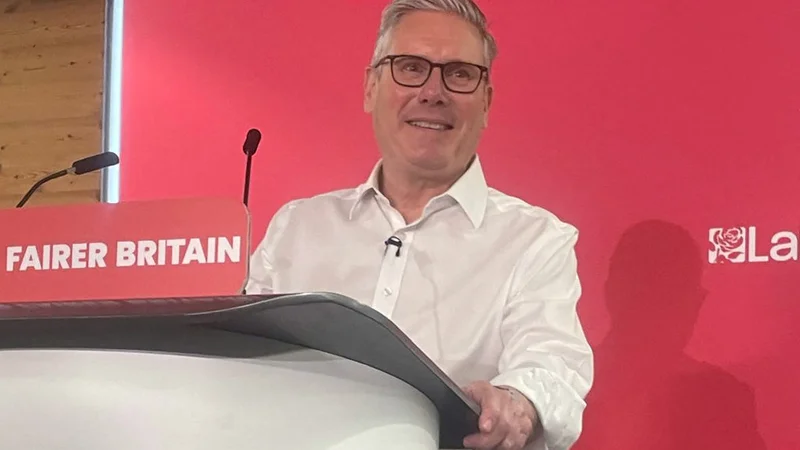
Image: Pbs
Main Takeaway
UK Prime Minister Keir Starmer pledges closer EU ties and vows to prove doubters wrong as Labour revolt grows after devastating local election losses.
Jump to Key PointsSummary
Starmer's Last-Ditch Bid to Hold Power
Keir Starmer has declared himself in a "battle for the soul of our nation" and pledged to draw Britain closer to the European Union, according to Fortune and multiple outlets, as he faces mounting calls to resign following devastating local election results. The prime minister delivered what aides billed as a make-or-break speech in London on Monday, attempting to stave off a leadership crisis that has already seen junior government aides quit and over 70 Labour MPs publicly demand his departure or a resignation timetable.
Starmer's pivot toward Europe represents a striking repositioning six years after Brexit. He argued he would "face up to the big challenges" and restore hope to the country by forging closer ties with the EU, a move that would reverse the acrimonious departure he once accepted as settled policy. "I know I have my doubters and I know I need to prove them wrong, and I will," Starmer said, according to the Associated Press reports carried by HuffPost, PBS, and ABC News. The speech framed the next election as an "open fight between Labour and Reform," positioning his party as the centrist bulwark against Nigel Farage's anti-immigration movement.
The immediate political arithmetic looks grim. Cabinet Office aide Naushabah Khan, parliamentary private secretaries Joe Morris and Tom Rutland, and PPS Melanie Ward all resigned, according to Yahoo News UK and 9News. Home Secretary Shabana Mahmood emerged as a prominent voice calling for Starmer to set out a timetable to stand down, putting her in what BBC described as a minority position within cabinet but reflecting broader parliamentary unrest. The resignations of parliamentary private secretaries, typically young loyalists, signal that dissent has penetrated layers of government usually insulated from leadership challenges.
What Closer EU Ties Would Actually Mean
Starmer's pledge to put Britain "at the heart of Europe" lacks detailed policy scaffolding. The BBC's Europe editor Katya Adler noted the proposal landed with surprise in Brussels, where officials had not anticipated a UK prime minister using EU alignment as a political survival mechanism. The vague formulation leaves substantial room for interpretation, ranging from regulatory harmonization and trade facilitation to more ambitious measures like rejoining customs arrangements or mobility agreements.
The economic case for closer EU relations has strengthened since Brexit, with trade data showing persistent friction and the Office for Budget Responsibility repeatedly downgrading growth forecasts. However, the political obstacles remain formidable. Any significant move toward the EU would face resistance from the substantial minority of Labour voters who backed Leave, not to mention the broader electorate where Brexit identity still mobilizes turnout. Starmer himself previously ruled out rejoining the single market, customs union, or freedom of movement, constraints that limit how far any rapprochement can practically go.
Timing compounds the difficulty. With a likely general election within two years, negotiating and implementing meaningful new agreements with Brussels would require political capital and bureaucratic bandwidth that a divided party cannot spare. EU officials, while welcoming warmer rhetoric, have indicated that substantive negotiations require stability and commitment that a caretaker or transitional government might not provide. The pledge thus functions more as a signal to domestic audiences, particularly pro-EU Labour members and metropolitan liberals, than a fully operationalized policy program.
The Reform Threat Reshaping British Politics
Starmer's framing of a "battle for the soul of our nation" against Reform UK reflects a genuine structural shift in British electoral politics that transcends his personal leadership troubles. Nigel Farage's party has absorbed disaffected Conservative voters while also peeling away working-class Labour supporters on immigration and cultural issues. The local election results that triggered the current crisis saw Reform make gains at Labour's expense in traditional industrial constituencies, demonstrating that the threat is not merely a Conservative Party phenomenon but a cross-cutting realignment.
The prime minister's warning that Britain would go down "a dark path" under Reform, reported by Fortune, echoes earlier centrist warnings about populist movements but now carries the urgency of direct electoral competition rather than abstract concern. Reform's rise has compressed the political space available to Labour, forcing Starmer to simultaneously reassure progressive voters with European overtures and address migration concerns that drive defections. This triangular positioning, familiar to Continental social democrats but relatively new to British Labour, has produced policy incoherence that both wings of the party find unsatisfying.
The danger for Starmer is that neither audience fully believes him. Pro-EU voters remember his previous commitment to "make Brexit work," while migration-focused voters see little concrete difference from Conservative approaches. Reform's political methodology relies on this credibility gap, using social media and direct communication to portray mainstream politicians as interchangeable elites. Starmer's survival strategy depends on persuading sufficient voters that the alternative to his leadership is genuinely worse, a negative case that has historically motivated Labour coalitions but rarely inspired them.
Cabinet Splits and the Mechanics of Removal
The formal mechanisms for removing a sitting Labour prime minister are deliberately demanding, giving Starmer structural advantages even as his political position deteriorates. Under current party rules, a leadership challenge requires nominations from 20% of Labour MPs, followed by a ballot of members if the incumbent contests it. With 404 Labour MPs, that threshold means approximately 81 parliamentarians must publicly commit to ousting him, a number that dissenters have not yet reached despite the reported 70-plus critics.
However, informal pressure operates on different dynamics. Shabana Mahmood's public call for a resignation timetable, reported by BBC, represents a significant escalation because cabinet ministers rarely break collective discipline so directly. The resignation of four government aides, including parliamentary private secretaries to senior ministers Wes Streeting and Emma Reynolds, creates visible bleeding that can accelerate further defections. Parliamentary private secretaries are typically the first rung on the ministerial ladder, and their departures signal to ambitious backbenchers that loyalty to a sinking leader may damage their own advancement.
Starmer's response has combined defiance with limited conciliation. He convened his cabinet on Tuesday to shore up support, according to multiple sources, while simultaneously refusing to commit to any departure timeline. This mirrors the survival strategies of previous embattled prime ministers, though the compressed timeline before a general election leaves less room for recovery than Gordon Brown or Theresa May enjoyed. The question now is whether dissent stabilizes at a level Starmer can manage, or whether additional resignations trigger the cascade that formalizes a challenge.
Historical Parallels and the Limits of Comparison
Political journalists have reached for historical analogies to frame Starmer's predicament, though most collapse under scrutiny. The most cited comparison, Labour's 1980s divisions under Neil Kinnock, fails because Kinnock faced ideological opponents on his left while Starmer's critics span the party spectrum and focus on electability rather than policy direction. The more apt parallel may be John Major's Conservative government after 1992, where a small parliamentary majority and persistent Europe divisions combined to paralyze policy ambition and eventually deliver landslide defeat.
What distinguishes Starmer's situation is the speed of deterioration. Major survived as prime minister for over six years despite losing his party's reputation for economic competence. Starmer has reached comparable levels of internal opposition within months of taking office, suggesting either exceptional misjudgment of his political position or genuinely novel political conditions. The fragmentation of media consumption, the intensity of social media feedback loops, and the presence of Reform as a viable alternative for disaffected voters all create pressures that 1990s politicians did not face.
The EU pledge itself has few direct historical precedents. Harold Wilson's 1975 renegotiation of British membership occurred from within, while subsequent leaders either accepted or celebrated exit. Using European alignment as a domestic political repositioning tool, rather than responding to external diplomatic necessity or clear electoral mandate, represents a novel category of political risk-taking. Whether it succeeds depends less on Brussels' response than on whether British voters accept the framing of European closeness as a source of national renewal rather than national diminishment, a case that remains unproven after six years of post-Brexit politics.
Key Points
Keir Starmer pledged to draw Britain closer to the EU in a defiant speech aimed at saving his premiership after devastating Labour local election losses
Four government aides resigned and over 70 Labour MPs called for Starmer to step down or set a departure timetable, with Home Secretary Shabana Mahmood publicly breaking cabinet discipline
Starmer framed the next election as a "battle for the soul of our nation" against Nigel Farage's Reform UK, warning of a "dark path" if the anti-immigration party came to power
The EU pledge surprised Brussels officials and lacks detailed policy, with Starmer's previous red lines on single market membership, customs union, and freedom of movement constraining options
Formal removal remains difficult under Labour rules requiring 20% of MPs to trigger a challenge, but the pace of resignations and public dissent creates sustained pressure
Questions Answered
Starmer faces demands to step down after Labour suffered devastating losses in local elections across England, Scotland, and Wales. Over 70 Labour MPs have publicly urged him to resign or set a timetable for departure, and four government aides have quit in protest.
In a speech on May 11, 2026, Starmer pledged to put Britain "at the heart of Europe" and forge closer ties with the European Union, six years after Brexit. However, he has not detailed specific policies and previously ruled out rejoining the single market, customs union, or restoring freedom of movement.
Parliamentary private secretaries Joe Morris and Tom Rutland, Cabinet Office aide Naushabah Khan, and PPS Melanie Ward have all resigned. Their departures are significant because PPS roles are typically held by young loyalists beginning ministerial careers.
Under Labour Party rules, a leadership challenge requires nominations from 20% of Labour MPs, approximately 81 parliamentarians. If the threshold is met and the incumbent contests, a ballot of party members follows. This formal barrier gives Starmer structural protection despite informal pressure.
Reform UK is an anti-immigration party led by Nigel Farage that has gained support from disaffected Conservative and working-class Labour voters. Starmer frames the next election as a choice between his centrist Labour Party and Reform's "politics of predatory grievance," warning Britain would take a "dark path" under Farage.
Source Reliability
60% of sources are trusted · Avg reliability: 74
Go deeper with Organic Intel
Simple AI systems for your life, work, and business. Each one includes copyable prompts, guides, and downloadable resources.
Explore Systems