Special Forces Soldier Charged With $400K Insider Trading on Maduro Capture Mission
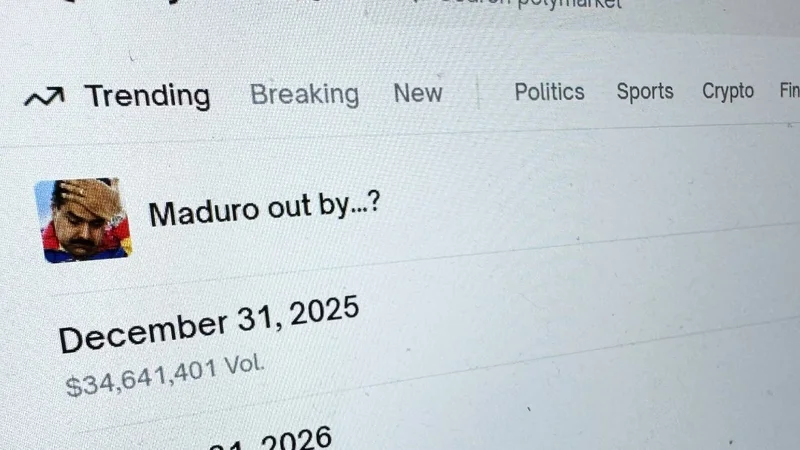
Image: Fortune AI
Main Takeaway
Master Sgt. Gannon Van Dyke allegedly used classified intel from Operation Absolute Resolve to place 13 winning bets on Polymarket about Maduro's removal.
Jump to Key PointsSummary
Who the soldier is and what he did
Master Sergeant Gannon Ken Van Dyke, a 38-year-old special forces operator stationed at Fort Bragg, North Carolina, stands accused of turning his nation's most sensitive military operation into a personal payday. According to the Justice Department, Van Dyke helped plan and execute Operation Absolute Resolve, the daring mission that captured Venezuelan President Nicolás Maduro. While his unit worked to secure one of America's most wanted targets, Van Dyke allegedly placed 13 separate wagers on Polymarket predicting Maduro's removal, walking away with over $400,000 in winnings.
The soldier's career spans nearly two decades, having joined the Army in 2008 and achieving promotion to master sergeant in 2023, the second-highest enlisted rank. His specialized training and clearance levels gave him access to classified operational details that formed the basis of his betting strategy, prosecutors claim. The case marks an unprecedented intersection of military operations and prediction markets, raising questions about security protocols in an era where soldiers can anonymously bet on geopolitical events from their phones.
How the betting scheme allegedly worked
Federal investigators say Van Dyke systematically used classified information about the Maduro operation's timing, logistics, and likely outcome to place increasingly confident bets on Polymarket. The prediction market, which allows users to wager on real-world events, had active markets speculating on Maduro's removal throughout early 2026. Van Dyke allegedly accessed these markets through standard consumer technology, placing bets that grew larger as the operation's success became more certain.
The soldier's insider knowledge allegedly gave him an enormous edge over other bettors who lacked access to classified briefings, operational timelines, and intelligence assessments. Each of his 13 bets reportedly generated substantial returns, suggesting he wasn't just guessing but making calculated moves based on privileged information. The Justice Department's charges indicate this wasn't a one-time impulse bet but a deliberate, sustained effort to monetize his military access.
The legal charges and potential consequences
The Justice Department has charged Van Dyke with using classified information for personal financial gain, a violation that could carry severe penalties under federal law. The charges represent a novel application of insider trading principles to military operations, as prosecutors argue that classified intelligence about planned military actions constitutes material non-public information. If convicted, Van Dyke faces potential prison time, dishonorable discharge, and forfeiture of his $400,000 in winnings.
Legal experts note this case breaks new ground in defining what constitutes insider trading when the "inside information" involves classified military operations rather than corporate earnings. The prosecution's theory suggests that any military personnel with advance knowledge of operations could face similar charges if they use that information for financial gain, even indirectly through prediction markets. The case could establish important precedent for how the government handles future instances where classified information intersects with public betting markets.
What this means for military security protocols
This incident has already triggered immediate reviews of security protocols across special operations commands. Military officials are scrambling to understand how a soldier with Van Dyke's clearance level could access external betting platforms while possessing knowledge of classified operations. The breach suggests potential gaps in both technical monitoring and personnel oversight that extend beyond one rogue operator.
The case highlights the challenge of maintaining operational security in an era where military personnel carry smartphones capable of accessing global markets. Traditional security measures designed for physical documents and face-to-face briefings struggle against encrypted messaging apps and anonymous betting platforms. Defense officials are reportedly examining new restrictions on personal device usage during sensitive operations, though such measures could prove unpopular with troops accustomed to constant connectivity.
The impact on prediction markets like Polymarket
Polymarket now faces intense scrutiny over how it handles markets tied to sensitive geopolitical events. The platform's decentralized nature, which allows anyone to create markets on virtually any topic, makes it nearly impossible to prevent insider trading by those with classified knowledge. This case could force prediction markets to implement new verification systems or restrict certain types of markets entirely.
The incident also raises questions about market integrity when participants might include government officials, military personnel, or intelligence operatives with privileged information. Other prediction market platforms are watching closely, as regulatory responses could reshape the entire industry. Some analysts suggest this might lead to restrictions on markets involving ongoing military operations or diplomatic negotiations, fundamentally limiting what events can be wagered upon.
Why this matters for crypto and decentralized betting
The Van Dyke case strikes at the heart of crypto-based prediction markets' core value proposition: permissionless access to global betting on real-world events. Unlike traditional sportsbooks or regulated exchanges, platforms like Polymarket operate without know-your-customer requirements or insider trading prohibitions. This freedom enabled Van Dyke's alleged scheme but now threatens the entire model's viability.
Regulators are already circling, with the Commodity Futures Trading Commission and other agencies examining whether prediction markets need stricter oversight. The case provides concrete evidence of how lack of traditional safeguards can be exploited, potentially accelerating regulatory crackdowns. For crypto advocates who championed prediction markets as superior to centralized alternatives, this incident represents a significant setback that could force platforms to abandon their decentralized principles or face shutdown.
What happens next
Van Dyke's case now heads to federal court where prosecutors will attempt to prove he used classified information for personal gain. Military officials have already launched parallel administrative proceedings that could strip him of rank, benefits, and security clearance. The broader implications will unfold over months as Congress, military leaders, and financial regulators debate new safeguards.
Expect proposed legislation targeting both military personnel's access to betting platforms and prediction markets' ability to offer markets on sensitive geopolitical events. The military will likely implement stricter device policies and monitoring systems, while platforms like Polymarket may voluntarily restrict certain market categories. This case probably marks just the beginning, not the end, of government efforts to prevent classified information from leaking into public prediction markets.
Key Points
Master Sgt. Gannon Van Dyke allegedly used classified intel from Operation Absolute Resolve to win $400K+ on Polymarket bets about Maduro's capture
The soldier placed 13 separate wagers based on privileged knowledge of mission timing and logistics, violating federal law
Case represents first major prosecution for using classified military information in prediction market betting
Incident triggers immediate military security protocol reviews and potential new restrictions on device usage during operations
Polymarket and similar platforms face regulatory scrutiny over markets tied to sensitive geopolitical events
Questions Answered
The Justice Department has charged him with using classified information for personal financial gain, which falls under federal laws prohibiting insider trading and mishandling of classified materials.
Investigators believe Van Dyke used personal mobile devices to access the decentralized prediction market platform, highlighting gaps in military security protocols for device usage during sensitive operations.
Yes, regulators are examining all crypto-based prediction markets, and the case could lead to industry-wide restrictions on markets involving military operations, diplomatic negotiations, or other sensitive geopolitical events.
If convicted, he faces potential prison time under federal insider trading laws, dishonorable discharge from the Army, forfeiture of his $400,000 in winnings, and loss of all military benefits and security clearances.
While not confirmed, military officials have launched broader reviews of personnel access to betting platforms during operations, suggesting this investigation may expand beyond Van Dyke.
Source Reliability
75% of sources are highly trusted · Avg reliability: 82
Go deeper with Organic Intel
Simple AI systems for your life, work, and business. Each one includes copyable prompts, guides, and downloadable resources.
Explore Systems