SpaceXAI Launches Grok Bot as Always-On AI Teammates for Work Across Apps
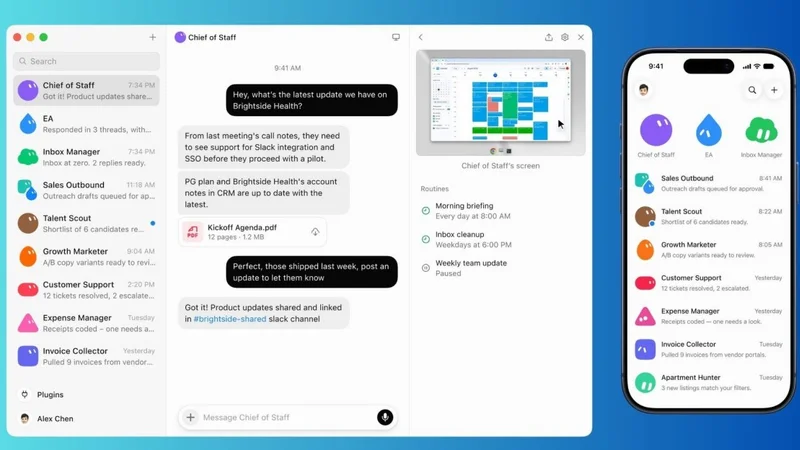
Image: The Verge AI
Main Takeaway
SpaceXAI has launched Grok Bot in early beta, giving AI agents cloud computers to sign into apps, complete assignments, and request approval only when needed.
Jump to Key PointsSummary
Grok takes on assigned work
SpaceXAI has launched Grok Bot, an early-beta service that turns Grok from a conversational assistant into a set of persistent AI teammates. Users assign work, and the bots operate across applications, websites, inboxes, and other tools rather than stopping after generating instructions. The company describes the service as a way to give AI real work, with each bot receiving its own cloud computer for browser-based tasks.
The agents continue working after a user steps away and return when a decision or approval is required. That operating model puts Grok Bot closer to a remote digital worker than a conventional chatbot. The launch follows the company’s broader push to expand Grok beyond answers and real-time information, areas associated with the chatbot’s integration with X, as described by Wikipedia and iGmGuru.
How the agents operate
Grok Bot’s defining feature is computer access in the cloud. The agents can sign into tools users already rely on, navigate websites, work through inboxes, and carry assignments from start to finish. The Verge described the service as an always-on system built around independent AI teammates, while Fonearena highlighted its ability to continue operating after the user leaves.
The service also retains context between tasks and supports parallel work, according to The Next Web. That lets users separate assignments across multiple bots instead of repeatedly rebuilding a workflow in a chat window. The arrangement creates a new control problem as well: credentials, private messages, purchases, edits, and other consequential actions can all sit inside the agent’s working environment. Approval checkpoints provide a safeguard, but the quality of those checkpoints will matter as much as the agents’ ability to complete tasks.
Access starts with paid tiers
Initial Grok Bot access is limited to selected paid subscribers. The Next Web lists SuperGrok Heavy, Cursor Ultra, and Cursor Teams Premium as launch tiers, while enterprise customers enter through a waitlist. The staged rollout places the product inside SpaceXAI’s existing subscription and developer-software base rather than opening it immediately to every Grok user.
The launch also connects the product to Cursor, the coding tool that several accounts describe as part of SpaceXAI’s combined business. Trendingtopics called Grok Bot the first joint product following the SpaceX and xAI merger with Cursor, and linked the release to a strategic effort against rival agent products. Zenmux’s launch page identifies the service as an early beta and includes a macOS download, although its page also contains Cursor-branded links, a detail that adds confusion around branding and distribution.
Competition shifts toward office tasks
Grok Bot enters a contest with Anthropic and OpenAI over AI systems that perform multi-step work instead of merely drafting responses. Bloomberg framed the release as SpaceXAI’s latest bid to keep pace with those companies, while Trendingtopics connected the product to Claude Cowork’s momentum. The competitive target is clear: control of the digital workspace, where email, project tools, research sites, customer systems, and internal documents intersect.
That market rewards reliability more than personality. An agent that can open a browser but loses context, mishandles permissions, or pauses at every small decision delivers limited value. Grok Bot’s persistent computer model gives SpaceXAI a concrete answer to that problem, but the early-beta label means performance, cost, speed, and error rates remain central tests. Mashable described the launch as a move toward background work, while The Next Web emphasized coordination among agents and retained context.
Enterprise adoption faces trust tests
Grok Bot’s enterprise opportunity depends on how safely it handles access. Agents that sign into existing tools can reduce setup work for organizations, but they also concentrate sensitive permissions inside software that acts with a user’s identity. Approval requests, account boundaries, audit trails, and restrictions on destructive actions will shape whether companies allow the bots beyond experiments.
The enterprise waitlist indicates a controlled rollout rather than broad workplace deployment. VentureBeat characterized Grok Bot as a persistent digital coworker operating across work systems, while Themobileindian and Timesofai focused on its end-to-end execution and approval-based handoffs. For businesses, the practical question is whether a bot can complete routine assignments without creating a second stream of supervision. Teams will measure time saved against review time, failed actions, security exposure, and the cost of maintaining multiple subscriptions.
What happens after beta
Grok Bot’s next phase will be defined by access, reliability, and governance. SpaceXAI needs to show that agents can manage longer tasks, recover from website changes, preserve context accurately, and ask for approval at the right moments. Broader availability would also test whether consumers view always-on agents as useful assistants or as another system requiring constant monitoring.
The product’s connection to Cursor gives SpaceXAI a route into developer and team workflows, while the Grok brand supplies a large consumer-facing identity. The release therefore joins 2 markets that have often advanced separately: coding agents and general office automation. If the service performs consistently, Grok Bot will push competitors to make their own agents more persistent and action-oriented. For now, its significance rests on a clear product bet: AI earns a place on a team by finishing work inside the tools people already use.
Key Points
SpaceXAI launched Grok Bot, persistent AI teammates that complete assignments across apps, websites, and inboxes.
Grok Bot agents use dedicated cloud computers to sign into tools and continue working after users leave.
Initial access covers SuperGrok Heavy, Cursor Ultra, and Cursor Teams Premium subscribers.
Grok Bot enters competition with Anthropic and OpenAI over persistent workplace AI agents.
Enterprise adoption depends on approval controls, permission management, audit trails, and reliable task execution.
Questions Answered
SpaceXAI Grok Bot is an early-beta service of always-on AI agents that perform assigned work across apps, websites, and inboxes. Each agent operates on its own cloud computer and returns for user approval when required.
SpaceXAI Grok Bot takes actions inside software instead of only producing conversational answers. It can sign into existing tools, retain context, run in the background, and complete multi-step assignments.
SpaceXAI Grok Bot initially serves SuperGrok Heavy, Cursor Ultra, and Cursor Teams Premium subscribers. Enterprise customers enter through a waitlist during the early-beta rollout.
SpaceXAI launched Grok Bot to compete in the growing market for persistent AI agents that perform workplace tasks. The product targets the same shift toward delegated office work pursued by Anthropic and OpenAI.
Grok Bot asks the user for approval when an action requires a decision or authorization. The agent otherwise continues working across its assigned tools and returns after completing the task or reaching that checkpoint.
Source Reliability
43% of sources are established · Avg reliability: 62
Go deeper with Organic Intel
Simple AI systems for your life, work, and business. Each one includes copyable prompts, guides, and downloadable resources.
Explore Systems