Rabbit Moves Its AI Agent Beyond the R1 With Cross-Platform OS3 and Custom Teach Mode
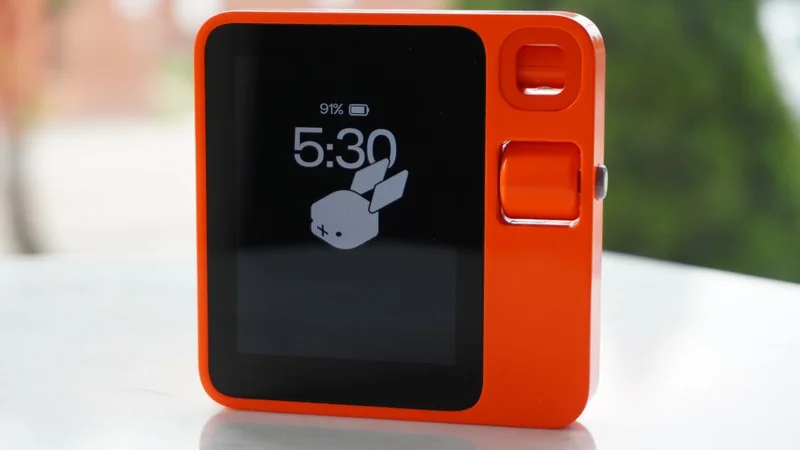
Image: The Verge AI
Main Takeaway
Rabbit is launching OS3 as a standalone AI agent for existing devices while adding custom agent creation and new capabilities to its R1 hardware.
Jump to Key PointsSummary
Rabbit changes its product strategy
Rabbit is launching rabbitOS3 as a cross-platform AI agent that runs on devices users already own, shifting the company’s focus beyond its dedicated R1 gadget. The move follows the R1’s 2024 debut, when Rabbit promoted the device as a way to complete tasks across services such as Uber and DoorDash through voice commands.
The R1 drew substantial attention at CES 2024 but received poor reviews after its promised agent features failed to consistently complete tasks. Rabbit founder Jesse Lyu has rejected the idea that the device was a flop, and the new software gives the company a way to place its agent in front of a larger audience without requiring another hardware purchase. Wired and The Verge both describe OS3 as the central product change, while Rabbit’s announcements frame it as an expansion of the company’s agent platform.
OS3 reaches beyond dedicated hardware
Rabbit’s new agent is designed to work independently of the R1, making the software available across existing screens and platforms. The company is also introducing an Android agent, according to Mashable, while The Verge describes the product as a standalone agent that does not require Rabbit’s hardware.
That distribution model addresses a basic weakness in the original R1 pitch: users had to buy and carry a separate gadget before testing Rabbit’s software. OS3 instead places the agent inside an established mobile environment, where apps, accounts, notifications, and permissions already live. The shift also puts Rabbit into direct competition with software assistants from much larger technology companies, even as the company continues supporting its own device.
Teach Mode puts users in the loop
Rabbit is also adding Teach Mode, a system that lets consumers create custom AI agents by showing the software how to perform a task. Rabbit describes the feature as a way for users to build agents for their own workflows, extending the product beyond a fixed collection of built-in commands.
Teach Mode is significant because it moves some of the burden of agent design from Rabbit to its users. The R1’s original appeal rested on Rabbit handling actions across third-party services, but custom teaching gives users a way to adapt the system when a task falls outside the company’s presets. Hackster’s coverage highlights Teach Mode on the R1, while Rabbit’s announcement presents customization as a consumer feature. Support documentation about third-party agents points to a broader effort to make the R1 work with outside services and agent systems.
The R1 becomes a software test bed
The R1 remains part of Rabbit’s strategy, even as OS3 reduces the need for it. Rabbit has continued updating the device, including rabbitOS 2, and has documented support for third-party agents. Those changes recast the R1 from a finished assistant appliance into a platform for testing new agent features.
That repositioning gives existing owners a reason to keep using the hardware while allowing new users to start with software. It also reflects a practical lesson from the first product cycle: an AI agent needs dependable access to services and clear ways to learn new tasks, not only a distinctive physical interface. Businesswire’s earlier coverage of rabbitOS 2, Rabbit’s support material, and the company’s Teach Mode announcement all point to continuing software development around the R1.
Rabbit faces a harder software market
OS3 gives Rabbit broader reach, but it also removes the hardware barrier that helped distinguish the company. A software agent running on phones and computers competes for attention with assistants from Apple, Google, Microsoft, OpenAI, and other established platforms that already control operating systems, accounts, and app ecosystems.
The company’s advantage is a focused agent identity and a product history built around task completion. Its disadvantage is the credibility gap created by the R1’s early reviews and the challenge of making third-party actions reliable at scale. The R1’s initial launch generated enough demand to sell out, according to Aibusiness, but sales momentum alone doesn't resolve questions about performance, privacy, permissions, and support. OS3’s reception will depend on whether users find the agent useful after the novelty fades.
What happens after the launch
Rabbit’s next test is operational: prove that OS3 and Teach Mode can complete repeatable tasks safely across the services people use every day. A cross-platform launch expands the addressable audience, while custom agents give users a reason to return and refine their workflows.
The company will also need to explain how OS3 handles account access, third-party integrations, mistakes, and data. Rabbit’s prior updates and support pages show an ongoing effort to extend the R1’s capabilities, but OS3 marks a sharper strategic pivot toward software. If the agent works reliably, the R1 can serve as one access point among many. If it does not, the broader distribution will simply expose the same reliability problem to more users.
Key Points
Rabbit launches OS3 as a standalone AI agent that works without the company’s R1 hardware.
Rabbit’s Teach Mode lets consumers create custom agents by demonstrating how specific tasks should work.
Rabbit continues updating the R1 with software features and support for third-party agents.
OS3 expands Rabbit’s audience while placing the startup against established mobile assistant platforms.
Rabbit must prove reliability after the R1 received poor reviews for inconsistent agent task completion.
Questions Answered
Rabbit OS3 is a cross-platform AI agent that runs without the Rabbit R1 device. It lets users access Rabbit’s task automation software through existing devices and expands the company beyond dedicated AI hardware.
Rabbit OS3 does not require an R1. Rabbit is offering the agent as standalone software, including an Android version, while continuing to support R1 owners.
Rabbit Teach Mode lets consumers create custom AI agents by showing Rabbit how to perform tasks. The feature is designed to extend Rabbit beyond preset commands and support personalized workflows.
Rabbit is moving beyond the R1 to make its AI agent available to more users without requiring a separate gadget. The shift follows the R1’s early attention and poor reviews tied to unreliable task completion.
The Rabbit R1 remains supported as part of Rabbit’s wider agent platform. Rabbit is continuing software updates, Teach Mode support, and integrations involving third-party agents.
Source Reliability
44% of sources are established · Avg reliability: 68
Go deeper with Organic Intel
Simple AI systems for your life, work, and business. Each one includes copyable prompts, guides, and downloadable resources.
Explore Systems