Meta’s Muse AI Agent Hits No. 1 on iPhone and Outpaces ChatGPT’s Early Mobile Growth
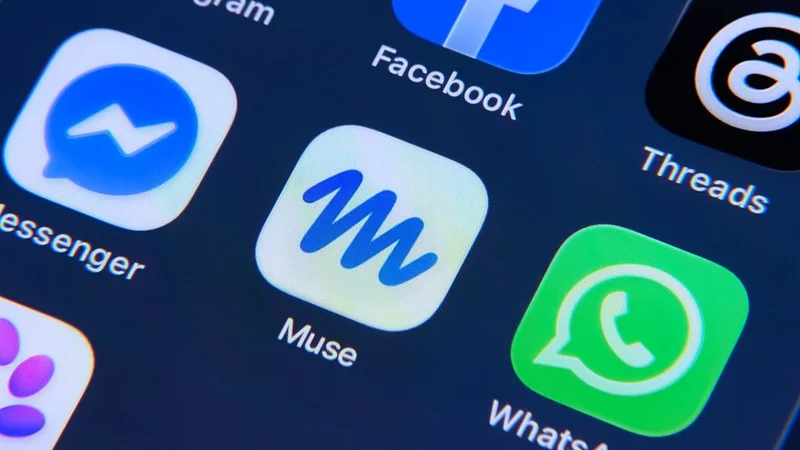
Image: TechCrunch AI
Main Takeaway
Meta’s Muse AI agent reached No. 1 on Apple’s App Store and attracted more early U.S. and Canadian users than ChatGPT did after its mobile debut.
Jump to Key PointsSummary
Muse wins an early mobile race
Meta’s Muse AI agent has reached No. 1 on Apple’s U.S. App Store, giving the company an early victory in the crowded market for consumer AI assistants. The app also recorded more downloads and daily active users in the United States and Canada during its first 12 days than ChatGPT did during the comparable period after its mobile debut, according to estimates from Apptopia cited by TechCrunch.
The comparison measures launch momentum rather than long-term product quality. App-store rankings can shift quickly with publicity, distribution, advertising and curiosity, while sustained retention depends on whether users return after the first experiment. Even so, Muse’s early position gives Meta a visible foothold in a category where OpenAI established the strongest consumer brand.
App-store ranking tells two stories
Muse reached the top of the iPhone charts with fewer downloads than ChatGPT recorded during its own early rise, according to the comparison highlighted by Finance.yahoo. That result points to a change in how users discover AI apps, as well as the force of Meta’s existing consumer reach. A high ranking reflects current momentum, but it doesn't by itself show that Muse has built a larger installed base or a more active global audience.
Meta benefits from a large ecosystem spanning Facebook, Instagram, WhatsApp and Messenger. That footprint gives the company distribution advantages that a standalone app must build from scratch. Bloomberg described the launch as an early sign that Meta is gaining traction in an increasingly crowded mobile AI market, while 9to5mac focused on Muse overtaking ChatGPT as the top iPhone app.
Personal agency drives the pitch
Muse is positioned as a personal AI agent rather than only a conversational chatbot. That framing places the app in a more demanding product category, where users expect the system to interpret instructions, carry out tasks and fit into everyday digital routines. Early reviews have treated the app as capable and distinctive, but they also frame its limits as central to the user experience.
Reviews from Businessinsider and Eesel examine what Muse can and can't do, while a separate Businessinsider headline describes the agent as powerful but insufficient for a complete replacement of established assistants. Medium’s comparison with ChatGPT Agent presents the products as different approaches to AI that acts on a user’s behalf. The common thread is that agency raises expectations faster than a standard chat interface does, especially around permissions, reliability and control.
Strong launch, unfinished verdict
Muse’s early numbers support a successful launch, but they don't settle the question of whether Meta has created a durable competitor to ChatGPT. The evidence spans sharply different readings: Apptopia estimates cited by TechCrunch show stronger early downloads and daily use than ChatGPT in the same markets, while Theaiinsider’s headline describes Muse’s early downloads as modest. Those descriptions can coexist if one measures relative performance and the other emphasizes absolute scale or a narrower time window.
The product also faces the familiar gap between trial and habit. Users may install an agent because it is new, then leave if answers are inconsistent, tasks are restricted or the app offers little beyond features already available elsewhere. Fool’s coverage puts the launch in a stock-market context, but any business impact depends on retention, engagement and Meta’s ability to connect Muse with its broader services.
What Meta must prove next
Meta’s next test is sustained use. The company needs Muse to retain users after its chart-topping debut, demonstrate dependable task completion and give people clear reasons to choose it over ChatGPT and other assistants. Daily active users matter more than a single ranking snapshot, but retention and repeat task completion will provide the stronger evidence of product-market fit.
The launch also raises strategic questions about distribution and monetization. Meta can promote Muse through its existing platforms, yet that reach brings scrutiny over privacy, personalization and how an agent handles access to user information. ChatGPT’s early mobile trajectory gives analysts a useful benchmark, while reviews from Businessinsider, Eesel and Medium show that capability alone won't decide the contest. Trust, boundaries and usefulness will determine whether Muse remains a chart leader after launch attention fades.
The broader agent race
Muse’s debut adds pressure to a consumer AI market shifting from chat interfaces toward agents that perform actions for users. Meta now has evidence that its app can attract attention at launch, while OpenAI’s ChatGPT remains the benchmark for comparing early mobile adoption. The competitive question has moved from who can release an assistant to who can make one useful often enough to become part of a daily routine.
For users, the immediate result is more choice and faster competition among AI products. For Meta, the launch is a test of whether its distribution network can turn an app-store spike into a lasting service. For investors and developers, the important signals will be retention, monetization, platform integration and the reliability of actions performed by the agent. Muse has won the opening chart battle; the longer contest has just started.
Key Points
Meta’s Muse AI agent reached No. 1 on Apple’s U.S. App Store during its first 12 days.
Muse recorded more early U.S. and Canadian daily users than ChatGPT after its mobile debut.
Muse reached the top chart position with fewer downloads than ChatGPT’s comparable launch period.
Early reviews praise Muse’s agent capabilities while highlighting limits around task scope and reliability.
Meta’s existing consumer platforms give Muse a powerful distribution advantage over standalone AI apps.
Questions Answered
Meta Muse recorded more downloads and daily active users than ChatGPT during comparable first-12-day periods in the United States and Canada. The comparison comes from Apptopia estimates cited by TechCrunch and measures early momentum rather than long-term retention.
Meta Muse reached No. 1 on Apple’s U.S. App Store. 9to5mac and Bloomberg identified the ranking as an early sign of strong consumer interest, though app-store position can change quickly.
Meta Muse benefited from strong launch attention and Meta’s broad consumer distribution. The app’s personal-agent positioning also gave users a clear reason to try it in a market crowded with chatbot products.
Meta Muse and ChatGPT Agent take different approaches to AI systems that act for users. Reviews focus on Muse’s personal-assistant capabilities, task boundaries, reliability and the permissions required for agentic behavior.
Meta must show that Muse retains users and completes tasks reliably after launch curiosity fades. Repeat usage, daily activity, privacy practices, platform integration and monetization will matter more than a temporary chart ranking.
Source Reliability
33% of sources are trusted · Avg reliability: 62
Go deeper with Organic Intel
Simple AI systems for your life, work, and business. Each one includes copyable prompts, guides, and downloadable resources.
Explore Systems