Google Opens Home MCP, Letting AI Agents Control Devices and Review Smart Home Activity
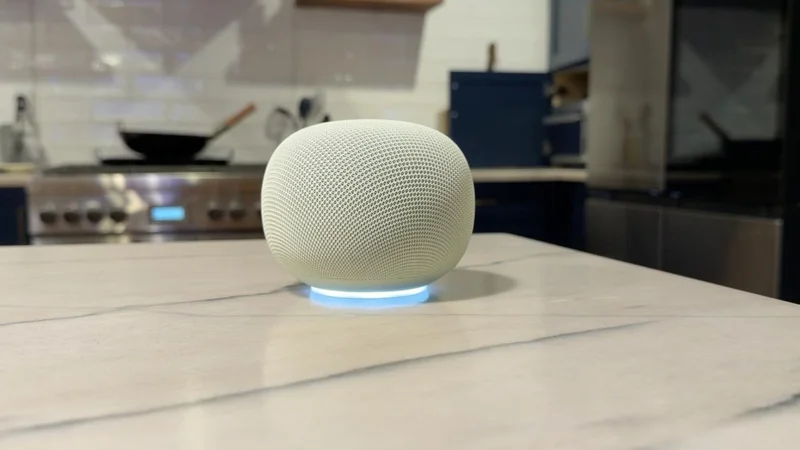
Image: The Verge AI
Main Takeaway
Google has opened early access to Home MCP, allowing AI agents such as Claude and ChatGPT to control connected devices, review camera summaries, and analyze home activity.
Jump to Key PointsSummary
Google opens the smart home
Google has opened early access to a Model Context Protocol server that lets compatible AI agents interact with devices connected to Google Home. The integration gives agents access to controls and event history across a user’s smart home ecosystem, extending natural-language assistants from answering questions to taking actions in the physical world.
Supported agents named in the launch materials include Claude, ChatGPT, Google Antigravity, Hermes, and OpenClaw. The Home MCP integration is designed to work with any agent that supports MCP, an open standard for connecting AI systems with external tools and data. Google’s developer materials frame the initiative as part of its broader Gemini for Home platform expansion, while coverage from The Verge and TechCrunch emphasizes third-party agent access.
What agents can do
Home MCP allows users to issue natural-language instructions for tasks such as controlling connected lights and other devices, checking smart home activity, and reviewing summaries from compatible cameras. Agents can also use household data to answer questions about events and device behavior, turning Google Home into a source of context for broader AI workflows.
The system also supports custom smart home dashboards, according to TechCrunch. That capability gives developers a way to combine device controls, activity information, and agent responses in interfaces tailored to a household’s routines. Google’s announcement places the service within a wider effort to make Gemini and other AI systems useful across home devices, while The Verge highlights Claude and OpenClaw as examples of outside agents that can connect through MCP.
Setup remains technical
Home MCP early access requires users to create a Google Cloud project and configure it for the service before connecting an agent. Users then provide the resulting MCP configuration details to their chosen agent and authorize access to their Google Home environment.
That setup gives developers and technically experienced households a path to experimentation, but it also adds friction for ordinary smart home owners. The launch is an early-access release rather than a mass-market feature activated with a single switch. Coverage from TechCrunch and The Verge describes the connection as secure, while Google’s developer framing focuses on the platform and integration layer rather than a simplified consumer setup.
Security and household control
Giving an AI agent access to devices and home event history raises a different class of safety question from ordinary voice commands. An agent that can inspect camera summaries or change connected devices receives information about private spaces and gains the ability to affect locks, lights, climate systems, and other equipment, depending on the devices and permissions available.
Google describes Home MCP as a secure way for compatible agents to work with Google Home devices and event history. The practical safeguards will depend on authorization settings, the individual agent’s behavior, and how users limit access. The MCP model also makes the agent a new control layer between a person and their home, increasing the importance of clear permissions and careful review before granting access.
Why the MCP approach matters
MCP gives Google a way to expose smart home capabilities beyond a single assistant. Instead of requiring every AI company to build a separate Google Home integration, compatible agents can connect through a shared protocol, allowing users to choose among systems such as Claude, ChatGPT, Gemini-related tools, and OpenClaw.
The approach also positions Google Home as an infrastructure layer for agentic software. Developers can build dashboards and workflows that combine household data with actions, while users can select an agent based on its reasoning, interface, or privacy controls. The tradeoff is that interoperability increases the number of software systems handling sensitive home information.
What happens next
The next test for Home MCP is whether early adopters turn the connection into reliable household workflows rather than one-off demonstrations. Useful applications include activity reviews, device monitoring, and coordinated routines that respond to natural-language requests.
Broader adoption will depend on simpler setup, dependable device control, and clear boundaries around camera data and other household records. Google’s platform announcement, along with reporting on support for multiple agents, indicates that the company is building for an ecosystem rather than a single assistant. Early access gives developers the first opportunity to determine whether that openness makes smart homes more useful or simply adds another layer of complexity.
Key Points
Google Home now offers early MCP access for AI agents controlling connected smart home devices.
AI agents can review camera summaries, monitor activity, and issue natural-language device commands.
Home MCP supports Claude, ChatGPT, Google Antigravity, Hermes, and OpenClaw.
Users need a Google Cloud project and configuration steps before authorizing agent access.
The integration broadens Google Home interoperability while increasing household privacy and permission concerns.
Questions Answered
Google Home MCP is an early-access server that lets compatible AI agents connect to Google Home devices and event history. It uses the Model Context Protocol to provide controls and smart home data to supported agents.
Google Home MCP supports agents including Claude, ChatGPT, Google Antigravity, Hermes, and OpenClaw. Any agent with MCP support can connect if the user completes the required Google Cloud setup and authorization.
Google Home MCP lets AI agents control connected devices, monitor smart home activity, review camera summaries, and support custom dashboards. The exact actions depend on the devices and permissions available in the user’s Google Home ecosystem.
Users set up Google Home MCP by creating a Google Cloud project, configuring it for Home MCP, and giving the connection details to a compatible AI agent. They then authorize the agent to access their Google Home environment.
Google Home MCP is available through early access rather than a fully simplified consumer rollout. The current setup is aimed at developers and technically experienced users who can manage Google Cloud configuration and agent permissions.
Source Reliability
50% of sources are highly trusted · Avg reliability: 74
Go deeper with Organic Intel
Simple AI systems for your life, work, and business. Each one includes copyable prompts, guides, and downloadable resources.
Explore Systems