SpaceX, OpenAI and Anthropic Gear Up for Historic IPO Summer as MANGOS Dethrones FAANG
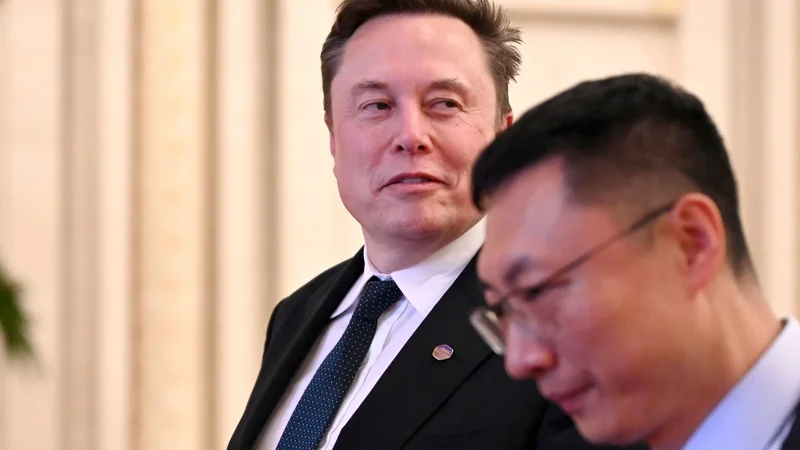
Image: TechCrunch AI
Main Takeaway
SpaceX, OpenAI, and Anthropic are preparing to go public in a concentrated 2026 IPO window that redefines tech's market leadership.
Jump to Key PointsSummary
Why FAANG is dead and MANGOS took over
The acronym that defined tech investing for a decade has been retired. FAANG (Facebook, Apple, Amazon, Netflix, Google) is giving way to MANGOS, a new grouping coined by TechCrunch that stands for Meta (or Microsoft, depending on who you ask), Anthropic, Nvidia, Google, OpenAI, and SpaceX. The shift is not merely cosmetic. It signals that artificial intelligence, not consumer internet or mobile computing, is now the gravitational center of the technology sector. Three of the six MANGOS companies, OpenAI, Anthropic, and SpaceX, are preparing to enter public markets simultaneously, creating a test case for how investors value AI-first businesses at scale.
The concentration is remarkable. Never before have three of the most highly valued private technology companies pursued IPOs in such a tight window. According to TechCrunch, this clustering poses a stress test for investor appetite, valuation frameworks, and what the public even expects from a tech company in 2026. The companies bring radically different profiles, OpenAI with its consumer chatbot dominance and enterprise API business, Anthropic with its safety-focused research culture, and SpaceX with its dual-track satellite and launch revenue streams.
What Google is buying with its $920 million SpaceX deal
Google committed $920 million to secure compute capacity from SpaceX, a transaction that reveals how AI infrastructure is being locked up years in advance. The deal, discussed on TechCrunch's Equity podcast, shows that cloud providers are no longer merely leasing data center space. They are pre-purchasing orbital infrastructure to ensure their AI training and inference pipelines have guaranteed bandwidth. SpaceX's Starlink satellite constellation is becoming a compute delivery mechanism, not just an internet service.
The transaction structure matters. By paying upfront, Google secures preferential pricing and capacity allocation while SpaceX gains the capital to fund its Starship development and satellite manufacturing without dilutive equity raises. Yahoo Finance notes that Wall Street views this as the AI trade bearing tangible fruit, infrastructure commitments that validate private valuations before a single share trades publicly. The deal also complicates SpaceX's IPO narrative. Investors must now evaluate whether the company is a launch services provider, a satellite operator, or an AI infrastructure utility.
How three IPOs stress-test the valuation playbook
OpenAI, Anthropic, and SpaceX are not typical IPO candidates, and that is precisely the problem. Each company burns billions annually, operates in markets with uncertain regulatory boundaries, and carries governance structures that public market investors rarely tolerate. Fox Business reports that all three are eyeing mega-IPOs this year, though specific timing and pricing remain closely guarded. Barron's asks the direct question: can these companies stick the landing? The answer depends on whether 2026 investors accept metrics that depart from traditional software multiples.
OpenAI's revenue run rate, customer concentration in Microsoft, and mounting competition from open-source models create a complex valuation puzzle. Anthropic's safety investments and constitutional AI approach may appeal to long-term capital but compress near-term margins. SpaceX requires the most conceptual leap, since its Mars ambitions consume cash that would crater any conventional aerospace valuation. Northeastern University's analysis, as cited in its coverage, suggests the reality behind these IPOs involves educating a new generation of public investors on how to price optionality, not just cash flows.
What Wall Street is watching beyond the headlines
The IPO pipeline extends beyond the three marquee names. Nvidia's position within MANGOS is instructive, it is already public and serves as the bellwether against which AI valuations are benchmarked. Meta and Google provide the revenue scale and diversification that OpenAI and Anthropic aspire to. The interdependencies are tightening. Google's SpaceX compute deal, for instance, directly supports its Gemini model training, which competes with OpenAI's GPT series. Yahoo Finance UK frames the summer as a moment when AI goes public in a literal and figurative sense, the technology transitions from research curiosity to investable infrastructure.
Trading dynamics could get messy. Dailymotion's coverage of the 2026 IPO boom notes that retail investor interest in AI companies remains at fever pitch, creating potential for volatile opening days. The simultaneous supply of three mega-offerings may test whether demand is as deep as bankers hope. Calcalistech's declaration that the MANGOS era has arrived captures the symbolic weight, this is not a single company going public but an entire sector seeking permanent capital.
What happens after the offerings close
The post-IPO landscape may matter more than the listings themselves. Once public, OpenAI, Anthropic, and SpaceX will face quarterly earnings cycles, shareholder lawsuits, and the activist pressures that reshaped Meta and Google. Their governance experiments, OpenAI's nonprofit board structure, Anthropic's public benefit corporation charter, and SpaceX's Elon Musk-centric control, will face their first real market tests. The companies that survive this transition intact will define whether MANGOS becomes a lasting investment framework or a fleeting acronym.
For the broader ecosystem, the IPOs will unlock liquidity for early employees and investors, potentially recycling capital into the next generation of AI startups. They will also establish pricing benchmarks for the dozens of AI companies currently valued in the tens of billions. If the offerings price successfully, the private AI funding environment stays open. If they stumble, the winter comes fast. The concentration of risk in a single summer is either a masterstroke of market timing or a cautionary tale in the making.
Key Points
SpaceX, OpenAI, and Anthropic are preparing simultaneous 2026 IPOs that redefine tech sector leadership.
MANGOS replaces FAANG as the dominant tech investment acronym, reflecting AI's market centrality.
Google's $920 million SpaceX compute deal secures orbital AI infrastructure years ahead of demand.
Each IPO candidate burns billions annually and carries unconventional governance structures for public markets.
The offerings will establish valuation benchmarks for dozens of private AI companies seeking capital.
Questions Answered
MANGOS stands for Meta (or Microsoft), Anthropic, Nvidia, Google, OpenAI, and SpaceX. The acronym, coined by TechCrunch in 2026, replaces FAANG to reflect that artificial intelligence, not consumer internet, now defines the technology sector's most valuable companies. Three of the six MANGOS members, OpenAI, Anthropic, and SpaceX, are preparing to go public simultaneously.
Google paid SpaceX $920 million to secure compute capacity through SpaceX's Starlink satellite constellation. The deal ensures Google has guaranteed bandwidth for AI training and inference operations, representing a shift from traditional cloud leasing to pre-purchasing orbital infrastructure. The transaction also provides SpaceX with non-dilutive capital for Starship development ahead of its IPO.
All three companies are targeting IPOs in 2026, with the concentrated timing described as a hot IPO summer by multiple financial outlets. Specific dates and pricing remain unannounced, though the window represents one of the most significant technology public offerings in market history. The simultaneous timing creates both opportunity and risk for investor demand.
The IPOs will establish pricing benchmarks for private AI companies and may redirect institutional capital toward newly public AI infrastructure plays. Nvidia, already public, serves as the valuation bellwether. Meta and Google could face competitive pressure or benefit from sector enthusiasm, depending on whether the offerings are perceived as expanding the market or fragmenting investor attention.
These IPOs differ because the companies burn billions annually, operate in unsettled regulatory environments, and employ experimental governance structures. OpenAI retains a nonprofit board, Anthropic is a public benefit corporation, and SpaceX remains tightly controlled by Elon Musk. Public market investors have limited experience pricing such combinations of massive scale, negative profitability, and unconventional accountability mechanisms.
Source Reliability
50% of sources are trusted · Avg reliability: 73
Go deeper with Organic Intel
Simple AI systems for your life, work, and business. Each one includes copyable prompts, guides, and downloadable resources.
Explore Systems