South Africa Renews Starlink Appeal as Musk Faces 30% Black Ownership Requirement
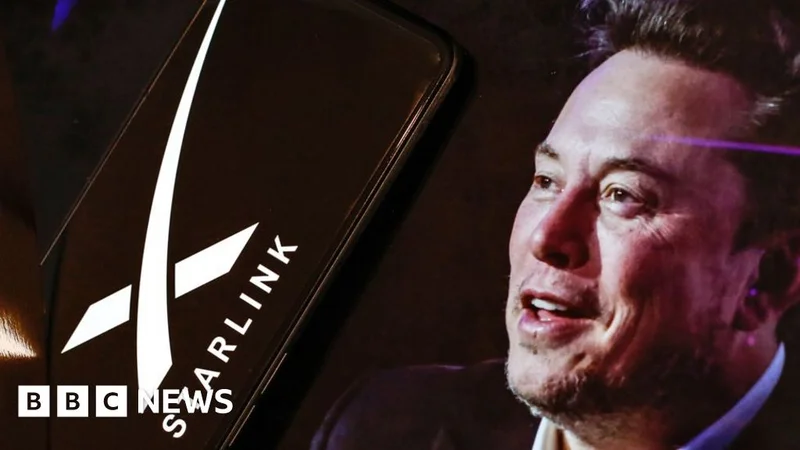
Image: Bbc
Main Takeaway
South Africa’s deputy communications minister urged Elon Musk to launch Starlink by working with the country’s 30% Black ownership requirement.
Jump to Key PointsSummary
The renewed appeal to Musk
South Africa has renewed its public appeal for Elon Musk to bring Starlink to the country, with Deputy Communications and Digital Technologies Minister Mondli Gungubele asking the billionaire to work with the government on ownership rules. Gungubele made the appeal at a Bloomberg event near Cape Town, framing Starlink as a possible tool for expanding internet access and reducing inequality.
The minister’s message combines a commercial invitation with a policy challenge. He urged Musk to cooperate with South Africa’s effort to broaden economic participation and appealed directly to the Pretoria-born entrepreneur. Bloomberg described Gungubele as saying Musk should work with the country and launch the satellite internet service, while local coverage characterized the intervention as an attempt to break a prolonged licensing deadlock.
Why Starlink remains outside
Starlink’s South African launch is blocked by licensing requirements that call for at least 30% ownership by historically disadvantaged or Black South Africans. The rule applies to telecommunications license holders under the country’s regulatory framework and forms part of post-apartheid measures designed to address economic exclusion.
Musk has objected to the requirement in sharply racial terms. In a post on X, he said Starlink could not operate in South Africa “simply because I am not Black,” a statement that turned a licensing dispute into a broader political controversy. The BBC reported that the dispute has also intersected with tensions between Washington and Pretoria, although the licensing issue remains the immediate barrier to Starlink’s entry.
A policy route under debate
South Africa has discussed ways for foreign technology companies to satisfy empowerment objectives without relying only on conventional equity transfers. One proposal would recognize Equity Equivalent Investment Programmes, or EEIPs, as an alternative route for meeting ownership-related obligations.
Communications Minister Solly Malatsi told Parliament in July that the proposed telecommunications reforms predated engagement with Starlink. The reforms were included in the Democratic Alliance’s 2024 election manifesto and the Government of National Unity’s medium-term policy planning, according to Africa.businessinsider. That account adds an important distinction to the dispute: the government presents regulatory change as a broader reform agenda, while Starlink has become its most visible test case. Broadbandbreakfast separately reported that an easing of affirmative-action rules affected foreign-owned satellite internet providers generally, rather than Starlink alone.
Access versus ownership
Starlink’s advocates in South Africa point to connectivity gains, especially in areas where terrestrial broadband infrastructure is limited or expensive to deploy. Satellite broadband can reach remote households and businesses without waiting for extensive local network construction, which gives the service relevance beyond Musk’s personal dispute with the government.
The ownership rule reflects a different priority: using access to the telecommunications market to produce local economic participation. Gungubele’s appeal asks Starlink to treat that objective as part of entering South Africa rather than as an obstacle to be challenged publicly. The competing positions leave the government balancing faster connectivity against an empowerment framework that officials say addresses long-standing inequality.
The wider political stakes
The Starlink dispute has become a test of how South Africa handles foreign technology investment, Black ownership policy and politically prominent entrepreneurs. Musk’s public criticism increased the dispute’s visibility, while ministers have continued to present cooperation as the preferred solution.
The issue also carries diplomatic weight because Musk is a South African-born businessman with close ties to the United States. The BBC linked the controversy to a wider deterioration in relations between Washington and Pretoria, while Africa.businessinsider reported that Malatsi rejected claims that Starlink influenced the government’s proposed licensing reforms. The government’s public outreach indicates that it still wants the service in the market, but the final arrangement must satisfy domestic law or follow a formal legal change.
What happens next
Starlink’s entry depends on an agreement that reconciles the company’s foreign ownership structure with South Africa’s empowerment requirements. The most visible routes are a local ownership partnership, an approved equity-equivalent investment programme, or a change to the licensing framework.
Gungubele’s intervention keeps negotiations in the public eye, but it does not itself grant Starlink a license. Any resolution will need to address both market access and the government’s stated inequality goals. Until that happens, Starlink remains a high-profile example of the friction between global satellite platforms and national rules governing strategic communications infrastructure.
Key Points
Starlink faces South Africa’s 30% Black ownership requirement before receiving a telecommunications license.
Mondli Gungubele urged Elon Musk to cooperate with Pretoria and launch Starlink locally.
Elon Musk criticized South Africa’s ownership policy as discriminatory in a post on X.
South Africa is considering Equity Equivalent Investment Programmes for foreign telecom providers.
The dispute links rural connectivity goals with post-apartheid economic empowerment regulations.
Questions Answered
Starlink cannot receive a South African telecommunications license without addressing the country’s 30% Black ownership requirement. The rule is part of policies designed to expand participation by historically disadvantaged groups.
Mondli Gungubele asked Elon Musk to work with South Africa and launch Starlink. He presented cooperation on ownership and inequality goals as the path toward market entry.
Elon Musk said Starlink was barred from operating in South Africa because he is not Black. His comment intensified the licensing dispute and gave it a wider political dimension.
South Africa is considering regulatory reforms that could recognize Equity Equivalent Investment Programmes as an alternative to conventional ownership requirements. Officials say those reforms form part of a broader policy agenda rather than a measure created solely for Starlink.
Starlink’s entry depends on a qualifying local partnership, an approved equity-equivalent arrangement, or a formal change to licensing rules. Gungubele’s appeal does not itself grant the company permission to operate.
Source Reliability
63% of sources are established · Avg reliability: 66
Go deeper with Organic Intel
Simple AI systems for your life, work, and business. Each one includes copyable prompts, guides, and downloadable resources.
Explore Systems