Siri AI Arrives in iOS 27 Public Beta, Becoming the iPhone’s Central Intelligence Layer
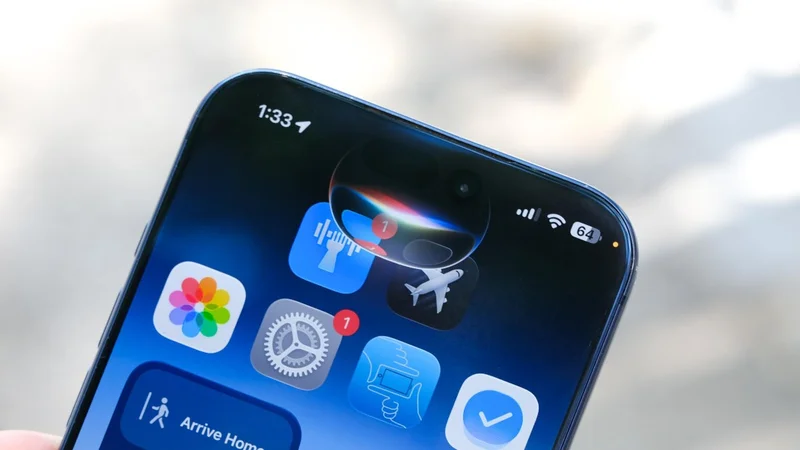
Image: The Verge AI
Main Takeaway
Apple released the iOS 27 public beta, giving users their first hands-on access to Siri AI, a chatbot-style assistant now woven into the core iPhone experience.
Jump to Key PointsSummary
What Siri AI actually is in iOS 27
Apple’s iOS 27 public beta, released on July 13, marks the first time the company’s revamped Siri AI is available to the general public. Showcased at WWDC in June, Siri AI expands far beyond the original voice controls, adding a chatbot-style app and deeper integration across the iPhone user experience. According to Wired, the assistant is now positioned as the backbone of how users interact with their devices, not just a feature layered on top.
The Verge describes iOS 27 as a Snow Leopard-style update, light on flashy new features and heavy on fixing broken foundations. App launches, Photos search results, and AirDrop transfers are all faster. The Messages app gains in-line replies and end-to-end encryption for RCS messages. Siri AI sits at the center of this refinement push, tying together system-wide improvements rather than standing apart as a separate tool.
Apple’s developer documentation frames Siri AI as part of the broader Apple Intelligence initiative, which brings on-device and server-side AI capabilities into everyday workflows. The assistant can now handle multi-step requests, maintain context across interactions, and tap into third-party apps through a new developer framework.
How the public beta experience differs from the keynote demo
Early hands-on testing reveals a gap between Apple’s stage demonstrations and what the public beta actually delivers. Wired’s initial impressions note that the chatbot interface feels polished but limited in scope, with many of the more ambitious cross-app actions still requiring developer adoption. The Verge echoes this, calling the current experience more of a glimpse at the future than a finished product.
Siri AI’s full capabilities depend on third-party developers building support into their apps using Apple’s new Intents framework. Without that support, the assistant can’t perform the kind of deep, app-spanning tasks Apple highlighted in June. The public beta therefore functions as a foundation, not a showcase. Users can test the conversational interface and basic system integrations, but the transformative workflows remain on the roadmap.
Apple’s own documentation confirms this phased rollout. The developer site outlines how App Intents let Siri AI understand and act on app-specific content, but adoption is voluntary and will take time. The company is betting that the iOS 27 install base will motivate developers to integrate quickly, though no timeline is guaranteed.
The partnership strategy behind Siri’s intelligence
Community sources, including the Latenode developer forum, indicate Apple is actively exploring partnerships with external AI companies to accelerate Siri’s capabilities. The strategy shift suggests Apple recognizes that its in-house models, while strong on privacy and on-device processing, need supplementation for complex reasoning and broad knowledge retrieval.
Apple’s own Apple Intelligence pages confirm a hybrid architecture: on-device processing handles personal context and privacy-sensitive tasks, while server-side models tackle more computationally intensive requests. The company hasn’t publicly named partners, but the developer community points to OpenAI as a likely candidate given the integration patterns observed in beta builds.
This dual approach lets Apple maintain its privacy branding while closing the capability gap with competitors like Google Assistant and ChatGPT. By keeping sensitive data local and offloading general queries to cloud models, Siri AI attempts to offer both security and sophistication in one package.
What this shift means for everyday iPhone use
Siri AI changes the iPhone interaction model from tap-and-swipe to conversational direction. Instead of navigating through apps manually, users can ask Siri to compose a message, find a photo, schedule a meeting, and adjust settings in a single flowing request. The Verge reports that even in beta, this consolidation of actions reduces the cognitive load of switching between apps.
Wired emphasizes that Siri AI is no longer a standalone assistant you summon occasionally. It’s woven into the operating system fabric, surfacing proactively in contexts where it anticipates user needs. This ambient presence, combined with faster system performance across iOS 27, makes the phone feel more responsive and less fragmented.
Privacy remains a central pillar. Apple states that on-device processing ensures personal data never leaves the phone for routine tasks. When server-side processing is required, the company uses anonymized relays and doesn’t build user profiles from query data. This architecture is a direct differentiator from cloud-dependent competitors.
Developer adoption and the timeline for full functionality
The success of Siri AI hinges on third-party developers embracing Apple’s new App Intents and SiriKit extensions. Apple’s developer portal provides detailed documentation for exposing app functionality to Siri, but the framework requires meaningful engineering effort. Developers must define intents, map parameters, and test interactions across multiple contexts.
The Verge notes that without broad developer support, Siri AI will remain a first-party tool, competent within Apple’s ecosystem but unable to reach into the apps users rely on most. Early beta testers report that third-party app integration is sparse, with only a handful of partners ready at launch.
Apple’s strategy appears to be platform leverage: with hundreds of millions of iPhones updating to iOS 27, the user base creates a powerful incentive for developers to invest in Siri AI compatibility. Whether that incentive translates into rapid adoption remains an open question, and the answer will determine how quickly the keynote vision becomes daily reality.
Where Siri AI fits in the competitive landscape
Siri AI arrives at a moment when Google, Amazon, and OpenAI are all racing to embed conversational AI into operating systems and devices. Google has integrated Gemini into Android, and Amazon is rebuilding Alexa around large language models. Apple’s approach stands apart through its emphasis on on-device privacy and system-level integration rather than cloud-first intelligence.
The Verge frames Siri AI as Apple’s attempt to redefine what a smartphone assistant can be, moving from a command-response tool to a persistent intelligence layer. Wired sees the same ambition but cautions that Apple’s privacy constraints may limit the assistant’s raw capability compared to cloud-native competitors.
Apple’s bet is that users will trade some breadth of knowledge for deeper, more secure integration with their personal data. If the developer ecosystem responds and the hybrid architecture proves robust, Siri AI could reset expectations for what an operating system-level assistant delivers.
Key Points
Apple launched the iOS 27 public beta with Siri AI as a chatbot-style assistant woven into the core iPhone experience.
Siri AI’s full cross-app capabilities require third-party developers to adopt Apple’s new App Intents framework.
The update focuses on system performance fixes, faster searches, and RCS encryption, following a Snow Leopard-style refinement approach.
Apple is exploring AI partnerships, likely with OpenAI, to supplement on-device processing for complex queries.
The hybrid architecture keeps personal data on-device for privacy while using server-side models for intensive tasks.
Questions Answered
Siri AI is Apple’s revamped assistant that adds a chatbot-style interface and deep system integration, moving beyond simple voice commands to become a persistent intelligence layer across iOS. Unlike the old Siri, it handles multi-step requests, maintains conversation context, and can proactively surface in apps based on user needs.
Siri AI is available now through the iOS 27 public beta, which Apple released on July 13, 2026. The full consumer release will arrive later this year alongside the official iOS 27 launch.
Third-party app integration is limited in the public beta because developers need to adopt Apple’s new App Intents framework to expose their app functionality to Siri AI. Full cross-app capabilities will expand as more developers build support over the coming months.
Community sources and developer forum discussions indicate Apple is exploring partnerships with external AI companies, with OpenAI seen as a likely candidate. Apple has not publicly confirmed specific partners but its hybrid architecture relies on both on-device models and server-side intelligence.
Siri AI uses on-device processing for personal and privacy-sensitive tasks so that data never leaves the iPhone. When server-side processing is necessary for complex queries, Apple uses anonymized relays and does not build user profiles from query data.
iOS 27 is designed as a performance-focused update that speeds up app launches, Photos search results, and AirDrop transfers across the system. Siri AI itself is part of this efficiency push, consolidating multi-app actions into single conversational requests.
Source Reliability
57% of sources are highly trusted · Avg reliability: 82
Go deeper with Organic Intel
Simple AI systems for your life, work, and business. Each one includes copyable prompts, guides, and downloadable resources.
Explore Systems