OpenAI’s GPT-Live-1 voice model learns to listen and shut up at the same time
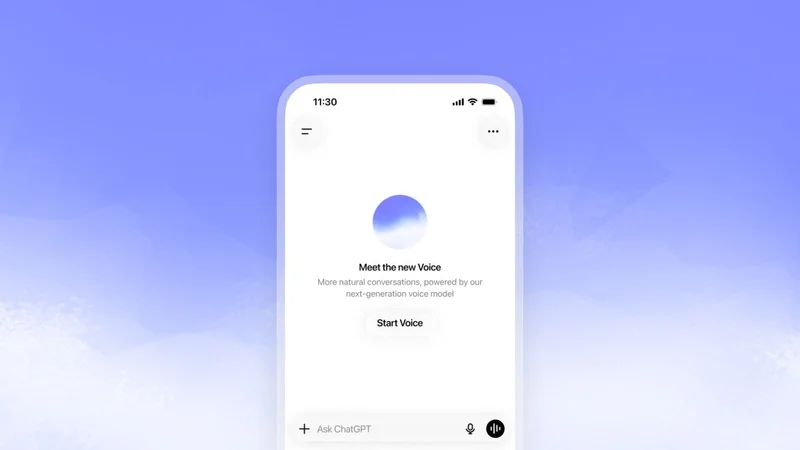
Image: TechCrunch AI
Main Takeaway
OpenAI released GPT-Live-1 and GPT-Live-1 mini, full-duplex voice models that can speak and listen simultaneously, enabling live translation and more.
Jump to Key PointsSummary
What the new GPT-Live models actually do
OpenAI has overhauled ChatGPT’s voice mode with two new conversational models, GPT-Live-1 and GPT-Live-1 mini, that the company says sound more natural and handle turn-taking better than anything it has shipped before. According to TechCrunch, these are full-duplex models, meaning they can speak and listen at the same time. That technical shift lets users interrupt the AI naturally, the way they would another person, and unlocks features like live translation that were impossible with the previous half-duplex architecture.
During a press briefing, OpenAI researcher lead Kundan Kumar called GPT-Live-1 the company’s “smartest voice model” yet, The Verge reports. The model is designed to interrupt users less and will wait for them to continue speaking if they pause mid-conversation. OpenAI is replacing the current Advanced Voice Mode in ChatGPT with GPT-Live-1 mini by default, while the full GPT-Live-1 model will be available to Plus subscribers, according to AI Business. The new models are also being exposed through the API for developers who want to build real-time voice applications.
Why simultaneous listening changes the interaction
Full-duplex audio is the architectural change that makes everything else possible. In the old voice mode, ChatGPT operated like a walkie-talkie: one party spoke while the other waited, then they swapped. The new models process incoming audio and generate speech in parallel, which means the AI can react to interruptions in real time without cutting off awkwardly or ignoring the user until it finishes its sentence.
This has a practical payoff that OpenAI is highlighting: live translation. A user can speak in one language and hear the model translate into another while they are still talking, with the AI handling both streams concurrently. 9to5Mac notes the models can reason, translate, and transcribe as users speak, folding multiple capabilities into a single real-time pipeline. The Verge’s coverage emphasizes the social dimension: the model is better at “shutting up” when it should, pausing when the user hesitates rather than jumping in to fill silence, which was a common complaint about earlier voice modes.
What subscribers and developers get right now
OpenAI is rolling out GPT-Live-1 mini as the default voice mode for all ChatGPT users, with the larger GPT-Live-1 reserved for Plus subscribers, AI Business reports. The company’s official Voice Mode FAQ, hosted on help.openai.com, provides the canonical details on availability, usage limits, and supported platforms. Simultaneously, OpenAI published an announcement on its developer forum confirming that the new real-time voice models are available in the API, letting third-party developers build applications that use the same full-duplex speech capabilities.
The API release matters because it opens the door for non-ChatGPT products to embed conversational AI with the same interruption-handling and translation features. OpenAI’s own technical documentation, hosted on cdn.openai.com, details the next-generation audio models available to developers. The split between a default mini model and a premium full model mirrors OpenAI’s text-model strategy with GPT-4o and GPT-4o mini, giving the company a way to manage inference costs while offering a paid tier for power users.
Early user reactions reveal a tradeoff
Not everyone is celebrating the update. Community forums on OpenAI’s own site show a split: some users call the new Advanced Voice Mode a “step backward,” while others report that the feature is limited or behaves inconsistently. Simon Willison, an independent developer and commentator with a track record of detailed AI critiques, posted that ChatGPT voice mode is “a weaker model,” suggesting that the conversational fluency improvements may come at the cost of reasoning depth or factual reliability compared to the text-only GPT-4o.
Fortelabs published a voice-only mid-year review testing the limits of the new mode, and Every ran a hands-on review of the updated Advanced Voice Mode. These early evaluations point to a pattern: the voice interaction feels more human, but the underlying model may be a distilled or optimized variant that trades some of the full model’s breadth for lower latency and smaller footprint. OpenAI has not publicly addressed whether GPT-Live-1 matches GPT-4o on benchmarks like MMLU or HumanEval, leaving the performance comparison an open question for the community to benchmark.
How this fits into the voice AI race
OpenAI’s voice upgrade lands in a market where real-time conversational AI is becoming table stakes. Google’s Gemini Live already offers interruptible voice conversations, and Meta has been integrating voice capabilities into its Ray-Ban smart glasses partnership. The full-duplex architecture OpenAI is now shipping was a known gap: competitors had already demonstrated simultaneous listen-and-speak, and OpenAI’s move closes that feature parity gap while adding live translation as a differentiator.
The API availability signals that OpenAI wants voice to become a platform layer, not just a ChatGPT feature. Developers who build customer support bots, language tutoring apps, or accessibility tools can now tap into the same voice pipeline that powers ChatGPT’s own experience. The pricing and rate limits on the API will determine how widely that gets adopted, and those details are still emerging from OpenAI’s documentation. The simultaneous release of both consumer and developer access suggests a coordinated push to make voice a primary interface for AI, not a secondary modality bolted onto a text model.
What happens next for voice quality and model capability
The immediate question is whether GPT-Live-1 mini, the default for most users, feels good enough to change usage habits. If the mini model handles turn-taking gracefully but produces shallower answers, users may stick with text for anything requiring depth. OpenAI will face pressure to publish benchmark comparisons between GPT-Live-1 and GPT-4o so developers and subscribers know what they are trading off for real-time voice.
Longer term, the full-duplex capability opens the door to multi-party conversations, where the AI mediates between several speakers, and to persistent voice sessions that stay open for hours rather than minutes. Live translation alone could push adoption in travel, international business, and live content consumption. But the user complaints surfacing on OpenAI’s forums suggest the rollout is not seamless, and the company will need to address reliability and model quality concerns quickly to avoid the perception that voice mode is a downgrade in intelligence.
Key Points
OpenAI shipped GPT-Live-1 and GPT-Live-1 mini, full-duplex voice models that speak and listen at the same time.
The new architecture enables natural interruptions, live translation, and pausing when users hesitate mid-sentence.
GPT-Live-1 mini becomes the default ChatGPT voice mode, with the full model reserved for Plus subscribers.
Both models are available in the API, letting developers build real-time voice applications with the same capabilities.
Early user feedback is split, with some calling it a step backward and others noting the model may be weaker than GPT-4o.
Questions Answered
GPT-Live-1 is OpenAI’s new full-duplex voice model that can speak and listen simultaneously. Unlike the previous half-duplex mode that worked like a walkie-talkie, it handles natural interruptions, waits when users pause, and enables live translation.
GPT-Live-1 mini is the default voice mode for all ChatGPT users. The full GPT-Live-1 model is available to Plus subscribers, and both models are accessible through OpenAI’s API for developers.
OpenAI has not published benchmark comparisons between GPT-Live-1 and GPT-4o. Independent developer Simon Willison has noted the voice mode appears to be a weaker model, suggesting a tradeoff between conversational fluency and reasoning depth.
Yes, the full-duplex architecture allows GPT-Live-1 to translate speech in real time while a user is still talking. OpenAI and 9to5Mac both highlight live translation as a key feature enabled by the simultaneous listen-and-speak capability.
Reactions are mixed. Some users on OpenAI’s community forums call it a step backward or report limited functionality, while hands-on reviews from Every and Fortelabs suggest the interaction feels more human but may sacrifice some model capability.
Source Reliability
36% of sources are highly trusted · Avg reliability: 64
Go deeper with Organic Intel
Simple AI systems for your life, work, and business. Each one includes copyable prompts, guides, and downloadable resources.
Explore Systems