Google Launches Nano Banana 2 Lite, Its Fastest and Cheapest Image Generator Yet
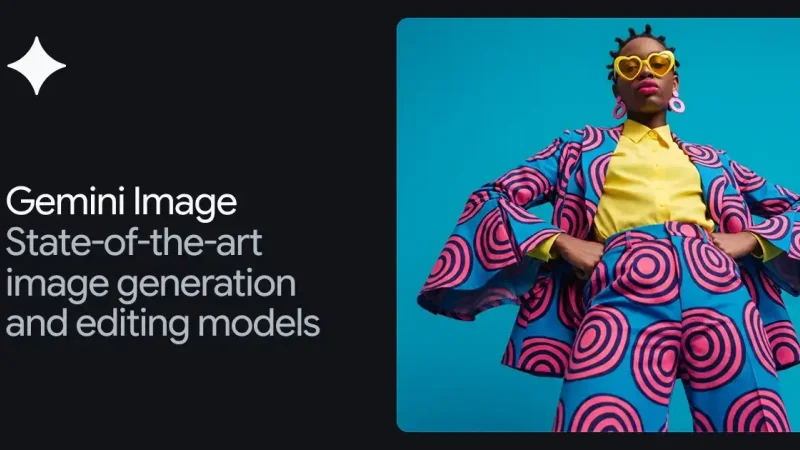
Image: Deepmind
Main Takeaway
Google released Nano Banana 2 Lite, generating images in 4 seconds at $0.034 each through Gemini API and consumer apps.
Jump to Key PointsSummary
What Google launched and when
Google DeepMind released Nano Banana 2 Lite on June 30, 2026, joining the existing Nano Banana Pro in its image generation model family. The new model generates images in approximately four seconds, according to Google, making it the fastest option in the Nano Banana lineup. It also carries the lowest price point at $0.034 per image through the Gemini API. The launch coincided with the release of Gemini Omni Flash, a separate video generation and editing model available via API for the first time.
The timing matters because it comes just months after Nano Banana 2 debuted in February 2026 with native 4K support and 40% lower API costs than its predecessor. Google is now segmenting its offerings: Pro for quality, 2 for balanced speed and fidelity, and Lite for pure velocity and cost efficiency.
How the pricing and speed compare
Nano Banana 2 Lite undercuts Google's previous options significantly. At $0.034 per image, it sits below the $0.04-$0.05 range that third-party providers charge for Nano Banana Pro access, and well under Imagen 4 Fast's $0.02 per image (though that model offers different capabilities). The four-second generation time represents a substantial improvement over Pro-tier models, which prioritize fidelity over latency.
This pricing strategy targets developers building high-volume applications where cost per image directly impacts margins. Google's official API documentation now lists multiple tiers, from free tiers in AI Studio to batch processing discounts. The company is effectively competing with open-source alternatives and API resellers by driving official pricing downward.
Where the model runs and who can access it
Nano Banana 2 Lite is available across Google's ecosystem, including Gemini consumer apps, the Gemini API, and partner platforms. Adobe integrated both Nano Banana 2 and Nano Banana Pro into Adobe Firefly, giving Creative Cloud subscribers direct access without leaving their workflow. The model also runs on third-party inference platforms like Higgsfield and Kie AI, which resell API access to developers.
Google's own channels remain the primary distribution method. The 141-country rollout mentioned in earlier Nano Banana 2 coverage suggests near-global availability, though specific regional restrictions for Lite have not been detailed. Developers can access the model through standard Gemini API endpoints with existing keys.
What quality trade-offs exist
Ars Technica's assessment captures the central tension: Nano Banana 2 Lite prioritizes speed and cost over output quality. The publication notes that generated images "may not look as good" as Pro-tier results, making the model suitable for rapid ideation, mockups, and high-volume scenarios where perfect fidelity matters less than iteration velocity.
Google's own positioning reflects this. The company describes Lite as built for "fast ideation" rather than production-ready final assets. Nano Banana Pro remains the choice for "studio-quality designs" with improved text rendering and enhanced world knowledge. This tiered approach lets Google serve both casual creators and professional workflows without forcing a single compromise.
How this reshapes the competitive field
The launch intensifies pressure on Midjourney, Stability AI, and Ideogram, all of which compete in the fast-cheap-generous segment of image generation. CNET's 2026 comparison placed Google's Nano Banana models among the top tier, and Lite's speed advantage could shift developer preference. Open-source alternatives like FLUX.2 and Stable Diffusion variants face a new benchmark for commercially viable latency.
Adobe's early integration signals where professional workflows are heading: model-agnostic platforms that route to the right backend based on quality-speed-cost needs. For Google, Lite also serves a strategic defensive purpose. It keeps developers in the Gemini ecosystem rather than losing them to cheaper specialized providers, while creating upgrade paths to Pro for demanding use cases.
What developers and businesses should watch
The practical impact depends on use case. For social media content, ad creative testing, and internal prototyping, Lite's speed and cost make it immediately viable. For publishing, e-commerce product imagery, and brand campaigns, Pro likely remains necessary. Google's API structure now supports this decision explicitly, with clear quality-speed-cost trade-offs.
Watch for two follow-on effects. First, pricing pressure on competitors will accelerate, potentially triggering a race to the bottom in consumer-facing image generation. Second, video generation via Gemini Omni Flash, launched alongside Lite, may prove more strategically significant long-term as multimodal AI matures. Google's bundling of image and video tools positions it against Runway, Pika, and OpenAI's Sora in the emerging video generation market.
Key Points
Google DeepMind released Nano Banana 2 Lite, generating images in 4 seconds at $0.034 each.
The model sacrifices some quality for dramatic speed and cost improvements over Pro-tier options.
Adobe Firefly, Higgsfield, and Kie AI now offer access alongside Google's Gemini API and consumer apps.
Launch coincided with Gemini Omni Flash, Google's first API-accessible video generation model.
Pricing pressures Midjourney, Stability AI, Ideogram, and open-source alternatives in the image generation market.
Questions Answered
Google Nano Banana 2 Lite generates images in approximately four seconds, making it the fastest model in Google's Nano Banana family. This compares to slower generation times for Nano Banana Pro, which prioritizes quality and text rendering accuracy over speed.
Google Nano Banana 2 Lite costs $0.034 per image through the Gemini API. This undercuts Nano Banana Pro pricing and competes with Imagen 4 Fast at $0.02, though the two models target different quality levels.
Yes, both Nano Banana 2 and Nano Banana Pro are available in Adobe Firefly's Generate Image module and Firefly Boards, giving Creative Cloud subscribers direct access without switching platforms.
Google Nano Banana 2 Lite sacrifices some output quality for dramatic speed and cost improvements. Google positions it for fast ideation and high-volume scenarios, while recommending Nano Banana Pro for studio-quality final assets.
Google launched Gemini Omni Flash alongside Nano Banana 2 Lite, bringing video generation and editing via text prompts to the Gemini API for the first time and competing with Runway and OpenAI's Sora.
Source Reliability
31% of sources are highly trusted · Avg reliability: 59
Go deeper with Organic Intel
Simple AI systems for your life, work, and business. Each one includes copyable prompts, guides, and downloadable resources.
Explore Systems