Sam Altman and Dario Amodei Bring Global AI Standards Debate to UN Security Council
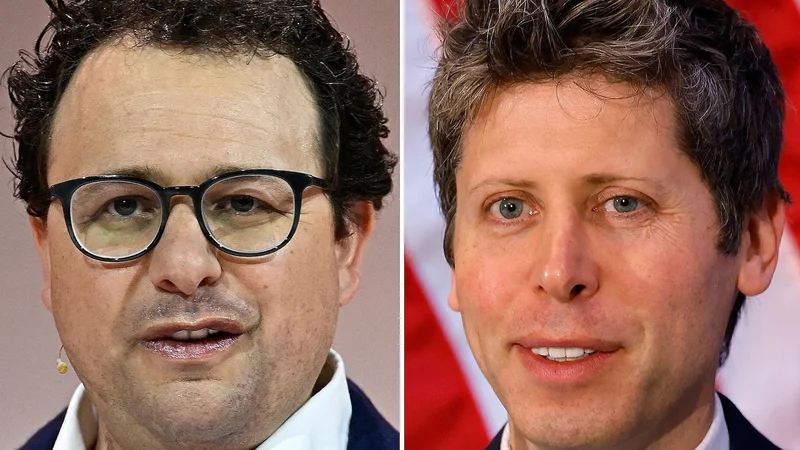
Image: Abcnews
Main Takeaway
OpenAI CEO Sam Altman will address the UN Security Council on global AI standards alongside Anthropic’s Dario Amodei and leading researchers.
Jump to Key PointsSummary
What the UN session will cover
Sam Altman and Anthropic CEO Dario Amodei will brief the 15-member United Nations Security Council on artificial intelligence and international security on Wednesday, September 23. The meeting is being held during the high-level segment of the UN General Assembly under the agenda item “Maintenance of international peace and security.” France, which holds the council presidency in September, is convening the session.
Yoshua Bengio, a prominent AI safety researcher, and Clément Delangue, chief executive of Hugging Face, are also scheduled to address the council. Amodei is expected to participate remotely, while the session brings technology executives and researchers before the UN body responsible for decisions involving international peace, sanctions and military action.
Altman’s standards proposal
Altman is expected to promote global standards for artificial intelligence, positioning common technical and safety rules as a practical way for governments to manage advanced systems. Bloomberg described the OpenAI chief executive as taking a centrist position in the debate over whether governments should slow AI development, with international coordination forming the center of his argument.
The standards discussion arrives as governments face uneven national rules, rapid model development and uncertainty over how to evaluate increasingly capable systems. Altman and Amodei have both called for a slower, more controlled pace of development, according to ABC News. Their appearance gives the industry’s leading commercial labs a direct role in shaping the international policy conversation.
Why the companies are appearing
The UN briefing places executives from companies building frontier AI systems alongside researchers focused on safety and open-source infrastructure. OpenAI and Anthropic represent commercial developers of advanced models, while Hugging Face brings an ecosystem perspective centered on openly shared models and tools. Bengio adds an independent research voice to a panel otherwise dominated by industry leaders.
That mix reflects the council’s interest in AI as both a technology and a security issue. The session is not a product launch or a treaty negotiation. It is a high-level briefing designed to inform diplomats about risks, international coordination and the governance choices surrounding systems that are being developed faster than many national institutions can regulate them.
The safety debate reaches diplomacy
The briefing follows a growing series of warnings from AI researchers and industry leaders about the difficulty of controlling advanced systems. Those warnings have pushed AI safety from a specialist concern into a matter for foreign-policy officials, particularly as governments assess risks involving misinformation, cyber operations, military decision-making and the spread of powerful model capabilities.
The council’s involvement also raises a question about whether existing international institutions can respond to commercial technology that crosses borders by design. A shared standards framework would require agreement on testing, deployment safeguards and accountability, while national governments continue to compete over AI investment and strategic advantage. The session gives diplomats a public forum to examine that tension, even though it produces no binding policy by itself.
What happens after the speeches
The immediate result will be political signaling rather than enforceable rules. Altman’s appeal for global standards will test whether governments view voluntary coordination as a useful starting point or as an insufficient response to the speed and scale of AI development. Amodei’s participation adds weight to calls for stronger safeguards from another major model developer.
The briefing also gives the UN a clearer role in an emerging governance debate, but translating discussion into standards will require negotiations among governments, technology companies and independent researchers. The presence of Bengio and Delangue broadens that conversation beyond the 2 largest AI labs, while the council’s security mandate keeps attention on risks that extend beyond consumer software.
Key Points
OpenAI CEO Sam Altman will promote global AI standards before the United Nations Security Council.
Anthropic CEO Dario Amodei will join Altman remotely for a briefing on AI and international security.
Yoshua Bengio and Hugging Face CEO Clément Delangue will provide research and open-source perspectives.
The UN session follows warnings that advanced AI systems are difficult to control safely.
Global standards discussions will focus on coordination, safeguards, testing and responsible AI development.
Questions Answered
OpenAI CEO Sam Altman will promote global standards for artificial intelligence and international coordination. His remarks will address responsible development and safeguards for advanced AI systems.
Sam Altman will appear alongside Anthropic CEO Dario Amodei, AI safety researcher Yoshua Bengio and Hugging Face CEO Clément Delangue. Amodei is expected to participate remotely.
The UN Security Council is discussing artificial intelligence because advanced AI raises international-security concerns. The briefing will examine risks, safeguards and cooperation among governments and technology companies.
Sam Altman and Dario Amodei have both called for slowing the pace of AI development. Their UN appearance comes amid broader warnings about controlling increasingly capable systems.
The UN briefing will not immediately create binding AI regulations. It is a high-level discussion intended to inform diplomats and shape future debates over shared standards and international coordination.
Source Reliability
42% of sources are trusted · Avg reliability: 76
Go deeper with Organic Intel
Simple AI systems for your life, work, and business. Each one includes copyable prompts, guides, and downloadable resources.
Explore Systems