Russia Opens Foreign Data Center Access After Ukrainian Strikes Expose Sovereign Infrastructure Risks
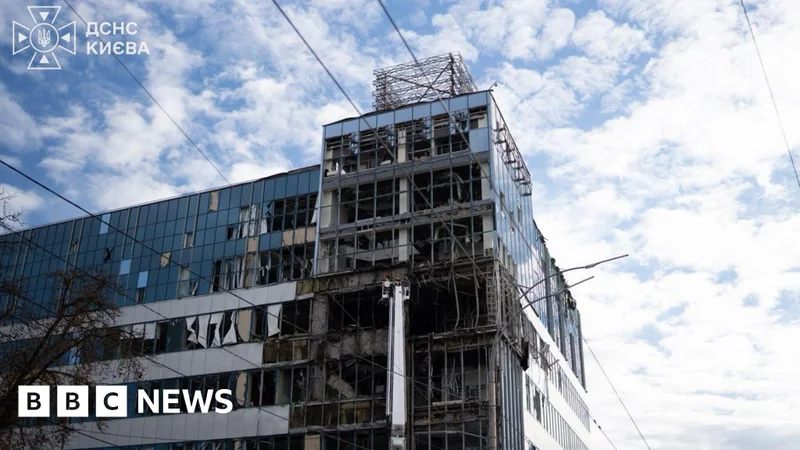
Image: Bbc
Main Takeaway
Russia is allowing temporary foreign data center use and reserving 10% of private domestic capacity after Ukrainian strikes disrupted technology infrastructure.
Jump to Key PointsSummary
Russia makes a sharp policy exception
Russia has temporarily authorized companies to use data center capacity outside the country after Ukrainian drone strikes hit facilities linked to Yandex and other major technology operators. The measure marks a significant exception to Moscow’s long-running effort to keep critical digital infrastructure within Russian borders, Bloomberg AI and Heise reported.
A presidential decree creates a government subcommission that can approve foreign capacity in consultation with the Federal Security Service, or FSB. The authorization applies under specified circumstances and gives Russian companies a route to maintain computing and online services when domestic facilities are damaged or unavailable. Silicon.co and Ars Technica AI described the decision as a response to the recent attacks and a notable retreat from the strictest interpretation of Russia’s sovereign-internet policy.
The attacks exposed a concentrated weak point
The strikes demonstrated how physical attacks on a small number of large facilities can disrupt services that depend on centralized computing capacity. Yandex facilities were among the targets in October, while data centers operated by Sberbank were also reported to have been struck. The resulting disruption affected technology operations and complicated Russia’s ambitions for artificial intelligence research, according to Money.usnews and Themoscowtimes.
Russia spent years concentrating internet and cloud infrastructure inside its territory as part of its sovereign-internet campaign. Carnegieendowment said that concentration created a single-country dependency, while the Council on Foreign Relations framed the attacks as a warning about the physical vulnerability of AI infrastructure worldwide. The issue extends beyond Russia: data centers require electricity, cooling, network connections and secure buildings, making them tangible targets even when the services they power are digital.
Private operators must hold capacity for the state
The same decree requires private Russian data center operators to reserve 10% of their capacity for government use. Authorities can call on that capacity when state information systems need additional resources, and Tomshardware reported that operators must provide access within 24 hours of a request.
The reserve gives Moscow a domestic emergency pool while the foreign-access provision supplies an external fallback. It also increases state control over privately operated computing infrastructure, shifting part of the cost of resilience onto commercial data center owners. The Moscow Times described the requirement as a mechanism for rapidly accessing available capacity, while Heise reported that the new subcommission will be able to order its release.
Sovereign internet meets wartime resilience
The foreign-capacity decision exposes a tension at the center of Russia’s digital strategy. Sovereign infrastructure is designed to reduce dependence on foreign providers and keep data flows under domestic control, yet a tightly centralized system has fewer geographic alternatives when facilities are attacked. Ars Technica AI connected the decree directly to Russia’s sovereign-internet rules, which have restricted companies from relying on cloud infrastructure beyond the country’s borders.
Security approval preserves a measure of state oversight, but cross-border computing introduces new dependencies involving foreign operators, network routes and legal jurisdictions. Carnegieendowment described the attacks as evidence of the costs created by infrastructure concentration. The response therefore combines two opposing policies: Moscow is retaining control over private capacity at home while temporarily reopening access to infrastructure abroad.
The civilian stakes reach beyond servers
The impact of data center attacks extends to ordinary digital services, including communications, work, education, commerce and online platforms. Ukraine’s President Volodymyr Zelensky said attacks on data centers and internet providers were intended to disrupt people’s ability to stay connected, study and work, according to BBC.
The broader conflict has turned network infrastructure into part of the battlefield. Ukraine has described Russian strikes on Ukrainian digital facilities as an attempt to damage everyday life, while attacks on Russian data centers have exposed similar vulnerabilities on the other side. Money.usnews reported that the Russian strikes disrupted key services and affected AI research, showing how infrastructure damage can reach both consumer systems and strategic technology programs.
What happens next for Russian computing
Russia’s immediate priority is redundancy: preserve services after attacks, mobilize unused domestic capacity and create a controlled path to foreign computing resources. The arrangement remains temporary and requires FSB involvement, so it does not represent a broad return to foreign cloud dependence. Its practical value will depend on how quickly approvals are issued and whether overseas providers are willing and able to serve Russian customers under wartime and sanctions constraints.
The policy also points to a larger infrastructure debate. Governments pursuing national control over cloud and AI systems must balance autonomy against geographic diversity, while private operators face new obligations to maintain state-accessible reserves. The Council on Foreign Relations argued that physical dispersion, stronger protection and contingency planning are central to reducing the risks revealed by the attacks.
Key Points
Russia authorizes temporary foreign data center use after Ukrainian strikes disrupt domestic technology facilities.
Private Russian data centers must reserve 10% of capacity for state information systems.
FSB consultation controls cross-border links under the new emergency data infrastructure framework.
Yandex and Sberbank facilities became targets exposing concentrated Russian computing infrastructure.
The policy challenges Russia’s sovereign internet strategy while creating new resilience options.
Questions Answered
Russia is allowing temporary foreign data center use after Ukrainian drone strikes disrupted domestic facilities linked to Yandex and other operators. The measure gives companies an external option when Russian computing capacity is damaged or unavailable.
Russian private data centers must reserve 10% of their capacity for state IT infrastructure. Authorities can request access to that capacity, with reports describing a response deadline of 24 hours.
Russia’s policy creates a temporary exception to its sovereign internet approach rather than abandoning it. Foreign connections require government authorization and consultation with the Federal Security Service.
Ukrainian drone strikes hit facilities associated with Yandex and other major Russian technology companies, disrupting services and affecting AI research. The attacks exposed the risks of concentrating computing infrastructure inside one country.
Russian authorities will combine reserved domestic capacity with tightly controlled access to foreign data centers. Operators and government officials must determine how quickly emergency approvals, cross-border connections and replacement capacity can function in practice.
Source Reliability
50% of sources are highly trusted · Avg reliability: 78
Go deeper with Organic Intel
Simple AI systems for your life, work, and business. Each one includes copyable prompts, guides, and downloadable resources.
Explore Systems