Qualcomm Unveils Data Center AI Chips With Meta Deal, Targets $15 Billion by 2029
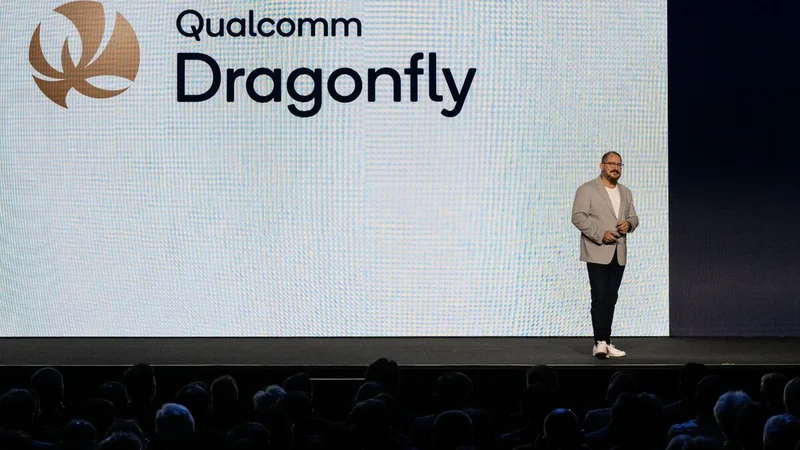
Image: Bloomberg AI
Main Takeaway
Qualcomm announced its first data center AI processors and signed Meta as a flagship customer, projecting $15 billion in annual chip sales by 2029.
Jump to Key PointsSummary
Qualcomm's data center debut
Qualcomm unveiled its first dedicated AI processors for data centers on June 24, 2026, marking a dramatic expansion beyond its mobile phone chip stronghold. The announcement included a major design win with Meta Platforms, which has agreed to deploy Qualcomm's chips in its infrastructure. Meta's involvement signals credibility for Qualcomm's entry into a market long dominated by Nvidia and AMD. The chips target AI inference workloads rather than training, positioning Qualcomm to capture demand as enterprises deploy already-trained models at scale. Qualcomm expects to begin shipping the data center chips later this year.
The Meta partnership carries particular weight given the social media giant's massive AI infrastructure spending and its historical reliance on Nvidia GPUs. Landing Meta validates Qualcomm's technical approach and opens doors to other hyperscale customers.
The $15 billion revenue target
Qualcomm projected data center chip sales exceeding $15 billion annually by fiscal 2029, nearly doubling its previous non-handset revenue forecast. The aggressive target reflects management's confidence that inference-optimized chips will carve out substantial share from incumbents. According to Bloomberg, this represents one of the most ambitious forecasts in Qualcomm's history and would transform the company's revenue mix.
The forecast depends on maintaining Meta's business and adding additional hyperscale customers. Qualcomm's mobile chip expertise in power efficiency translates to data center applications where electricity costs dominate operating expenses. The company is betting this advantage differentiates its offerings against Nvidia's power-hungry GPUs for inference tasks.
Wall Street's enthusiastic response
Qualcomm shares surged 15% following the announcement, with CNBC reporting the stock pop reflected investor enthusiasm for diversification beyond the smartphone market. The gain erased months of stagnation as analysts upgraded revenue estimates and price targets. Yahoo Finance noted the 11% jump validated Qualcomm's AI chip strategy, though the broader rally suggested markets had underappreciated the company's data center ambitions.
The stock movement exceeded typical semiconductor announcement reactions, indicating investors view this as a genuine strategic inflection rather than incremental product news. Trading volume hit multi-month highs as institutional investors repositioned.
Competitive positioning against Nvidia and AMD
Qualcomm enters a crowded field where Nvidia holds approximately 80% of data center AI market share and AMD has invested heavily to close the gap. Reuters reports Qualcomm's chips specifically target inference, the less computationally intensive phase of AI deployment that occurs after models are trained. This positioning avoids direct confrontation with Nvidia's training dominance while addressing a growing market segment.
The inference market is expanding rapidly as enterprises deploy AI applications. Qualcomm's ARM-based architecture offers potential cost and efficiency advantages over x86 competitors. However, software ecosystem maturity remains a significant hurdle against Nvidia's CUDA platform.
What happens next for Qualcomm
Shipments begin this year according to Thelec, giving Qualcomm limited time to prove manufacturing yield and performance claims. The Meta deal must expand from pilot to production volumes to approach the $15 billion target. Qualcomm needs additional hyperscale customers to diversify beyond Meta dependency.
Software tooling and developer support will determine whether Qualcomm can build sustainable competitive advantages. The company must also navigate potential tension with cloud providers developing their own inference chips. Success would validate a new business model; failure would confirm skeptics who view mobile chip expertise as non-transferable to data centers.
The Meta relationship's complexity
The Meta partnership contains unresolved tension. Theinformation previously reported Qualcomm had failed to land Meta as a flagship customer, suggesting negotiations were protracted and competitive. Utmel published analysis questioning why Meta would choose Qualcomm, indicating industry skepticism about the deal's durability.
Meta maintains multi-source strategies for critical components, so Qualcomm likely shares the socket with Nvidia and possibly custom silicon. The deal's revenue contribution depends on allocation share, which Meta controls. Qualcomm must demonstrate consistent performance to maintain or expand its position against future internal Meta chip development.
[ Myanmar,Theinformation,Utmel]
Broader implications for AI chip markets
Qualcomm's entry intensifies competition in a market seeing unprecedented investment. Multiple semiconductor players now target inference optimization, suggesting eventual commoditization pressure. For enterprise AI buyers, additional viable suppliers improve negotiating positions and reduce single-vendor risk.
The move validates ARM architecture for data center AI, potentially benefiting other ARM-based chip designers. It also demonstrates mobile-era power efficiency expertise transferring to data center applications, a thesis other companies may explore. Whether Qualcomm can sustain margins against Nvidia's software ecosystem advantages remains the central question for 2027-2028.
Key Points
Qualcomm unveiled its first data center AI processors with Meta as a launch customer.
Qualcomm projects $15 billion in annual data center chip sales by fiscal 2029.
The new chips target AI inference rather than model training workloads.
Qualcomm shares surged 15% following the announcement on June 24, 2026.
Shipments of the data center chips are expected to begin later in 2026.
Questions Answered
Qualcomm announced its first dedicated AI processors for data centers, designed specifically for AI inference workloads. The chips represent Qualcomm's entry into competition with Nvidia and AMD in data center AI acceleration.
Meta selected Qualcomm's data center chips for its infrastructure, though the deal likely reflects a multi-source strategy rather than exclusive commitment. Qualcomm's power efficiency expertise and inference optimization aligned with Meta's deployment needs for already-trained AI models.
Qualcomm forecasts data center chip sales exceeding $15 billion annually by fiscal 2029. This target nearly doubles previous non-handset revenue projections and depends on expanding beyond the initial Meta customer relationship.
Qualcomm expects to begin shipping its data center AI chips in 2026. The timeline gives the company limited runway to demonstrate manufacturing yield and performance before significant revenue contribution.
Qualcomm shares surged 15% following the announcement, with trading volume hitting multi-month highs. The gain reflected investor enthusiasm for the company's diversification beyond smartphones into higher-growth data center markets.
Qualcomm faces Nvidia's dominant CUDA software ecosystem, potential Meta custom silicon development, and the challenge of adding hyperscale customers beyond its initial Meta win. The company must also prove ARM-based inference chips can compete on total cost of ownership against entrenched alternatives.
Source Reliability
50% of sources are highly trusted · Avg reliability: 74
Go deeper with Organic Intel
Simple AI systems for your life, work, and business. Each one includes copyable prompts, guides, and downloadable resources.
Explore Systems