OpenAI Introduces ChatGPT for Teens With Stronger Safeguards and New Parental Controls
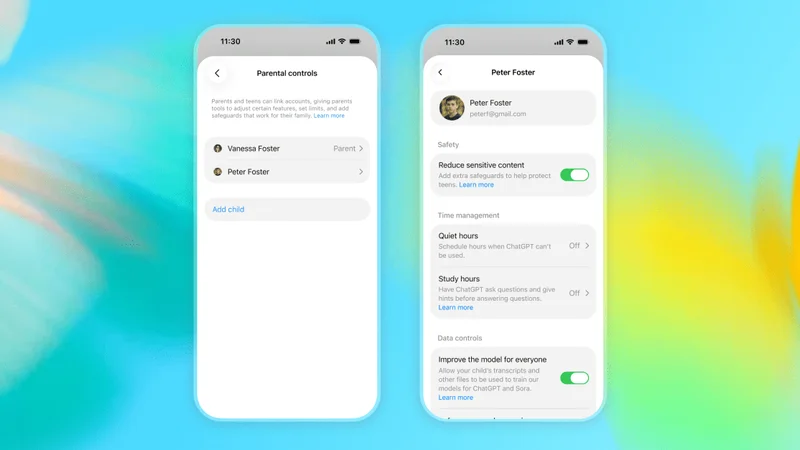
Image: The Verge AI
Main Takeaway
OpenAI is introducing ChatGPT for Teens, a dedicated experience that combines learning tools, stronger safety protections, healthy-use features, and parental controls.
Jump to Key PointsSummary
OpenAI creates a teen-specific experience
OpenAI is introducing ChatGPT for Teens, a dedicated experience that brings youth safeguards, learning support, healthy-use features, and parental controls into one product. The launch addresses growing concern over how generative AI affects younger users while positioning ChatGPT as a tool for studying, critical thinking, and guided exploration. OpenAI describes the service as designed to help teenagers learn and use AI with confidence.
The teen mode consolidates protections that previously existed across ChatGPT’s broader experience and adds controls intended for families. The Verge describes the launch as a response to expanding scrutiny of AI platforms and the rise of age checks and teen-focused settings across the technology industry. CNBC and NBC News also frame parental oversight as a central part of the rollout, rather than a secondary account feature.
Safety features target youth risks
ChatGPT for Teens places stronger safety boundaries around interactions involving younger users. The stated goal is to reduce exposure to harmful content while preserving access to educational assistance, explanations, brainstorming, and other common study uses. OpenAI’s announcement emphasizes protections and healthy-use support as core parts of the experience.
The announcement arrives as parents, educators, and policymakers examine risks involving emotional dependence, inappropriate advice, misinformation, and excessive screen time. Ophthalmologyadvisor characterizes the product as a teen-safe version with parental oversight, while the Ohio State University guide emphasizes that parents need to understand how teenagers use ChatGPT and where supervision remains necessary. Those concerns make the product’s design as important as its feature list: safeguards must work during ordinary conversations, not only in obvious high-risk prompts.
Parents receive more control
Parents are gaining a formal role in how teenagers use ChatGPT. OpenAI’s parental-controls announcement and the company’s teen-focused materials describe additional settings that let families shape the experience and monitor healthy use. CNBC and NBC News identify those controls as a defining element of the launch.
The approach reflects a shift from treating age suitability as a simple account setting to treating it as an ongoing family relationship. Controls can support conversations about study habits, boundaries, and responsible AI use, but they don't replace parental judgment. The Ohio State University guidance stresses that parents should ask what their children use ChatGPT for, while the American Psychological Association presents ChatGPT as a learning aid that works best when users evaluate and discuss its output.
Education drives the product’s case
OpenAI is presenting ChatGPT for Teens primarily as a learning and thinking tool. The service is intended to help teenagers study, understand difficult concepts, organize ideas, and build confidence using AI, while encouraging critical evaluation rather than uncritical acceptance.
That educational framing matches guidance from the American Psychological Association, which recommends using ChatGPT to support learning while checking accuracy and preserving the student’s own reasoning. The Digital Learning Institute likewise places ChatGPT within a broader debate about classroom practice, academic integrity, teacher oversight, and student skills. Education-focused guides from Aitoolsforkids, Risewithtech1, and BOOKR Class reflect strong interest in age-appropriate AI access, although their available coverage provides less detail about OpenAI’s specific implementation.
Trust will depend on real-world use
ChatGPT for Teens gives OpenAI a product framework for balancing access and protection, but its credibility will depend on how the safeguards perform in daily use. Families will judge whether controls are understandable, alerts are useful, and educational interactions remain productive without making the service too restrictive.
The launch also raises practical questions about age verification, privacy, parental visibility, and how the system handles sensitive conversations. OpenAI’s dedicated announcements establish the product’s purpose and controls, while independent parent and education guidance points to the need for supervision, fact-checking, and clear expectations. As schools and families adopt AI tools, teen-specific design is becoming part of the basic product competition, alongside model quality and price.
What happens next for teen AI
OpenAI’s teen mode places safety architecture directly inside a major consumer AI product. That gives parents and educators a clearer entry point, while giving OpenAI a way to distinguish teen use from general-purpose ChatGPT accounts.
The next phase will center on adoption, feedback, and accountability. Families will want evidence that the protections work; educators will want tools that reinforce learning instead of shortcutting it; and policymakers will continue examining age assurance and platform responsibility. The product’s success therefore depends on more than a launch announcement. It depends on whether ChatGPT for Teens can make safe, supervised learning practical at the scale of a mainstream chatbot.
Key Points
OpenAI is launching ChatGPT for Teens with stronger safeguards, learning features, and parental controls.
ChatGPT for Teens combines youth protections and healthy-use tools in a dedicated experience.
Parental controls give families greater influence over teenagers’ ChatGPT accounts and usage patterns.
OpenAI frames the teen product as support for learning, critical thinking, and responsible AI use.
Education experts stress supervision, fact-checking, and preservation of students’ independent reasoning.
Questions Answered
OpenAI’s ChatGPT for Teens is a dedicated ChatGPT experience for teenagers with stronger safety protections, learning support, healthy-use features, and parental controls. OpenAI designed it to help teens use AI for studying and critical thinking within a more supervised setting.
OpenAI’s ChatGPT for Teens includes additional parental controls that give families more influence over the teen experience and healthy-use settings. The product is intended to support parental supervision rather than replace conversations about boundaries and responsible use.
OpenAI created ChatGPT for Teens to provide age-appropriate access to AI while addressing concerns about harmful content, excessive use, misinformation, and emotional dependence. The company also wants to position ChatGPT as a tool for learning and critical evaluation.
Students should use OpenAI’s ChatGPT for Teens to explain concepts, brainstorm, organize ideas, and practice learning while checking its answers. Education guidance recommends keeping the student’s own reasoning central and using parental or teacher supervision.
OpenAI’s ChatGPT for Teens is not a replacement for parental supervision. Its controls add safeguards and visibility, while parents still need to discuss appropriate use, review how the tool supports learning, and encourage fact-checking.
Source Reliability
44% of sources are highly trusted · Avg reliability: 58
Go deeper with Organic Intel
Simple AI systems for your life, work, and business. Each one includes copyable prompts, guides, and downloadable resources.
Explore Systems