OpenAI Consolidates Leadership Around Brockman to Pursue Single AI Agent Platform
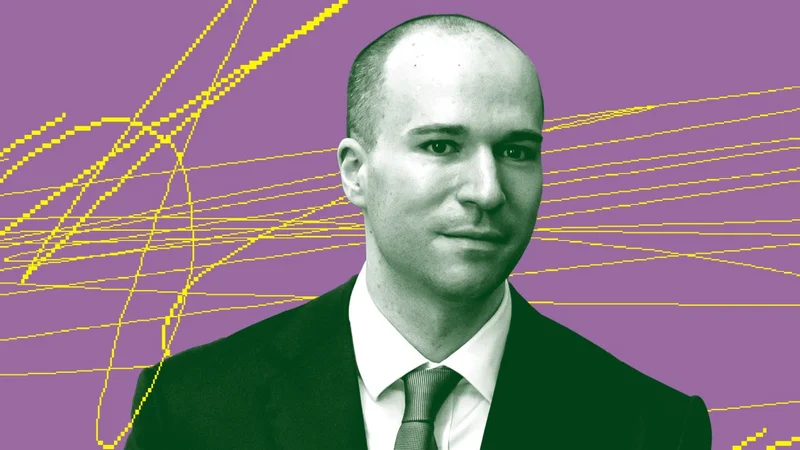
Image: The Verge AI
Main Takeaway
OpenAI hands product control to Greg Brockman, merges teams, and chases unified agentic AI as exec departures continue.
Jump to Key PointsSummary
Why Brockman now leads all product
OpenAI has made Greg Brockman the permanent head of its entire product division, ending his interim status and stripping away any ambiguity about who steers the company's consumer and developer offerings. The change, announced in a May 15 memo Brockman sent to staff and viewed by The Verge, makes official what had been a temporary arrangement while Fidji Simo, the company's CEO of AGI deployment, was on medical leave. Brockman now holds product authority alongside his existing infrastructure responsibilities, a dual role that concentrates enormous operational power in one of OpenAI's three remaining cofounders still at the company.
The reshuffling comes as OpenAI chases what it calls an "agentic future," with Brockman writing that the company would "invest in a single agentic platform and to merge ChatGPT and our developer tools into one core product experience." This language signals OpenAI's intent to stop treating ChatGPT, its API, and its nascent agent products as separate fiefdoms, and instead force them into a unified architecture. Wired reports that the reorganization specifically targets unifying ChatGPT and Codex, the company's coding assistant, into one interface. For developers, this could mean a single subscription or API layer through which both conversational and code-generation capabilities flow, though OpenAI has not detailed pricing or technical specifics.
The timing matters. OpenAI has lost or sidelined multiple senior leaders since August 2024, including cofounder John Schulman to rival Anthropic and, temporarily, Simo herself. Consolidating under Brockman reduces the number of decision-makers at a moment when the company needs to ship fast to stay ahead of Anthropic, Google, and a resurgent Microsoft-backed ecosystem. It also places Brockman, who took an extended leave in late 2024 that he described as his "first time to relax since co-founding OpenAI 9 years ago," back at the center of operational gravity.
What the single platform strategy actually means
OpenAI's push to merge its products into one agentic platform represents a bet that users do not want to think about whether they are "chatting" or "coding" or "browsing with an agent." They want a system that switches modes automatically based on intent. This is harder to build than it sounds. ChatGPT's consumer interface, the Codex IDE integration, and the developer API currently run on partially overlapping but distinct infrastructure, pricing models, and safety frameworks. Forcing them together risks degrading performance in one area to serve another, or creating a confusing hybrid that satisfies nobody.
The company has tried convergence before. ChatGPT plugins, launched with fanfare in 2023, were supposed to turn the chatbot into a platform; they were deprecated. GPTs, custom versions of ChatGPT, were supposed to fragment the product into a thousand niche use cases; usage has been underwhelming by most accounts. The "single agentic platform" framing suggests OpenAI learned from those stumbles and now wants to own the full stack rather than invite third parties to build on top of an unstable foundation. According to Business Chief, this also connects to OpenAI's reported "Super App" ambitions, a term that has circulated in industry reporting but which the company itself has not formally used in product announcements.
If executed well, the strategy could simplify OpenAI's go-to-market and reduce the engineering overhead of maintaining parallel products. If executed poorly, it could alienate developers who have built workflows around the existing API structure, or consumers who liked ChatGPT precisely because it was not trying to do everything at once.
The parade of departures behind the reorganization
OpenAI's leadership has been in continuous flux since at least November 2023, when Sam Altman was briefly fired and reinstated, but the velocity of exits accelerated through 2024 and into 2025. Greg Brockman's own leave of absence, which he announced in August 2024 via a post on X, was part of a broader exodus that included cofounder John Schulman's departure for Anthropic. Schulman told TechCrunch that he left to "deepen his focus on AI alignment" and do more hands-on technical work, a statement that carried extra weight given his role in shaping OpenAI's safety practices.
More recently, COO Brad Lightcap shifted to a special projects role reporting directly to Altman, with AI Magazine and Business Chief both reporting that his portfolio includes a $10 billion joint venture with private equity firms TPG, Brookfield Asset Management, and Bain Capital. The venture's stated purpose is to drive enterprise adoption of OpenAI software, though details remain thin. Meanwhile, executives Kate Rouch and Fidji Simo have taken temporary medical leaves, according to AI Magazine, further thinning the ranks of day-to-day operational leaders.
Business Insider, citing The Information, noted that the pattern of departures has become a story in itself, with each exit prompting speculation about whether OpenAI's internal culture, Altman's management style, or competitive pressure is the root cause. The company has not publicly addressed these questions beyond standard statements about wishing departing employees well.
How rivals are reading the chaos
Anthropic has been the clearest beneficiary of OpenAI's talent outflow. John Schulman's move there in 2024 was followed by reports of other OpenAI researchers considering similar paths, and the company has positioned itself as the steadier, more research-focused alternative. Google's DeepMind unit, meanwhile, has not dramatically changed its public strategy but has to see an opening in enterprise sales if OpenAI's $10 billion PE joint venture stumbles or distracts from direct customer relationships.
Microsoft presents a more complicated picture. The company's massive investment in OpenAI gives it visibility into these leadership changes before they are public, and its own Copilot products compete partially with OpenAI's direct offerings. Some industry observers, including commentary cited by Klemchuk, have noted historical parallels to earlier Microsoft-OpenAI tensions, though no source suggests a current rupture. Microsoft benefits from OpenAI's success but also from any narrative that makes its own AI investments look like safer bets.
Smaller AI agent startups, from AutoGPT to newer entrants, face a paradox. OpenAI's consolidation could validate the agent category and expand the market, or it could use OpenAI's distribution advantages to crowd out specialized competitors before they gain traction. The outcome depends heavily on whether OpenAI can ship its unified platform quickly and make it genuinely useful rather than merely ambitious.
What happens next for OpenAI's product roadmap
The immediate test for Brockman's consolidated product leadership is execution speed. OpenAI has a history of announcing directions and then taking months or years to fully deliver, think GPT-4's limited rollout, the plugin pivot, or the still-emergent Sora video product. The "single agentic platform" memo sets expectations that will be measured against whatever the company shows at its next developer day or major product event.
Brad Lightcap's special projects role, particularly the $10 billion private equity joint venture reported by AI Magazine and Business Chief, suggests OpenAI is simultaneously pursuing a parallel enterprise strategy that may or may not align with the consumer-facing platform Brockman controls. If these efforts conflict, for instance if the PE-backed distribution channel demands custom features that fragment the unified product, the organizational tension could resurface in new form.
For developers, the key question is whether the API they have built around will survive the consolidation or be deprecated in favor of something new. OpenAI has not been shy about breaking changes, most notably with its GPT-4 turbo transitions and pricing restructurings. A unified platform could mean a single, simpler API. It could also mean fewer choices and higher switching costs. The company will need to communicate clearly to avoid the kind of trust erosion that has plagued other platform consolidation attempts in tech history.
Whether this reshuffle fixes or deepens OpenAI's challenges
Leadership changes at this frequency are not neutral events. They consume management attention, destabilize teams, and signal to partners and customers that the company's direction is still being negotiated internally. OpenAI's valuation and brand have insulated it from most consequences so far, but there is a limit to how often a company can reorganize before the pattern itself becomes the story.
Brockman's return to central product authority is a bet on continuity. He cofounded the company, knows its technical architecture, and has Sam Altman's trust. But he also left for several months just as the competitive landscape was intensifying, and his dual mandate over product and infrastructure may prove too broad for sustained deep work in either domain. The coming six months will reveal whether this reorganization was the final adjustment before a period of shipping stability, or merely the latest in a series of structural experiments as OpenAI searches for a sustainable operating model.
Key Points
Greg Brockman is now permanent head of all OpenAI product, ending his interim status and consolidating authority over ChatGPT, Codex, and developer tools.
OpenAI aims to merge its offerings into a single agentic platform, moving away from separate products toward unified AI that switches modes based on user intent.
The reorganization follows a period of significant leadership turnover including Schulman's exit to Anthropic, Lightcap's shift to special projects, and Brockman's own prior leave.
A $10 billion private equity joint venture led by Lightcap aims to accelerate enterprise adoption through TPG, Brookfield, and Bain Capital.
Execution risk is high given OpenAI's history of announced directions that take years to materialize, and the technical challenge of integrating distinct infrastructure stacks.
Questions Answered
Brockman announced in August 2024 that he was taking his first extended break since cofounding OpenAI nine years prior, stating he wanted to relax and recharge. He returned to take on product responsibilities and has now been made permanent head of the division.
OpenAI plans to merge ChatGPT, Codex, and developer tools into a single platform that can automatically switch between conversational, coding, and task-execution modes based on user intent, rather than requiring users to choose separate products.
Cofounder John Schulman departed for Anthropic in 2024. COO Brad Lightcap moved to a special projects role. Executives Kate Rouch and Fidji Simo have taken temporary medical leaves.
The full impact remains unclear. A unified platform could simplify integration, but developers face potential breaking changes or reduced flexibility as OpenAI consolidates previously separate services.
Brad Lightcap is reportedly leading a joint venture with private equity firms TPG, Brookfield Asset Management, and Bain Capital to drive enterprise adoption of OpenAI software, though specific terms and structure have not been publicly detailed.
Source Reliability
40% of sources are established · Avg reliability: 61
Go deeper with Organic Intel
Simple AI systems for your life, work, and business. Each one includes copyable prompts, guides, and downloadable resources.
Explore Systems