Bill Ackman Bets Big on Microsoft, Dumps Google in Major Portfolio Shake-Up
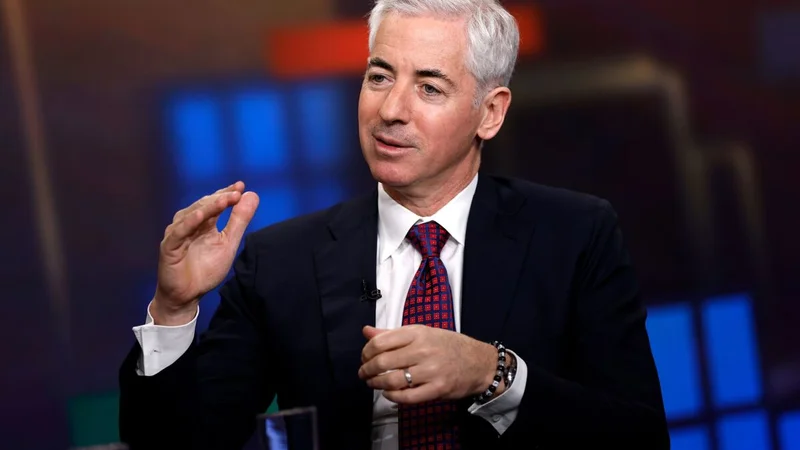
Image: Bloomberg AI
Main Takeaway
Billionaire investor Bill Ackman reveals new Microsoft stakes for Pershing Square and his closed-end fund, while exiting a long-held Alphabet position.
Jump to Key PointsSummary
Why Ackman chose Microsoft now
Bill Ackman has built a substantial new position in Microsoft, with purchases beginning as early as February 2026 according to Fortune. The Pershing Square founder disclosed the stake via a detailed post on X, explaining that his hedge fund and his newer closed-end fund, Pershing Square USA, both made Microsoft a core holding. The timing coincided with a sharp decline in Microsoft's share price, which had fallen roughly 16% year-to-date through mid-May.
Ackman's investment thesis centers on what he views as a temporary dislocation in a dominant franchise. According to Stocktwits, Ackman explicitly compared the current Microsoft setup to his earlier successful bets on Google, Amazon, and Meta, suggesting he sees similar value creation ahead. He pointed to the convergence of rising passive index ownership and the growing influence of short-term, leveraged, volatility-sensitive investors as forces that occasionally create rare buying opportunities in high-quality stocks. Microsoft, with its ownership of M365 and Azure, represents exactly the kind of durable competitive position Ackman has historically favored.
What got sold to fund the Microsoft bet
The Microsoft purchase came at a direct cost to Ackman's long-held position in Alphabet, Google's parent company. Yahoo Finance and TradingView both reported that Pershing Square exited its Alphabet investment to help finance the new Microsoft stake, marking a significant shift in Ackman's tech portfolio allocation. The Alphabet exit is particularly notable given Ackman's history with the position and his previous public praise for Google's business model.
This swap from Alphabet to Microsoft signals a meaningful recalibration of Pershing Square's view on the competitive dynamics between these two tech giants. While both companies are deeply invested in artificial intelligence, Ackman appears to have concluded that Microsoft's integrated position across enterprise software and cloud infrastructure offers a more compelling risk-reward profile at current valuations. The 13F filing expected later on May 15 was set to disclose the precise sizing of both the Microsoft acquisition and the Alphabet divestiture, providing fuller transparency into the portfolio restructuring.
How Microsoft got cheap enough to attract a value investor
Microsoft's stock weakness in early 2026 created the opening Ackman needed. The shares had declined approximately 16% year-to-date by mid-May, driven in part by investor anxiety about the company's massive capital expenditure commitments and the pace of Azure growth. Fortune specifically noted that Ackman is betting investors are wrong about both Azure's growth trajectory and Microsoft's $190 billion capex budget, viewing near-term concerns as overblown relative to the long-term opportunity.
Ackman's value-oriented approach typically targets moments when market sentiment turns excessively negative on fundamentally sound businesses. The Microsoft situation fits this pattern precisely, a dominant technology franchise experiencing temporary skepticism about its AI-related spending and cloud momentum. His February start date for accumulating shares indicates he began building the position during some of the most intense AI-related selling pressure, demonstrating conviction that Microsoft's underlying competitive advantages remained intact even as short-term narratives deteriorated.
What this means for Pershing Square's portfolio construction
The Microsoft and Alphabet moves represent a significant reshaping of Pershing Square's public equity exposure. The new position is expected to rank among the fund's largest holdings, given Ackman's description of it as a core position and his tendency to concentrate capital in high-conviction ideas. The closed-end fund, Pershing Square USA, which launched with its IPO in April 2026, also received Microsoft as a core holding, suggesting Ackman wants this exposure accessible to a broader base of investors beyond traditional hedge fund limited partners.
The dual-fund structure of the Microsoft investment, spanning both the flagship hedge fund and the newer closed-end vehicle, indicates strong and uniform conviction. Ackman has historically been willing to make bold, concentrated bets, and the parallel deployment across both vehicles suggests he sees limited downside and substantial upside in Microsoft's current valuation. The 13F disclosure was anticipated to reveal position sizing that would clarify whether this ranks among his largest single-company commitments.
What happens next for Microsoft and Alphabet shares
The market impact of Ackman's disclosure depends significantly on whether other institutional investors follow his lead. CNBC noted that the 13F filing later on May 15 would provide the first concrete data point on position size, which could trigger additional buying or at least stabilize sentiment around Microsoft's stock. For Alphabet, the exit of a prominent long-term shareholder like Ackman may prompt questions about whether other value-oriented investors share his diminished enthusiasm.
The broader significance extends beyond these two stocks to how AI-related investments are being reassessed across the technology sector. Ackman's move from Alphabet to Microsoft suggests a view that enterprise software and cloud infrastructure integration will prove more durable competitive advantages than search and advertising dominance in the AI era. If his track record of identifying dislocations in GOOG, AMZN, and META holds, this portfolio rotation could mark an inflection point in how the market values the major AI platform companies. The coming quarters will reveal whether Ackman's February entry point proves as prescient as his prior technology investments.
Key Points
Bill Ackman built new Microsoft stakes for both Pershing Square hedge fund and Pershing Square USA closed-end fund, starting purchases in February 2026
Microsoft shares had declined approximately 16% year-to-date, creating what Ackman views as a value dislocation in a dominant franchise
Ackman exited Pershing Square's long-held Alphabet position to help fund the Microsoft acquisition, marking a major portfolio shift
The investment thesis centers on Microsoft's M365 and Azure ownership, with Ackman betting against negative sentiment on Azure growth and $190 billion capex spending
Ackman explicitly compared the Microsoft opportunity to his earlier successful bets on Google, Amazon, and Meta at similar dislocation moments
Questions Answered
According to Fortune, Ackman began accumulating Microsoft shares as early as February 2026, well before his public disclosure in mid-May.
Yes. Reuters reported that Pershing Square exited its long-held investment in Alphabet, Google's parent company, to help finance the Microsoft purchase.
Ackman specifically cited Microsoft's ownership of M365 (Microsoft 365) and Azure as core franchises that make the company a dominant AI winner.
Microsoft shares had fallen roughly 16% year-to-date through mid-May 2026, creating the valuation opportunity Ackman targeted.
Yes. Ackman stated that Pershing Square would disclose the position size in a 13F filing expected on May 15, 2026.
Both the flagship Pershing Square hedge fund and the newer Pershing Square USA closed-end fund made Microsoft a core holding.
Source Reliability
43% of sources are trusted · Avg reliability: 67
Go deeper with Organic Intel
Simple AI systems for your life, work, and business. Each one includes copyable prompts, guides, and downloadable resources.
Explore Systems