Apple-OpenAI Partnership Sours as Legal Threats Mount From Multiple Fronts
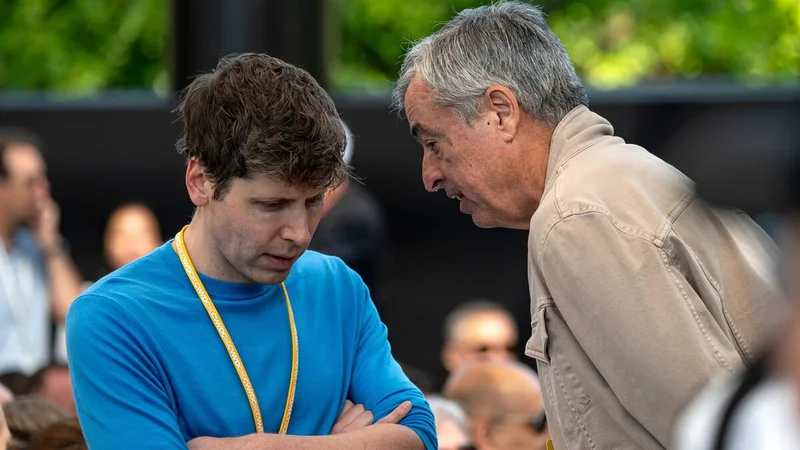
Image: Bloomberg AI
Main Takeaway
Apple and OpenAI's alliance frays amid unmet expectations, while Elon Musk's X Corp antitrust lawsuit forces Apple to disclose internal messages about the secretive ChatGPT deal.
Jump to Key PointsSummary
Apple and OpenAI's two-year partnership has curdled into mutual recrimination and legal exposure on multiple fronts. According to people familiar with the matter cited by Bloomberg, OpenAI hasn't seen the benefits it expected from the deal and is now preparing possible legal action against Apple. The exact nature of the grievances remains unclear, but the timing is notable. Apple integrated ChatGPT into iOS and Siri as part of its broader AI push, yet the revenue and data advantages OpenAI anticipated apparently failed to materialize at the scale promised.
This isn't a simple commercial dispute. The partnership sat at the center of Apple's belated AI strategy, giving OpenAI privileged access to over a billion iOS users. If OpenAI sues, it risks not just damaging a key distribution channel but also signaling to other tech partners that its contractual expectations run high. Apple, for its part, has historically played hardball with suppliers and partners. The dynamics here mirror earlier Apple content deals where the company extracted favorable terms, then moved slowly to deliver on its side. What makes this different is that OpenAI is no content supplier. It is arguably the most valuable AI company on Earth, with Microsoft as its largest backer and its own consumer business to protect.
The fracture also raises questions about Apple's AI roadmap. If ChatGPT integration was meant to be a bridge to more capable on-device models, a legal fight could delay or derail that transition entirely.
What Elon Musk's antitrust lawsuit means for both companies
Elon Musk has inserted himself directly into this conflict through X Corp, which is pursuing an antitrust lawsuit against both Apple and OpenAI. Reuters reports that a US judge has ruled Apple and OpenAI must face this lawsuit for now, denying any immediate dismissal. The suit alleges anti-competitive behavior in how Apple and OpenAI structured their partnership, potentially disadvantaging rivals including Musk's own xAI.
The judicial pressure has now sharpened. A judge has ordered Apple to produce internal messages discussing the secretive ChatGPT deal, according to Ars Technica. This compelled disclosure pierces the company's characteristic operational secrecy and could surface communications that illuminate how Apple negotiated the partnership, what promises were made, and whether Apple executives were internally candid about their intentions for OpenAI's technology. For a company that treats internal deliberations as sacrosanct, this is not a minor procedural step. It is a forced exposure of the machinery behind a deal that both parties have been notably quiet about in public.
The antitrust dimension complicates any potential Apple-OpenAI reconciliation. If internal messages reveal that Apple structured the partnership to limit competitor access or extract asymmetric value, that evidence could strengthen Musk's claims while simultaneously weakening any contract claims OpenAI might bring. Apple would face pincer pressure: defending against OpenAI's potential breach claims while fending off Musk's competition allegations using documents Apple never wanted public.
Where this leaves both companies
Apple's AI strategy now carries contingent liabilities on multiple vectors. The OpenAI partnership was supposed to accelerate Siri's relevance and buy time for Apple's own model development. Instead, Apple finds itself potentially litigating against a partner whose technology it deeply integrated, while a separate lawsuit forces disclosure of its private negotiations. The iPhone maker has historically absorbed supplier disputes quietly; it cannot easily do so when the supplier is OpenAI and the secondary plaintiff is Elon Musk with his particular appetite for prolonged legal warfare.
OpenAI faces its own awkward position. Preparing legal action against Apple while simultaneously defending against Musk's antitrust claims requires careful choreography. Any complaint against Apple could be weaponized by Musk's team as evidence of the partnership's anti-competitive structure. OpenAI's leadership must weigh whether the contractual remedies it seeks from Apple justify the discovery risks and public exposure.
The forced document production also sets a timing pressure that neither company chose. Judges move on their own calendars, and preliminary discovery in antitrust cases can stretch for months while generating headline after headline. Apple loses control of its narrative. OpenAI loses the option of a quiet renegotiation. Both become characters in a legal drama that Musk, whatever the ultimate merit of his claims, has the resources to sustain indefinitely.
Key Points
OpenAI is preparing possible legal action against Apple over unmet expectations from their two-year ChatGPT integration deal, according to Bloomberg
A US judge denied dismissal of Elon Musk's X Corp antitrust lawsuit against both companies, forcing them to face the allegations
A judge has ordered Apple to produce internal messages about the secretive ChatGPT deal, piercing the company's typical operational secrecy
The compelled disclosure could reveal how Apple negotiated the partnership and whether promises were made that went unfulfilled
Apple faces pincer legal pressure: potential breach claims from OpenAI while defending against Musk's competition allegations using Apple's own documents
Questions Answered
According to Bloomberg, OpenAI believes it has not received the expected benefits from its two-year partnership with Apple and is preparing possible legal action. The specific grievances have not been publicly detailed, but they relate to the commercial returns from integrating ChatGPT into Apple's ecosystem.
Musk's X Corp has filed an antitrust lawsuit against both Apple and OpenAI, alleging their partnership is structured anti-competitively to lock out rivals including xAI. A judge has ruled the suit can proceed, meaning both companies must now defend against these claims.
Not yet. Congressional Republicans have urged an antitrust investigation, but this is political pressure rather than a formal inquiry by the FTC or DOJ. However, such congressional attention can influence enforcement priorities.
In the short term, nothing is certain to change. If the partnership dissolves or is restructured, Apple might reduce ChatGPT's role in Siri and iOS, potentially replacing it with other AI providers or accelerating its own model development.
The Apple-OpenAI partnership was one of the most visible AI distribution deals. Its unraveling would signal that the partnership model funding much of the AI boom may be unstable, potentially triggering renegotiations across the industry.
Source Reliability
44% of sources are highly trusted · Avg reliability: 74
Go deeper with Organic Intel
Simple AI systems for your life, work, and business. Each one includes copyable prompts, guides, and downloadable resources.
Explore Systems