Nvidia certifies Samsung, SK Hynix, and Micron for HBM4 supply ahead of Vera Rubin launch
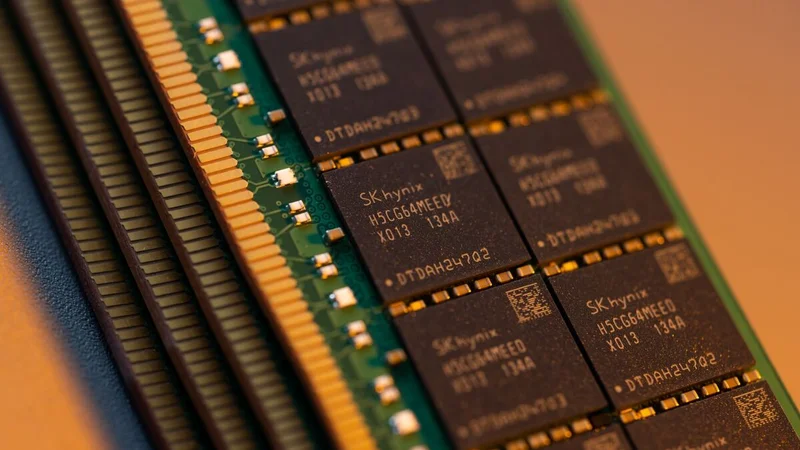
Image: Bloomberg AI
Main Takeaway
Nvidia CEO Jensen Huang certified all three major memory suppliers for HBM4 chips powering the upcoming Vera Rubin AI platform.
Jump to Key PointsSummary
Why Nvidia needed three suppliers
Nvidia approved Samsung, SK Hynix, and Micron to supply HBM4 memory for its next-generation Vera Rubin AI platform, CEO Jensen Huang confirmed during a visit to South Korea. The triple certification ensures Nvidia won't face production bottlenecks as demand for AI accelerators continues to surge. Each supplier brings distinct manufacturing strengths: SK Hynix has led early HBM market share, Samsung offers massive scale, and Micron provides geographic diversification with US-based production. Huang's announcement came alongside news of a multi-year partnership with SK Hynix focused on designing future memory generations, signaling deeper collaboration beyond simple procurement. The dual strategy, multiple qualified vendors plus a strategic design partner, reflects lessons from past semiconductor shortages that crippled automotive and consumer electronics industries. Nvidia's Vera Rubin platform, expected later this year, represents the company's next major architecture leap after the Blackwell generation.
What the SK Hynix partnership means
SK Hynix will supply memory chips for Nvidia's new Vera central processing units, Huang told reporters in Seoul, calling the relationship foundational for the coming product cycle. The two companies signed a multi-year pact to co-design future generations of AI memory, moving beyond buyer-supplier dynamics into joint architecture development. This arrangement gives SK Hynix early visibility into Nvidia's roadmap while locking in premium volumes for its most advanced products. Samsung and Micron remain certified suppliers but without equivalent strategic design partnerships disclosed. The asymmetry matters: co-development agreements typically yield higher margins and stickier relationships than commodity supply contracts. SK Hynix has historically dominated HBM shipments to Nvidia, supplying over half of its memory needs in recent generations. The new Vera CPU designation, distinct from GPU accelerators, suggests Nvidia is expanding memory-intensive designs beyond traditional graphics processing into general-purpose data center compute.
How Samsung and Micron fit in
Samsung and Micron secured equal certification status for HBM4 supply, ensuring competitive tension and supply resilience even as SK Hynix claims the design partnership. Samsung debuted physical HBM4 samples at Nvidia's March GPU Technology Conference, demonstrating early engagement with the platform. Micron's inclusion provides critical geopolitical balance, with US manufacturing capability that satisfies potential procurement requirements from American government and enterprise customers. All three vendors are already producing HBM4 for Nvidia, Huang stated, indicating the certification process concluded faster than industry observers expected. The simultaneous qualification of three suppliers for such advanced memory is unusual; previous HBM generations typically saw one or two vendors achieve full certification at launch. This suggests Nvidia prioritized supply security over single-vendor optimization, perhaps reflecting lessons from the pandemic-era chip shortages and ongoing geopolitical tensions affecting semiconductor supply chains.
Timing and competitive pressure
The Vera Rubin platform launch later this year puts enormous pressure on memory supply chains already stretched thin by AI demand growth. Huang's public confirmation during his Seoul visit served dual purposes: reassuring investors about supply readiness and signaling to competitors that Nvidia's next generation won't face the production constraints that plagued earlier launches. SK Hynix, Samsung, and Micron have all expanded HBM manufacturing capacity aggressively, with combined capital expenditures exceeding $40 billion in 2025-2026 according to industry estimates. The memory market's cyclical nature makes such commitments risky, but Nvidia's certification provides demand visibility that justifies investment. Competitors including AMD and Intel are also pursuing HBM4 for their own AI accelerators, creating additional demand pressure thatZh that could constrain availability if Nvidia's triple-supplier strategy hadn't secured manufacturing slots in advance.
What happens to memory market dynamics
The triple certification reshapes competitive dynamics among memory suppliers, rewarding technical execution with guaranteed volume while preventing any single vendor from capturing monopoly rents. SK Hynix must now defend its historical HBM leadership against Samsung's manufacturing scale and Micron's geopolitical advantages. For customers, the multi-vendor approach should moderate pricing pressure compared to single-source scenarios, though AI demand growth may overwhelm any supply increase. The co-design partnership with SK Hynix suggests Nvidia expects memory architecture to become a more significant differentiator in future AI systems, not merely a commodity component. This mirrors broader industry trends: as AI models grow larger, memory bandwidth increasingly constrains training and inference performance, making custom memory designs more valuable. Samsung and Micron may seek similar strategic partnerships if the SK Hynix arrangement proves successful, potentially fragmenting the market into competing design ecosystems rather than interchangeable suppliers.
Implications for AI infrastructure buildout
Nvidia's supply chain positioning supports an aggressive Vera Rubin rollout that industry analysts expect will define 2027 data center deployments. The platform's memory requirements, substantially higher than Blackwell's, demanded supplier certainty before customers would commit to infrastructure spending. Cloud providers and enterprise buyers have reportedly delayed some purchases awaiting clarity on next-generation availability; Huang's announcements provide that signal. The SK Hynix partnership specifically, with its forward-looking design component, suggests Nvidia anticipates several product generations of collaboration rather than transactional annual negotiations. This long-view approach contrasts with more adversarial supplier relationships in earlier semiconductor eras. Whether the triple-supplier model persists for future HBM generations, or converges toward fewer partners as technology matures, will indicate whether Nvidia views memory as a strategic differentiator worth exclusive investment or a commodity requiring competitive sourcing.
Key Points
Nvidia certified Samsung, SK Hynix, and Micron for HBM4 memory supply for Vera Rubin platform
CEO Jensen Huang confirmed all three vendors are already producing HBM4 chips for Nvidia
SK Hynix signed multi-year co-design partnership for future AI memory generations with Nvidia
Vera Rubin platform launch expected later in 2026 as successor to Blackwell architecture
Triple-supplier strategy prioritizes supply chain resilience over single-vendor optimization
Questions Answered
Nvidia certified Samsung, SK Hynix, and Micron to supply HBM4 memory for its Vera Rubin platform. CEO Jensen Huang confirmed the triple certification during a visit to South Korea, stating all three vendors are already producing chips for Nvidia.
No, SK Hynix is not exclusive but holds a special co-design partnership with Nvidia for future memory generations. Samsung and Micron remain equally certified for HBM4 supply, though only SK Hynix has the additional strategic development agreement.
Vera Rubin is Nvidia's next-generation AI data center platform succeeding Blackwell, expected to launch in 2026. The platform includes both GPU accelerators and new Vera central processing units that use SK Hynix memory chips.
Nvidia pursued triple certification to ensure supply chain resilience and avoid production bottlenecks that plagued earlier semiconductor generations. The strategy provides competitive pricing pressure and protects against geopolitical disruptions or individual supplier constraints.
Nvidia and SK Hynix signed a multi-year agreement to co-design future generations of AI memory chips. This moves beyond standard supplier relationships into joint architecture development, giving SK Hynix early visibility into Nvidia's product roadmap.
Source Reliability
38% of sources are trusted · Avg reliability: 64
Go deeper with Organic Intel
Simple AI systems for your life, work, and business. Each one includes copyable prompts, guides, and downloadable resources.
Explore Systems