Modi Pitches India’s $30 Billion Semiconductor Bet to Global Investors at Semicon 2026
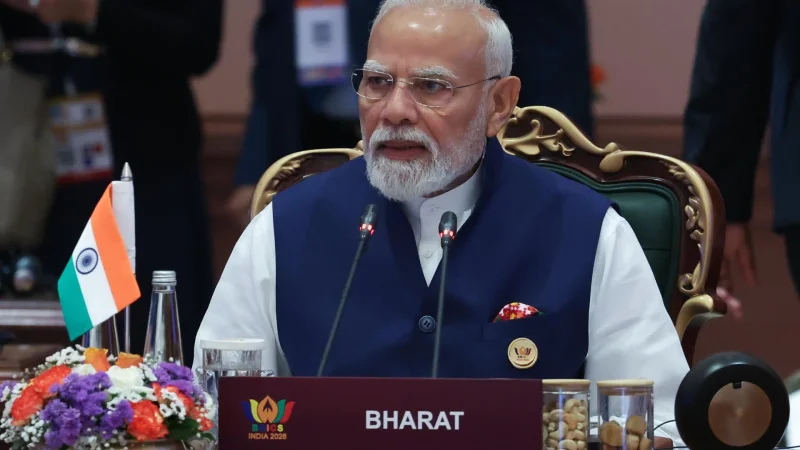
Image: Businesstimes.com
Main Takeaway
India has secured up to $12 billion in semiconductor investment pledges as Prime Minister Narendra Modi courts global firms at Semicon 2026.
Jump to Key PointsSummary
India puts chips at the center
India is using Semicon 2026 in New Delhi to present semiconductor manufacturing as a central pillar of its industrial strategy. Prime Minister Narendra Modi opened the three-day event on September 17 by courting global chipmakers, equipment suppliers, component companies and technology customers. The initiative represents a roughly $30 billion national bet on building an industry that barely existed in India a decade ago. Bloomberg AI and The Business Times described the conference as a high-profile effort to secure India a place in global chip production, while Finance.yahoo reported Modi’s appeal for investment in what he called a reliable manufacturing base.
The campaign combines economic ambition with a geopolitical pitch. India wants semiconductor plants to serve domestic demand while supplying overseas customers, creating higher-paid industrial jobs and expanding the country’s role in technology supply chains. Modi told executives that chips made in Indian plants are already reaching customers in India and abroad, according to Finance.yahoo. The event also gives India a stage to connect emerging domestic manufacturers with international partners, customers and suppliers.
Investment pledges accelerate
India’s new semiconductor policy has attracted investment pledges of as much as $12 billion within months of its launch, Bloomberg AI reported. That figure covers commitments from global and Indian investors and marks an early test of whether subsidies and policy support can convert political ambition into factory construction, equipment orders and operating capacity. The pledges represent a substantial share of the broader $30 billion program, but they remain commitments rather than evidence that every planned project is already financed or producing chips.
The government is reinforcing the push with $19.8 billion in additional subsidies, according to IBEF. Those incentives are designed to offset the high cost of semiconductor plants, where construction, specialized equipment, clean-room standards, power reliability and water access require sustained investment. Modi’s outreach therefore targets more than chip designers. Equipment makers, parts suppliers, packaging companies and industrial partners are also being invited to build around the emerging manufacturing base.
A broader supply-chain strategy
India’s semiconductor plan reaches beyond the fabrication of advanced processors. The government is courting companies across the production chain, including manufacturers, suppliers and potential buyers for chips made by Indian firms. That breadth matters because a durable semiconductor industry needs packaging, testing, materials, machinery, logistics and a dependable customer base alongside fabrication capacity. The Business Times reported that the conference is designed to bring those groups together around India’s opportunity created by rising artificial-intelligence investment.
The strategy also reflects India’s effort to capture more value from electronics manufacturing. A domestic chip ecosystem can reduce reliance on imported components for phones, vehicles, communications equipment and data infrastructure, while supporting exports. The move people from farms into better-paying jobs, highlighted in The Business Times summary, gives the investment drive a labor and development objective as well as a technology objective. India is selling investors access to a large market and a workforce, while promising a platform for global production.
Credibility will decide the bet
India’s pitch now faces the difficult work of execution. Investors will judge the program by whether subsidies arrive on schedule, facilities receive reliable electricity and water, projects attract experienced technical partners, and plants reach commercial output. A conference can gather commitments, but semiconductor manufacturing requires years of construction, qualification and customer certification. The gap between announced capital and operating capacity will determine whether India’s bet becomes an industrial base or remains a collection of high-profile plans.
The government is emphasizing continuity and long-term commitment to address that concern. Pranay Kotasthane of the Takshashila Institution said Semicon in New Delhi signals a sustained government commitment to growing the chip industry, The Business Times reported. Modi’s description of India as a reliable location adds a second part to the pitch: investors are being asked to trust the country’s policy direction, infrastructure buildout and ability to integrate with international supply networks.
What happens after Semicon
The next measure of India’s semiconductor campaign will be the conversion of pledges into sites, contracts, equipment installations and production milestones. Semicon 2026 gives the government access to companies that can fill gaps in India’s emerging ecosystem, but the program’s success depends on sustained coordination among policymakers, manufacturers, suppliers and customers. The $12 billion in reported pledges provides momentum, while the larger $30 billion target defines the scale still ahead.
India is positioning itself as both a major electronics market and an alternative manufacturing base as technology companies spread supply-chain risk. That proposition has attracted attention from global firms, but competition remains intense and chip projects are expensive to operate. Modi’s investor campaign establishes the political direction; the coming stages will show whether India can build the technical depth, infrastructure and commercial relationships needed to turn that direction into a lasting semiconductor industry.
Key Points
India is courting global investors for a $30 billion semiconductor manufacturing and electronics supply-chain expansion.
Semicon 2026 showcases India’s ambition to become a reliable global chip production and export base.
India has attracted investment pledges of up to $12 billion under its new semiconductor policy.
The government is offering $19.8 billion in additional subsidies to accelerate chip industry development.
India’s strategy covers chipmakers, equipment suppliers, component firms, packaging companies and technology customers.
Questions Answered
India’s $30 billion semiconductor plan is a national effort to build chip manufacturing and related electronics capacity. The strategy includes fabrication, packaging, testing, suppliers, equipment makers and export-oriented production.
India has attracted investment pledges of up to $12 billion under its new semiconductor policy. The commitments come from global and Indian investors and form part of the larger $30 billion ambition.
Narendra Modi is promoting India as a chipmaking hub to attract foreign investment, create higher-paid industrial jobs and strengthen electronics supply chains. The government also wants Indian plants to serve domestic and international customers.
India is offering $19.8 billion in additional subsidies for its semiconductor push, according to IBEF. The incentives are intended to help offset the high costs of building and operating chip facilities.
After Semicon 2026, India must turn investment pledges into factory construction, equipment installation and commercial production. Investors will focus on infrastructure, policy continuity, technical partners and customer commitments.
Source Reliability
50% of sources are trusted · Avg reliability: 71
Go deeper with Organic Intel
Simple AI systems for your life, work, and business. Each one includes copyable prompts, guides, and downloadable resources.
Explore Systems