Snap Reframes Its $2,195 Specs Glasses With New Features and Verizon Partnership
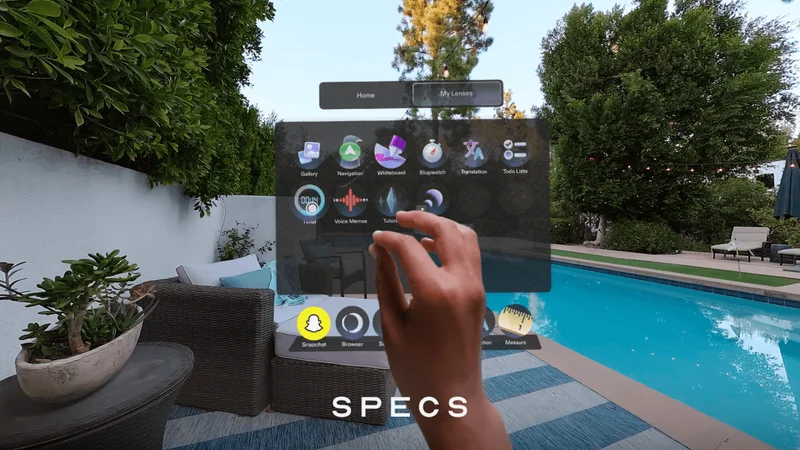
Image: TechCrunch AI
Main Takeaway
Snap is adding new services and a Verizon partnership to give its $2,195 Specs AR glasses a clearer purpose after a difficult debut.
Jump to Key PointsSummary
Snap’s second sales pitch
Snap is trying to explain why its Specs augmented-reality glasses deserve a place in the market after their $2,195 debut drew ridicule, consumer skepticism, and pressure on the company’s stock. The company used a Los Angeles event this week to present new features and services built around the glasses, shifting the conversation from the hardware’s price and appearance toward what users can do with it.
Specs are designed as a technically advanced, self-contained wearable with an integrated display. Bloomberg described the glasses as offering a built-in screen without requiring a separate device, while TechCrunch characterized them as heavy and expensive for ordinary consumers. The competing headlines from Houston Public Media, Engoo, and Forbes frame the launch as a test of whether AR glasses can become a mainstream technology category.
Why the debut landed badly
The original launch left Snap with a perception problem that software updates alone won't quickly erase. TechCrunch reported that the glasses’ bulky, scuba-gear-like design and $2,200 price tag prompted online jeers, calls for CEO Evan Spiegel to resign, and a sharp decline in Snap’s stock after the reveal.
That reaction turned Specs into a business case Snap now has to defend. The company isn't selling a familiar phone accessory at a modest premium. It's asking customers to spend roughly $2,195 on a new category of wearable computing, while the product’s physical design makes its status appeal less obvious than that of conventional eyewear. Forbes, Engoo, and Houston Public Media each place the glasses in the broader AR market, where novelty alone has struggled to overcome cost and social awkwardness.
Features carry the argument
Snap’s latest move is to connect Specs to a wider set of digital activities. Executives introduced new features and services at the Los Angeles event, presenting the glasses as a platform rather than a single-purpose display. That positioning gives Snap more room to show value, since the product can be judged on communication, information access, and interactive experiences alongside its visual hardware.
The integrated display and self-contained design are central to that pitch. Bloomberg reported that Specs combines advanced optical technology with a convenient standalone form, while TechCrunch said the new updates are intended to give the glasses a clearer purpose. The challenge is practical: each added feature must make the glasses useful often enough to justify their price, weight, and unfamiliar form factor. A long feature list won't settle that question by itself.
Verizon expands the reach
A partnership with Verizon gives Snap another way to position Specs as connected infrastructure rather than an isolated gadget. Bloomberg identified Verizon as part of Snap’s latest announcement, tying the glasses to a major telecommunications network as the company fills out the product’s surrounding services.
The arrangement also reflects the demands of wearable computing. AR glasses need dependable connectivity, timely software, and services that work beyond a demonstration stage. Verizon brings network credibility and distribution context, while Snap supplies the hardware and software experience. The partnership won't resolve the price objection, but it helps Snap argue that Specs belongs inside a broader communications ecosystem. Forbes and Engoo’s market-focused framing reinforces the significance of that ecosystem question for AR adoption.
The market test ahead
Specs now faces a narrower and tougher test: whether a high-priced AR product can find enough users before its technology becomes cheaper and smaller. Snap's event addresses the first part of the problem by adding reasons to use the glasses. It leaves the second part, the price and physical design, largely intact.
The product's prospects will depend on repeated use, developer support, and whether people accept wearing it in public. TechCrunch's account emphasizes the gap between Snap's ambitions and casual consumers’ ability to afford the device. Houston Public Media, Engoo, and Forbes present the launch as a broader question about AR’s next phase. Snap has bought itself another chance to make the case, but Specs still has to turn a striking demonstration into a habit.
What Snap needs to prove
Snap needs to show that Specs delivers daily value strong enough to overcome its $2,195 cost and unconventional design. The company’s new services, integrated display, standalone operation, and Verizon partnership supply the outline of that argument, but adoption will determine whether the pitch works.
The next signals will come from actual usage, software expansion, and the response from developers and enterprise customers. Snap has moved the discussion beyond the launch spectacle and toward the product’s practical role. That is a necessary reset after the initial backlash, though it leaves the central commercial question untouched: how many people will pay premium prices for a wearable that asks them to change how they interact with digital information?
Key Points
Snap is adding services and Verizon connectivity to defend its $2,195 Specs AR glasses.
Specs combines an integrated display and self-contained design in Snap’s premium AR hardware.
Snap faced online ridicule, leadership criticism, and a stock decline after Specs debuted.
New software features aim to give Specs a clearer role across everyday digital activities.
Verizon partnership strengthens Snap’s case for connected services around the glasses.
Questions Answered
Snap Specs are augmented-reality glasses with an integrated display and self-contained design. Snap is presenting them as a platform for connected digital services rather than only as eyewear.
Snap Specs cost about $2,195, commonly rounded to $2,200. The premium price has become one of the main obstacles to attracting casual consumers.
Snap is promoting Specs again because the glasses’ debut drew criticism over their design, price, and unclear purpose. New features and services give the company another chance to explain the product’s practical value.
Verizon is partnering with Snap as part of the services connected to Specs. The relationship supports Snap’s effort to position the glasses within a broader communications and connectivity ecosystem.
Snap Specs must demonstrate repeated real-world use among consumers, developers, or enterprise customers. Adoption will determine whether the new services can overcome the glasses’ high price and unconventional form.
Source Reliability
60% of sources are highly trusted · Avg reliability: 77
Go deeper with Organic Intel
Simple AI systems for your life, work, and business. Each one includes copyable prompts, guides, and downloadable resources.
Explore Systems