Meta and Reliance Strike Deal for 168-Megawatt AI Data Center in India
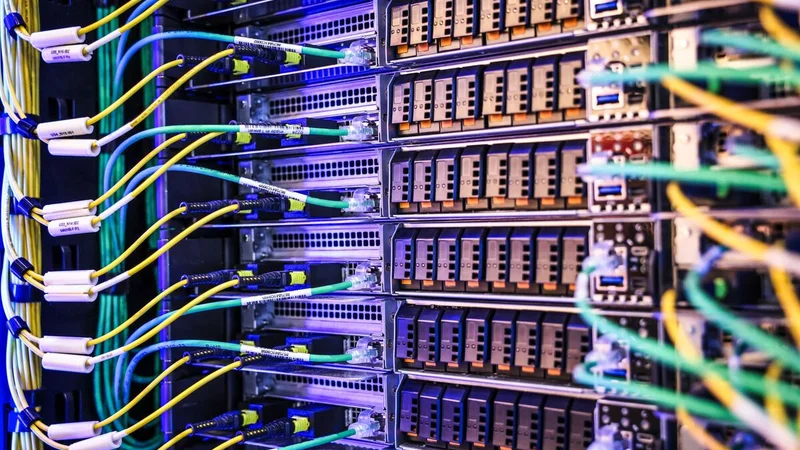
Image: Bloomberg AI
Main Takeaway
Meta partners with Reliance to build a 168-megawatt AI data center in Jamnagar, marking its first AI infrastructure investment in India.
Jump to Key PointsSummary
Why Meta chose India now
Meta is planting its first AI infrastructure flag in India through a partnership with Reliance Industries, the conglomerate controlled by Mukesh Ambani. The 168-megawatt facility in Jamnagar, Gujarat, will support Meta's global AI computing needs and can expand over time, according to TechCrunch. The deal arrives as tech companies scramble to lock down computing capacity for training and deploying AI systems.
India's appeal goes beyond cheap labor. The country offers a massive domestic market, government incentives for digital infrastructure, and a strategic location for serving Asian and Middle Eastern markets. Reuters reports that Reliance and rival Adani Group are driving India's AI push with plans to invest $210 billion collectively. Meta's partnership gives it a foothold without the capital intensity of building from scratch.
The Jamnagar site sits within Reliance's existing industrial complex, offering ready access to power and connectivity. This co-location strategy trims deployment time, a critical factor when GPU clusters become obsolete in 3-4 years.
What the 168-megawatt number signals
Power capacity serves as the closest thing to a standard metric in data center economics. A 168-megawatt facility ranks as genuinely large, comparable to some of Meta's U.S. campuses. For context, a megawatt of data center capacity typically supports 800-1,200 high-end GPUs. At full build-out, this site could house well over 100,000 AI accelerators.
The scale reflects Meta's AI ambitions beyond social media ranking and recommendation. The company needs dedicated infrastructure for its Llama model family, generative AI products, and undisclosed research projects. Lightreading notes that Reliance created a new subsidiary to house its AI data center business, signaling long-term commitment rather than a one-off real estate play. The joint venture structure suggests shared risk and shared upside.
Reliance's stock jumped over 2% on the news, per HDFCSky, indicating investor appetite for infrastructure plays tied to global tech demand. The rally also reflects relief that Reliance is converting its capital-heavy industrial assets into recurring revenue streams with creditworthy tenants.
How this reshapes India's data center map
India has long been a data center backwater compared to Singapore, Hong Kong, or Tokyo. That is changing fast. The Tech Capital reports that this marks Meta's first mega-data center in India, but not the last major announcement expected this year. The $210 billion figure cited by Reuters, split between Reliance and Adani, dwarfs previous infrastructure cycles.
Government policy fuels part of this acceleration. India's data localization requirements and digital sovereignty push have made onshore computing mandatory for certain applications. The country's renewable energy goals also align with tech companies' carbon neutrality pledges. Gujarat's industrial corridor offers land, power, and regulatory cooperation that Mumbai's congested facilities cannot match.
The concentration risk deserves attention. Jamnagar becomes a single point of failure for a significant slice of Meta's Asian compute. Earthquakes, heat waves, or grid instability in Gujarat would ripple globally. Reliance's operational track record in refining and telecom suggests competence, but data center uptime is a different discipline.
Where the money is actually flowing
The $110 billion figure attached to Reliance's AI push, reported by Techbuzz and Telecompaper, requires parsing. This appears to represent a multi-year capital commitment across the entire Reliance ecosystem, not solely the Meta joint venture. The data center subsidiary is one vehicle among several.
Capital intensity on this scale transforms supplier relationships. Nvidia, AMD, and Intel stand to benefit from GPU and networking equipment orders. Cooling specialists and power distribution vendors gain a new geographic market. The construction and real estate sectors in Gujarat see direct stimulus. Meta's spend, meanwhile, shifts from pure opex on cloud providers to a hybrid model with long-term lease obligations.
The deal structure matters for competitive dynamics. Meta is leasing, not owning, which preserves balance sheet flexibility. Reliance absorbs construction risk and likely secures debt against the tenant commitment. This replicates patterns seen in Meta's U.S. data center relationships but in a market with higher country risk and higher growth potential.
What happens next for Big Tech in India
Meta's move pressures competitors to clarify their India strategies. Google has operated data centers in Mumbai, Delhi, and Bangalore for years but has not announced comparable AI-specific scale. Amazon Web Services and Microsoft Azure maintain Indian regions but may need to accelerate GPU cluster deployments. Apple's AI infrastructure remains concentrated in the U.S. and Europe.
The Reliance partnership also carries political dimensions. Meta has faced regulatory friction in India over content moderation and market dominance. Aligning with Ambani, the country's richest man and a figure with deep government connections, smooths access. The Economic Times frames the deal as significant for both companies and for India's broader tech ambitions. Meta's newsroom called it part of accelerating India's AI adoption.
Execution risk sits on both sides. Reliance must deliver power and cooling reliability at hyperscaler standards. Meta must integrate this geographically distant capacity into its global training and inference pipelines. The announced timeline remains vague, leaving room for slippage as global supply constraints for specialized equipment persist.
The bigger bet on India's digital stack
This deal is best understood as infrastructure preceding application. Meta is not yet launching India-specific AI products at scale. It is building the capacity to do so. That sequencing reflects confidence in India's trajectory as both a consumer market and an engineering base.
The concentration of AI infrastructure in a few countries has drawn policy attention. The U.S., China, and increasingly the Gulf states dominate. India's emergence as a fourth pole, if sustained, redistributes geopolitical leverage. Reliance and Adani become gatekeepers of sorts, the domestic champions through which foreign tech must operate.
For developers and startups, cheaper local compute access eventually follows. The timeline depends on how much capacity gets reserved for internal Meta use versus offered through cloud marketplaces. Reliance's Jio platform history suggests consumer-facing applications will follow enterprise infrastructure. The data center is the foundation; the products built atop it remain to be seen.
Key Points
Meta partners with Reliance for its first 168-megawatt AI data center in Jamnagar, India
Reliance and Adani plan combined investments of $210 billion in Indian AI infrastructure
Meta will lease the facility rather than own it, sharing construction risk with Reliance
Reliance shares rose over 2 percent following the partnership announcement
The deal pressures Google, AWS, Microsoft, and Apple to clarify India AI infrastructure strategies
Questions Answered
Meta is building its first AI data center in Jamnagar, Gujarat, through a partnership with Reliance Industries. The 168-megawatt facility sits within Reliance's existing industrial complex, giving it access to power and connectivity infrastructure.
Reliance and Adani plan to invest a combined $210 billion in Indian AI and data center infrastructure, according to Reuters. Reliance alone has committed $110 billion through a new AI data center subsidiary, though this spans multiple years and projects beyond the Meta joint venture.
Meta chose a lease structure with Reliance to preserve balance sheet flexibility and avoid construction risk. The partnership gives Meta faster access to a ready industrial site with existing power and connectivity, while Reliance gains a creditworthy tenant and expertise in hyperscale operations.
The deal pressures Google, Amazon Web Services, Microsoft Azure, and Apple to accelerate their India AI infrastructure plans. Google has existing data centers but not comparable AI-specific scale, while AWS and Azure may need to expand GPU cluster deployments to match Meta's commitment.
The Jamnagar facility supports Meta's global AI computing needs including its Llama model family and generative AI products. The 168-megawatt capacity can expand over time, giving Meta dedicated infrastructure to reduce reliance on third-party cloud providers for training and inference workloads.
Source Reliability
42% of sources are established · Avg reliability: 70
Go deeper with Organic Intel
Simple AI systems for your life, work, and business. Each one includes copyable prompts, guides, and downloadable resources.
Explore Systems